x






The U.S. Securities and Exchange Commission (SEC) has voluntarily dismissed its civil lawsuit against Binance, its U.S. affiliate, and founder Changpeng Zhao, marking a significant shift in the regulatory landscape for cryptocurrencies. Filed in June 2023, the lawsuit had accused Binance of various violations, including operating as an unregistered exchange, artificially inflating trading volumes, misrepresenting surveillance controls, and commingling customer funds. This dismissal, made "with prejudice," means the SEC cannot refile these specific charges. Binance and its affiliates hailed the decision as a "landmark moment" and a "huge win for crypto," attributing the change in approach to the Trump administration and SEC Chair Paul Atkins, who they believe are moving away from "regulation by enforcement."
This dismissal signals a broader recalibration of the SEC's enforcement strategy concerning digital assets. Under previous leadership, the SEC had adopted an aggressive stance, filing numerous lawsuits against crypto firms. However, with new leadership, the agency has shown a trend of dropping or settling cases against various cryptocurrency companies, including Coinbase and Kraken. This shift is accompanied by the establishment of the SEC's Crypto Task Force, aimed at developing clearer regulatory frameworks for digital assets and encouraging industry dialogue, rather than relying solely on litigation. While the SEC's dismissal of the Binance case resolves a major legal hurdle for the exchange in the U.S., it's important to note that this was separate from Binance's prior $4.3 billion criminal settlement with the Department of Justice in November 2023 for anti-money laundering and sanctions violations, which saw Zhao step down as CEO and serve a prison sentence. Source
A recent Harris Poll commissioned by Digital Currency Group (DCG) reveals a strong preference for decentralized artificial intelligence (DeAI) among Americans, with 77% believing it is "more beneficial to society overall." The survey of 2,036 U.S. adults found that 56% explicitly favoured decentralized AI, indicating a growing sentiment that AI's transformative power should not be concentrated in the hands of a few major players. This support stems from concerns about centralized AI, with 67% of respondents believing it is more likely to be biased and 63% thinking it benefits large tech companies over the average person, along with a higher likelihood of misusing user data. The poll suggests a public appetite for AI beyond Big Tech's constraints and a desire for greater personal oversight and data control.
This widespread preference for decentralized AI also reflects a broader understanding of its potential benefits. Three-quarters of Americans (75%) believe DeAI is more supportive of innovation and progress, and 71% see it as more secure for consumers' personal data. The findings highlight an increasing awareness of data privacy and control, with 88% of respondents agreeing that if AI uses their personal information, they should have more control over its usage. This sentiment is not partisan, with both Democrats and Republicans showing a majority preference for decentralized alternatives. Industry leaders and experts, including Chris Miglino of DNA Fund and Ben Goertzel of SingularityNET, have also emphasized the importance of decentralized AI, with some even suggesting its potential to become larger than Bitcoin, especially if artificial general intelligence is to truly benefit humanity. Source
The U.S. Securities and Exchange Commission (SEC) has issued a significant statement clarifying that certain crypto staking activities, particularly those intrinsically linked to the programmatic functioning of public, permissionless proof-of-stake (PoS) blockchain networks, do not constitute securities offerings. This new guidance, released by the SEC's Division of Corporation Finance, distinguishes between "protocol staking," where tokens are used for network consensus or security, and other yield-generating schemes. The SEC's stance focuses on whether the efforts involved are "administrative or ministerial" rather than "entrepreneurial or managerial," a crucial distinction under the Howey test for determining if an asset is a security. This offers welcome clarity for staking service providers, including node operators and custodial platforms, aiming to comply with U.S. federal securities laws.
This shift in the SEC's approach marks a notable departure from previous enforcement actions, which had challenged staking services offered by platforms like Coinbase and Kraken as unregistered securities. The guidance covers various staking models, including solo staking, self-custodial staking with third-party operators, and custodial staking, provided that custodians act purely as agents without discretionary investment decisions. However, the statement explicitly excludes complex staking variations such as liquid staking and restaking, leaving a significant portion of the staking market without clear regulatory treatment. While this guidance is a staff interpretation and not legally binding, it signals a move towards establishing clearer regulatory guardrails for the digital asset industry, though it has also faced criticism from some who argue it contradicts prior enforcement actions and judicial findings. Source
Cantor Fitzgerald Asset Management is set to launch an innovative investment product called the "Cantor Fitzgerald Gold Protected Bitcoin Fund." This new fund is specifically designed to attract investors who are hesitant about Bitcoin's volatility, by offering them full upside exposure to Bitcoin's price movements while providing 1-to-1 downside protection linked to the price of gold. Structured with a five-year duration, this marks Cantor Fitzgerald's first Bitcoin-focused investment vehicle, aiming to bridge the gap between traditional finance and the digital asset economy by blending Bitcoin's growth potential with the perceived stability of gold.
The fund's mechanism is particularly appealing to those "scared of Bitcoin," as highlighted by Cantor Fitzgerald Chairman Brandon G. Lutnick. The gold protection mitigates the risk of significant losses, providing a safety net that traditional investors often seek. This initiative comes at a time when Bitcoin ETFs have seen substantial inflows, contrasting with outflows from gold ETFs, suggesting a potential shift in investor preference for safe-haven assets. By offering this hybrid product, Cantor Fitzgerald seeks to broaden the appeal of Bitcoin and integrate digital assets more deeply into conventional investment portfolios, reflecting a growing trend of financial institutions adapting to the evolving landscape of digital assets. Source
Blockchain explorers are evolving beyond mere data visualization tools to integrate advanced security features, aiming to protect users from the increasing sophistication of on-chain scams. Platforms like Etherscan and Dune Analytics are now incorporating capabilities such as scam detection, transaction simulation, and risk assessments directly into their interfaces. This shift is crucial as traditional security solutions often fall short in the dynamic and opaque world of decentralized finance (DeFi), where fraudulent activities like phishing, rug pulls, and fake token sales are rampant. By providing real-time security insights, these explorers empower users to make more informed decisions and identify potential threats before engaging with suspicious contracts or transactions.
The enhanced security features in blockchain explorers leverage various methods, including AI-driven analytics, threat intelligence databases, and community-sourced data. For instance, some explorers can now flag addresses associated with known scams, simulate the outcome of a transaction before it’s executed, or display warnings about smart contracts with malicious code. This proactive approach aims to create a safer environment for users navigating the complexities of blockchain networks, ultimately reducing the success rate of malicious actors. As the crypto ecosystem continues to expand, the integration of robust security insights into widely used blockchain explorers is becoming an indispensable tool for safeguarding digital assets and fostering greater trust in the decentralized space. Source
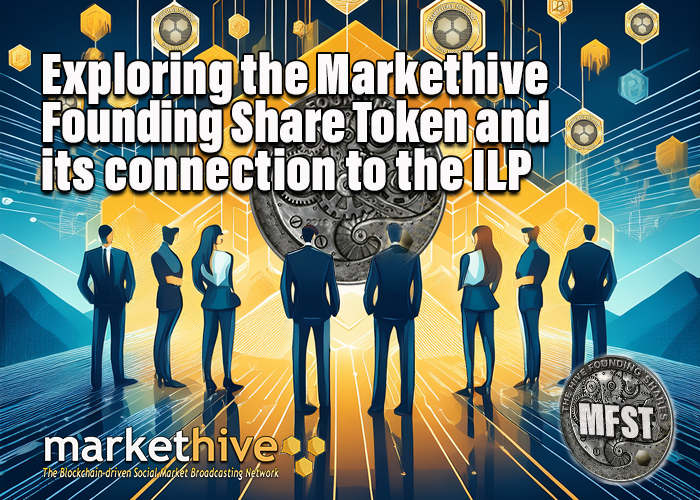
The Markethive Founding Share Token (MHST) represents a unique asset within the Markethive ecosystem, designed to align the interests of early adopters and the platform's long-term success. Unlike typical utility tokens, the MHST offers holders a share in the future profits generated by Markethive, particularly through its advertising and marketing services. This token is intrinsically linked to the concept of an "Initial Lifetime Position" (ILP), which grants users exclusive benefits, including perpetual access to premium features, enhanced earning potential, and a share of the platform's revenue. The MHST serves as a foundational element for the ILP, incentivizing early participation and rewarding those who contribute to the network's growth and stability.
The connection between the MHST and the ILP is symbiotic: owning an MHST is a prerequisite for obtaining an ILP, thereby locking in a user's position as a foundational member of the Markethive community. This structure aims to create a highly engaged and loyal user base, as token holders have a direct stake in the platform's profitability and expansion. The tokenomics of the MHST are designed to ensure its value is tied to Markethive's performance, providing a clear incentive for holders to promote and utilize the platform. This innovative approach to token distribution and user engagement seeks to build a sustainable and decentralized marketing platform where users are not just consumers but also beneficiaries of its success. Source
Midas, a regulated German tokenization platform, has launched the mTBILL token on the Algorand blockchain, marking its first non-EVM deployment. This tokenized certificate references short-term U.S. Treasury ETFs, making it possible for European retail investors to gain exposure to the yield of U.S. government bonds without the high minimum investment typically required by institutional funds. Unlike BlackRock's BUIDL fund, which demands a minimum investment of $5 million, mTBILL has no minimums, democratizing access to high-quality, yield-generating assets. The mTBILL currently offers a net yield of 4.06% and leverages Algorand's infrastructure for negligible transaction costs, instant finality, and 24/7 trading.
This initiative is a significant step in bridging traditional finance with the decentralized world, offering enhanced accessibility, liquidity, and transparency for investors. The mTBILL is a permissionless token, allowing for full DeFi composability, and is expected to integrate further into the Algorand DeFi ecosystem in the coming weeks. The first atomic swap involving $2 million in USDC for mTBILLs was successfully executed on May 27, demonstrating Algorand's efficiency. This launch is part of a broader trend of increasing institutional adoption and retail interest in tokenized real-world assets (RWAs), with Europe, particularly Germany, leading the way in tokenized bond issuance due to supportive regulatory frameworks. Source
Malaysia and Singapore have formalized a strategic partnership to enhance cross-border digital trade, signaling a significant step towards a more digitally integrated ASEAN economic bloc. MY E.G. Services Berhad (MYEG), Malaysia's e-government and digital services provider, and Singapore Trade Data Exchange Services Pte. Ltd. (SGTraDex), Singapore's digital infrastructure for trade data exchange, signed a Memorandum of Understanding (MoU) to this effect. The collaboration aims to create secure and interoperable digital platforms for the seamless exchange of trade-related data, moving away from traditional paper-based processes and fostering greater transparency and security in cross-border transactions. This initiative aligns with the ASEAN Digital Economy Framework Agreement (DEFA), which promotes the mutual recognition of digital identities, electronic trade documents, and regulatory credentials across borders.
The partnership will focus on several key areas, including platform-to-platform connectivity between MYEG's Zetrix blockchain platform and SGTraDex's systems, joint product development for verifying trade documents, technical integration using blockchain and interoperable data standards, and regulatory knowledge exchange and sandbox coordination. The use of blockchain technologies, such as MYEG's Zetrix Layer-1 chain and SGTraDex's TradeTrust framework, will ensure the immutability and traceability of verified information exchanged between governments and enterprises. This collaboration is expected to serve as a foundation for wider regional integration, potentially expanding to include China and the Gulf Cooperation Council (GCC) countries, ultimately strengthening ASEAN's digital infrastructure and facilitating more secure, inclusive, and efficient trade within the region's projected $2 trillion digital economy by 2030. Source
Vitalik Buterin, co-founder of Ethereum, has emphasized the critical need for the Ethereum network to become more resilient and private, especially in light of the growing trend towards cashless societies and the vulnerabilities of centralized digital payment systems. His remarks were prompted by reports from Nordic countries, which are reportedly re-evaluating their push for fully cashless economies due to the inherent fragility of centralized digital infrastructure. Buterin highlighted that physical cash serves as a necessary fallback option in times of crisis or system failure, and Ethereum needs to be robust and private enough to credibly play a similar role in a digital future. He stressed that a truly decentralized and censorship-resistant network, capable of functioning even when other systems falter, is essential for Ethereum's long-term viability and its ability to provide a reliable alternative to centralized financial systems.
Buterin's call for enhanced resilience and privacy isn't new; he has consistently advocated for users to run their own nodes to bolster decentralization and privacy. He believes that while the technological know-how for private and resilient transactions exists, practical implementation still faces limitations, particularly concerning the reliance on trusted hardware or post-hoc enforcement against double-spenders. The discussion underscores the challenge of balancing the efficiency of centralized digital payments with the security and reliability offered by decentralized alternatives, especially as geopolitical tensions and cyber threats become more prevalent. For Ethereum to truly become a "digital cash" alternative, it must overcome these technical hurdles and ensure it can provide a secure, private, and accessible payment method even in the most challenging circumstances. Source
Tether, the issuer of the world's largest stablecoin USDT, is strategically shifting its primary focus to international markets, particularly in emerging economies across Latin America, Asia, and Africa. CEO Paolo Ardoino stated that the company sees significant growth opportunities in these regions, which often have underdeveloped financial systems and a large unbanked population. This global expansion strategy comes as the United States continues to grapple with establishing clear regulatory frameworks for stablecoins. While Tether is monitoring the progress of U.S. legislation like the GENIUS Act and considering the issuance of a separate, compliant stablecoin for the U.S. market, Ardoino emphasized that the company's main interest will remain outside the U.S. to capitalize on its existing user base of hundreds of millions relying on USDT for remittances, savings, and protection against local currency instability.
Tether's approach reflects a broader trend of stablecoin issuers adapting to evolving global regulations, and Ardoino has expressed support for the GENIUS Act, noting its potential to provide clearer rules. Despite its international focus, Tether is engaging with U.S. lawmakers and has indicated a willingness to comply with new regulations, even as it continues to hold reserves, including Bitcoin and secured loans, that may not fully meet proposed U.S. standards. The company is also in discussions with a "Big Four" accounting firm for a formal audit to enhance transparency. This dual strategy of prioritizing emerging markets while navigating complex U.S. regulatory discussions positions Tether to maintain its dominance in the stablecoin market, by serving diverse needs ranging from financial stability in developing countries to potential institutional adoption in regulated environments. Source
U.S. authorities have launched a significant crackdown on the dark web, seizing approximately 145 darknet and traditional internet domains, along with associated cryptocurrency funds, linked to the "BidenCash" marketplace. This operation, spearheaded by the U.S. Attorney's Office for the Eastern District of Virginia, targets a notorious platform that specialized in the illicit sale of stolen credit card numbers, personal identifiable information, and compromised credentials. Since its inception in March 2022, BidenCash had amassed over 117,000 customers, facilitating the trafficking of more than 15 million payment card numbers and generating over $17 million in revenue. The seized domains will now redirect to a U.S. law enforcement-controlled server, effectively preventing further criminal activity on these sites and sending a clear message to cybercriminals.
The comprehensive investigation was a collaborative effort involving the U.S. Secret Service's Frankfurt Resident Office, the U.S. Secret Service's Cyber Investigative Section, and the FBI Albuquerque Field Office, with crucial assistance from international partners including the Dutch National High Tech Crime Unit, The Shadowserver Foundation, and Searchlight Cyber. This action highlights the increasing sophistication of law enforcement in tracing and disrupting illicit activities conducted on the dark web, particularly those involving cryptocurrency. While the exact value of the seized cryptocurrency funds has not been disclosed, this operation underscores the ongoing commitment of global authorities to dismantle cybercrime networks and protect individuals and businesses from financial fraud and identity theft. Source
Disclaimer: These articles are provided for informational purposes only. They are not offered or intended to be used as legal, tax, investment, financial, or any other advice.
Featured Image Source: Pixabay















