x






Yuga Labs, the creator of the Bored Ape Yacht Club (BAYC) NFT collection, has proposed a drastic overhaul of the ApeCoin decentralized autonomous organization (DAO), essentially seeking to dismantle it and replace it with a new, more centralized entity called "ApeCo." This move comes from a belief that the current DAO structure, while initially promising, has become inefficient, plagued by "sluggish, noisy, and often unserious governance theater" that diverts resources to "vanity proposals and low-impact initiatives." Yuga Labs CEO Greg Solano argues that the ApeCoin DAO has failed to effectively support the core ecosystem pillars of ApeChain, the Bored Ape brand, and the Otherside metaverse, hindering faster product development and strategic growth.
The proposal, if approved by token holders, would transfer all major assets of the ApeCoin DAO, including its substantial treasury of APE tokens (valued at over $168 million), intellectual property rights, and smart contracts, to the new ApeCo entity. This shift would also terminate all token holder governance rights, nullify previous proposals, and dissolve existing DAO working groups and forums. Yuga Labs positions ApeCo as a leaner, faster organization focused on execution and strategic growth, aiming to "unleash faster product development" and "reignite belief" in ApeCoin's utility by prioritizing "high-quality builders" with stricter, milestone-based grants. This move represents a significant re-centralization of control within the ApeCoin ecosystem under Yuga Labs' direct stewardship, a notable departure from the decentralized ethos often championed in Web3. Source
The percentage of Bitcoin held on centralized exchanges has plummeted to its lowest levels since March 2018, dropping below 11%. This significant decline, from a peak of over 17.2% in March 2020, indicates a substantial shift in investor behaviour and market dynamics. Approximately 1.26 million BTC has been withdrawn from exchange wallets since then, signalling a growing preference among investors for self-custody and long-term holding. This trend is driven by several factors, including increasing institutional adoption through vehicles like spot Bitcoin ETFs, a decline in trust in centralized exchanges following events like the FTX collapse, and a broader "HODLing" mentality among Bitcoin investors who are moving their assets to cold storage rather than keeping them readily available for trading.
This reduction in Bitcoin's readily available supply on exchanges has significant implications for the market. A lower supply, coupled with sustained or increasing demand, can lead to upward pressure on prices, potentially setting the stage for a "supply shock." Institutional players, such as BlackRock, Fidelity, and Franklin Templeton, are increasingly utilizing third-party custody solutions for their substantial Bitcoin holdings, further contributing to the outflows from public exchanges. While the overall aggregate liquidity for spot buyers has remained relatively stable due to this structural reshuffling of custody, the reduced exchange balance implies less immediate selling pressure, potentially leading to increased price volatility if demand surges. Source
The convergence of artificial intelligence (AI) and Web3 presents a transformative opportunity for advertising, particularly through the use of AI agents. AI agents, capable of automating complex tasks and interacting autonomously, are poised to revolutionize how ad campaigns are conceptualized, executed, and optimized within the decentralized Web3 environment. This shift moves beyond traditional programmatic advertising by enabling AI to not only analyse data and target audiences but also to create ad content, manage bids, and even negotiate placements in real-time across various Web3 platforms. This level of automation and intelligence could lead to significantly more efficient and effective ad campaigns, addressing the challenges of transparency, user privacy, and data ownership that are central to the Web3 ethos.
AI agents are expected to enhance Web3 advertising by offering hyper-personalization and fraud detection capabilities. By leveraging decentralized data and blockchain for transparency, these agents can create highly targeted campaigns that respect user privacy while simultaneously combating ad fraud, a persistent issue in the digital advertising landscape. The interview with Bitmedia highlights the potential for AI to navigate the complexities of diverse Web3 ecosystems, from metaverse platforms to decentralized applications (dApps), ensuring that advertisements are not only seen by the right audience but also resonate with them. This integration could foster a new era of advertising that is more equitable, transparent, and user-centric, aligning with the core principles of Web3. Source
The confirmation of Christopher Waller and Judy Shelton to the Federal Reserve Board of Governors, particularly the focus on Senator Cynthia Lummis's role in advocating for digital assets, signals a potentially brighter future for cryptocurrencies and blockchain technology within the U.S. financial system. While the article specifically discusses Waller's confirmation, it frames the broader context as a win for digital asset proponents, given Senator Lummis's outspoken support for Bitcoin and her efforts to create a clearer regulatory framework for the crypto industry. The presence of individuals open to understanding and integrating digital assets into traditional finance suggests a move away from outright scepticism towards a more nuanced approach, potentially leading to more favourable policies and regulatory clarity.
This development is significant because the Federal Reserve plays a crucial role in shaping monetary policy and financial innovation. Having members who are at least open to or knowledgeable about digital assets could lead to more informed discussions and decisions regarding central bank digital currencies (CBDCs), stablecoins, and the overall treatment of cryptocurrencies within the banking system. The article implies that this shift could pave the way for greater mainstream adoption and legitimacy for digital assets, as regulatory uncertainty has long been a significant barrier to growth and institutional participation. This signals a growing recognition within high-level financial institutions of the increasing importance and potential of the digital asset space. Source
Artificial intelligence (AI) is rapidly cementing its position within the Web3 ecosystem, with a recent DappRadar report indicating that AI-powered decentralized applications (DApps) are now challenging the dominance of established sectors like Decentralized Finance (DeFi) and Web3 gaming in terms of user engagement. In May, AI-backed DApps saw approximately 4.8 million daily unique active wallets, representing a significant 23% growth. This surge in activity underscores a broader societal shift towards open, user-owned technologies, as AI DApps are proving to be more than just hype and are steadily establishing themselves as a core component of the decentralized landscape. This growth reflects an increasing user interest in AI solutions across various industries, finding practical applications within Web3.
The report highlights a shifting landscape where AI DApps are now attracting comparable levels of user attention to DeFi and gaming, which have historically been the largest categories by total value locked and active users. For instance, the top AI DApp in May, LOL, recorded 2 million daily active wallets, utilizing an AI bot to analyse laughter and reward users. Another notable newcomer, SubHub, an AI-enhanced Web3 notification and marketing platform, saw 82,000 daily unique active wallets, reinforcing the growing intertwining of social and AI DApps. This trend suggests that the future of Web3 will increasingly involve intelligent automation and data analysis powered by AI, fostering more efficient, personalized, and user-centric decentralized experiences. Source
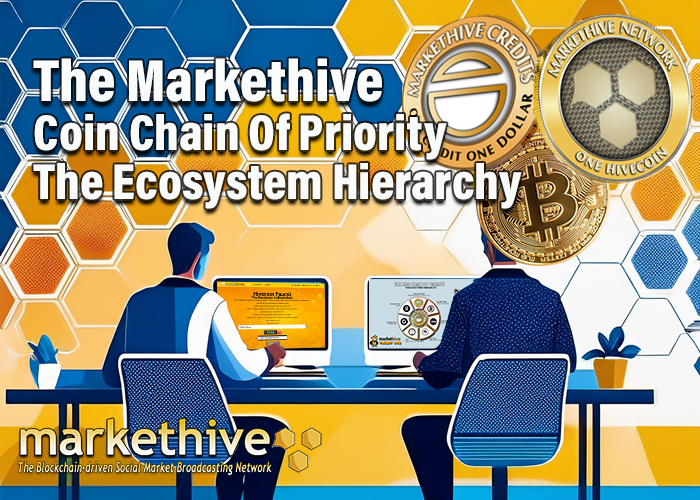
Markethive's new Markethive Coin (MHV) is positioned as the central economic driver within its integrated ecosystem, designed to prioritize value distribution and utility across its diverse features. The MHV coin operates on a hierarchical "chain of priority," ensuring that various components of the Markethive platform, such as its ad platform, entrepreneurial tools, and marketplace, are interconnected and mutually beneficial. This structured approach aims to create a robust internal economy where the coin facilitates transactions, rewards user engagement, and underpins the entire value proposition of the Markethive system. The core idea is to establish a self-sustaining loop where the growth of the platform directly enhances the value and utility of the MHV coin for its users.
The ecosystem hierarchy dictates how value flows and is distributed, with priority given to areas that foster network growth and utility. For instance, advertising services, which drive external revenue and user acquisition, are highly prioritized in terms of MHV coin utility. Other crucial components, such as the marketplace for goods and services, also play a vital role in creating demand and utility for the coin. This tiered system ensures that the coin's value is directly tied to the real-world utility and activity within the Markethive platform, moving beyond speculative value to a more functional, use-case driven approach. The ultimate goal is to create a vibrant, incentivized community where users are rewarded for their contributions and engagement, further solidifying the coin's place as the central economic backbone. Source
Major U.S. crypto lobbying groups are pushing for the inclusion of critical protections for software developers and infrastructure providers within a broader crypto market structure bill. A joint statement from prominent advocacy organizations, including the DeFi Education Fund, Coin Center, and the Blockchain Association, urged lawmakers to add the "Blockchain Regulatory Certainty Act (BRCA)" to the "Digital Asset Market Clarity (CLARITY) Act of 2025." The BRCA aims to exempt developers of non-custodial crypto platforms from being classified as money transmitters, a designation that would subject them to stringent and often impractical regulatory requirements like Know Your Customer (KYC) data collection, which is fundamentally incompatible with decentralized technologies. This push reflects a desire to distinguish between those who build decentralized infrastructure and those who provide custodial financial services.
The inclusion of these protections is seen as crucial for fostering innovation within the U.S. and preventing a "brain drain" of crypto talent to more crypto-friendly jurisdictions. The CLARITY Act, introduced in late May, seeks to establish a clear regulatory framework for digital assets by redefining the roles of the Securities and Exchange Commission (SEC) and the Commodity Futures Trading Commission (CFTC). By explicitly protecting non-custodial software developers, the crypto lobby aims to ensure that the development of peer-to-peer technologies and decentralized networks can continue without undue regulatory burden, while still maintaining oversight of traditional financial institutions dealing with digital assets. This move also highlights a broader shift in U.S. policymakers' stance on crypto, with calls for more engagement with industry participants rather than regulation solely through enforcement. Source
Yuga Labs, the creative force behind the Bored Ape Yacht Club (BAYC) NFT collection, has put forth a proposal to effectively dissolve the ApeCoin decentralized autonomous organization (DAO) and replace it with a new, more centralized entity called "ApeCo." Yuga Labs CEO Greg Solano argues that the current DAO model, while initially promising, has become inefficient and prone to "sluggish, noisy, and often unserious governance theater." This inefficiency, he claims, has led to a misallocation of resources on "vanity proposals and low-impact initiatives" that hinder the faster development and strategic growth of core ecosystem projects like ApeChain, the Bored Ape brand, and the Otherside metaverse.
If approved by token holders, the proposal would transfer all significant assets of the ApeCoin DAO, including its substantial treasury of APE tokens (valued at over $168 million), intellectual property rights, and smart contracts, to the new ApeCo entity. This shift would also mean the termination of all token holder governance rights, the nullification of previous proposals, and the dissolution of existing DAO working groups and forums. Yuga Labs envisions ApeCo as a streamlined, agile organization focused on execution and strategic growth, aiming to "unleash faster product development" and "reignite belief" in ApeCoin's utility by providing stricter, milestone-based grants to "high-quality builders." This move signifies a notable re-centralization of control within the ApeCoin ecosystem under Yuga Labs' direct management, a departure from the decentralized governance principles often espoused in the Web3 space. Source
Kraken, a prominent cryptocurrency exchange, has issued a stark warning regarding the alarming lack of basic security awareness displayed by attendees at crypto events and conferences. According to Kraken's Chief Security Officer Nick Percoco, a "troubling trend" has emerged where individuals, even those from major crypto protocols, are leaving laptops and phones unlocked and unattended. These devices often contain sensitive personal and organizational crypto assets, making them prime targets for theft and exploitation by bad actors who frequently infiltrate these events. Percoco emphasizes that in the crypto world, a digital device is akin to a vault, and basic precautions like keeping devices locked and in close proximity are essential to safeguard one's financial freedom and security.
Beyond unattended devices, Kraken's report highlights several other security risks prevalent at crypto events. These include "juice jacking," where malicious USB charging stations can install malware or steal data, and compromised public Wi-Fi networks that attackers can exploit to access sensitive information. Scammers also attend these events, easily blending in with fake identities and preying on unsuspecting attendees. Furthermore, there's a concern about attendees openly discussing high-value crypto gains and revealing personal information, making themselves targets for in-person theft, kidnapping, and extortion attempts, which have been on the rise. Kraken advises using "burner wallets" with limited funds for conference activities and exercising extreme discretion when discussing financial matters in public. Source
The article argues that cross-chain infrastructure is the critical missing layer preventing Decentralized Finance (DeFi) from achieving its full potential and truly challenging traditional finance. Currently, the DeFi ecosystem is fragmented across numerous independent blockchains, creating "isolated silos" that hinder liquidity, limit innovation, and complicate user experience. This fragmentation means that assets and data on one blockchain cannot seamlessly interact with applications on another without complex and often risky bridging solutions. As a result, DeFi's capital efficiency is suboptimal, and its ability to scale and offer a unified financial experience akin to traditional markets remains significantly constrained.
Addressing this fragmentation requires robust and secure cross-chain interoperability solutions that can facilitate the seamless transfer of value and information between different blockchains. The article suggests that without this "missing layer," DeFi will continue to operate below its capabilities, struggling with liquidity bottlenecks and a convoluted user journey that deters broader adoption. Effective cross-chain infrastructure is essential not only for optimizing capital flow and expanding the range of DeFi applications but also for fostering a more unified and resilient decentralized financial system that can truly rival the interconnectedness of traditional global finance. Source
DeFi Development Corp., a Nasdaq-listed company, has made headlines as the first publicly traded entity to integrate Solana Liquid Staking Tokens (LSTs) into its treasury strategy. This strategic move involves allocating a portion of its substantial Solana (SOL) holdings into dfdvSOL, its own LST developed using Sanctum's protocol infrastructure. This decision is driven by the desire to enhance treasury management and validator operations, aiming to maximize SOL Per Share (SPS) growth—a proprietary metric measuring the value of SOL held relative to the company's shares. By utilizing LSTs, DeFi Development Corp. can earn staking rewards on its SOL holdings while simultaneously maintaining liquidity, allowing these assets to be used in other DeFi applications or redeemed via the Sanctum protocol. This innovative approach extends their validator business into the rapidly growing liquid staking sector and strengthens their long-term participation in the Solana ecosystem.
This pioneering step by DeFi Development Corp. highlights a broader trend where publicly traded companies are increasingly exploring ways to incorporate altcoins and DeFi strategies into their balance sheets. The benefits of liquid staking, such as increased capital efficiency, flexibility, and the ability to compound staking rewards by utilizing LSTs in various DeFi protocols, are proving attractive. For DeFi Development Corp., launching dfdvSOL is a powerful flywheel, unlocking new revenue streams and helping to acquire more SOL per share. The company has also partnered with Kamino Finance to boost dfdvSOL's adoption, integrating it into borrow/lend markets and Multiply Vaults, which further enhances its utility and aims to make it a foundational asset in Solana's DeFi ecosystem. This move signifies a growing institutional interest in leveraging the benefits of decentralized finance to optimize asset management and generate additional returns. Source
Disclaimer: These articles are provided for informational purposes only. They are not offered or intended to be used as legal, tax, investment, financial, or any other advice.
Featured Image Source: Pixabay















