x





Image Source: Pixabay
2 reasons why Bitcoin Ordinals are ‘positive’ for BTC: Grayscale
Ordinals have been a controversial topic within the Bitcoin community but crypto investment firm Grayscale says there are two main reasons to be optimistic.
Bitcoin Ordinals — also known by some as Bitcoin NFTs — could renew developer enthusiasm for Bitcoin and boost mining fees, according to cryptocurrency investment firm Grayscale.
In an April 27 “Market Byte” blog post, the firm suggested that Ordinals provide two key benefits to the growth and development of the Bitcoin ecosystem.
The first is a substantial increase in fees paid to miners, which has been seen since the launch of the protocol in January, according to Grayscale.
“The advent of ordinals has led to an increase in total fees paid to miners [...] which could potentially establish a sustainable baseline level of transaction fees to incentivize miners.”
Grayscale argued that this would ensure “continued network security throughout the lifetime of the Bitcoin network.” Read More
Lightning Labs Aims to Help 'Bring Bitcoin to Billions' With Latest Upgrade
The tech startup aims to continue to make it easier for people to use the Lightning Network.
The team at Bitcoin tech startup Lightning Labs, one of the main developers of Bitcoin's speedy and scalable Lightning Network, released an update to its Litd node management tool designed to make Bitcoin and Lightning easier to use.
Users need to run a Lightning “node” to send and receive payments on the network non-custodially, meaning without the assistance of a third party, a feat that isn’t easy for users who aren’t tech-savvy or don’t want to spend hours learning the ins and outs of the protocol to send a payment.
Lightning Labs manages a tool called Lightning Terminal to make managing Lightning nodes easier. Behind the scenes, Litd aims to abstract certain features of node management so users don't have to manage them directly, making it easier to use Lightning.
“We've heard consistent feedback from the Lightning developer community about the need for increased node management automation and better developer tooling for seamlessly onboarding new Lightning users,” Lightning Labs head of product growth Michael Levan told Decrypt, adding that these changes will make it easier to onboard new users to the network “regardless of their experience level.” Read More
Bitcoin hash rates threaten blockchain decentralization
The blockchain industry is facing a massive power imbalance — just like the traditional finance industry.
Blockchain technology was introduced in 2008 as a decentralized, secure, transparent system for managing digital transactions. Its primary aim was to provide a solution to major problems with traditional transactional systems, including trust, security, decentralization and efficiency. Blockchain has since expanded beyond finance and has been used in supply chain management, healthcare, games, digital media and social media, among others.
However, the blockchain industry is still facing significant challenges — such as a lack of diversity, wealth control by a few holders, hash rate problems and a loss of the promise of decentralization.
Hash rate and why it’s a problem:
The cryptocurrency on everyone’s mind — and in the digital wallets of more than 400 million people around the world — is Bitcoin. Bitcoin’s hash rate is the computing power required to validate transactions and produce new blocks on the Bitcoin blockchain. A high hash rate is necessary to maintain the integrity of the Bitcoin network, but it also presents some significant challenges. Read More
Phantom Solana Wallet Adds Ethereum and Polygon Support
The popular mobile and browser wallet courts new users with a seamless multichain experience.
Self-custodial wallet Phantom announced today that simultaneous support for Ethereum and Polygon networks is live on its mobile app and browser wallets, widening users' access to dApps across the Web3 landscape, including Magic Eden, Uniswap, Aave, blur, and OpenSea.
The popular Solana wallet first announced support for rival blockchains Ethereum and Polygon in November, with the aim of providing the ability to interact with the three largest blockchains for digital collectibles in one place.
"We are dedicated to leveraging our expertise from the Solana ecosystem to drive innovation in the wallet space... in order to deliver the most versatile and user-friendly experience across all platforms," Phantom CEO Brandon Millman tells Decrypt, especially "the three most prominent ecosystems: Ethereum, Polygon, and Solana."
The company says the new features will simplify managing multiple accounts and assets across blockchains, removing the requirement to switch between wallets and adding the ability to import existing MetaMask, Solana, and EVM wallets. Read More
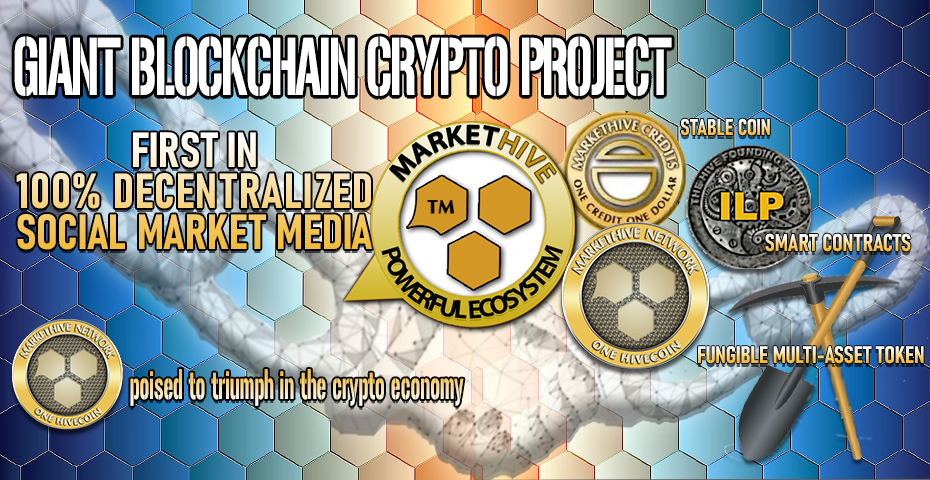
HVC is poised to triumph in the crypto economy.
Markethive is a monolithic blockchain project currently operating as a social network, an entire inbound marketing platform with email, blogging, and digital media capabilities that broadcast to the vast internet. It’s a complete Market Network and the first of its kind.
Markethive is predominantly a free system where users can access a platform that can cost more than $2,500 offered by other marketing platforms. There are, of course, upgrades that open up more tools and monetization opportunities, the first being the Entrepreneur One Loyalty Program, and coming soon is the Premium Upgrade.
The many domains Markethive has and its autonomous cloud systems that ensure its sovereignty and longevity make it untouchable and immune from the tech giants’ rule and biased agenda. But can still remotely infiltrate the social media platforms and reach the multitudes either locked in or looking for an alternative meritocratic medium.
In other words, wherever you go, Markethive is there, anywhere and everywhere, delivering its message via its community of entrepreneurs to a far-reaching audience. This next-generation social market media is poised in the wings, and when the time is right, it will emerge as a shining light to lift people up and bring financial sovereignty and hope in this gloomy and uncertain world.
The video platform, conference rooms, the unique four specific news feeds currently in development, and many other projects and incentives add to the credibility and need for an ecosystem in the social media and digital marketing space. Read More

Tensor Snatched Magic Eden’s Solana NFT Crown. But for How Long?
Mad Lads hype helped push “pro” marketplace Tensor on top, but the latest battle for Solana traders may only be getting started.
The Solana NFT space got a shot in the arm with the late April launch of Mad Lads, a buzzy profile picture (PFP) collection that led the market-wide charts. But something else happened amid the trading surge: upstart marketplace Tensor topped the dominant Magic Eden.
Tensor launched in 2022, but saw increasing activity after introducing trading rewards in March. Last week, it clinched the majority market share by trading volume on Solana. Data collected by Tiexo shows a slight lead by Tensor over the last seven days, with Tensor commanding 45% of Solana NFT market share and Magic Eden under 44%.
Mad Lads helped push Tensor over the top, as traders apparently flocked to take advantage of its specific promotion around the NFT project rather than Magic Eden’s offering. But can Tensor maintain that momentum after waking Solana’s sleeping giant? Read More
Crypto Companies Plead With UK Regulators Not to Follow the US
Investment firm a16z and Polygon Labs are the latest to praise Britain’s approach to crypto regulation—in stark contrast to attitudes toward U.S. policymakers.
In the eyes of some American lawmakers and businesses, the U.S. is stifling innovation with its sometimes confusing and often heavy-handed approach to regulating the crypto space.
But Web3 companies are hoping the U.K. won’t go the same way. Today, a16z, the crypto-focused division of VC giant Andreessen Horowitz, asked the U.K. Treasury to take a more “nuanced” approach to regulation, adding that “the U.S. approach is not one that the U.K. should consider adopting.”
The U.K. in February laid out its first rules to regulate crypto. In a consultation paper, the Treasury said it wanted to regulate crypto exchanges like other traditional finance venues.
Head of policy at a16z Brian Quintenz said on Twitter Monday that they “enthusiastically embrace the U.K.’s approach for a ‘proportionate and focused, agile and flexible’ regime.”
He added that the investment firm looked forward to continuing work with the Treasury in order to “establish world-class rules which will protect consumers and allow this innovation to flourish.” Read More
Binance Announces Support for New Highly Anticipated Aptos Rival – Here’s When It Launches
Binance, the largest crypto exchange in the world by volume, has announced support for a new layer-1 blockchain Sui Network (SUI).
In a new announcement, Binance says it will launch SUI on its Launchpool platform, which allows users to stake coins in exchange for new ones.
“Binance is excited to announce the 33rd project on Binance Launchpool – Sui (SUI), a DPoS layer 1 blockchain based on move programming language.”
Binance users can either stake True USD (TUSD) or Binance Coin (BNB) to receive SUI token when it launches. According to the exchange, SUI will go live on Wednesday when appropriate liquidity conditions are met. Read More
Sports Illustrated launches Polygon-based NFT ticketing platform
SI's new service, called "Box Office," will allow event organizers to issue commemorative nonfungible token tickets, including pre-attendance and post-event audience perks.
On May 2, Sports Illustrated's ticketing subsidiary SI Tickets launched the "Box Office" platform, a self-service event management and primary ticketing solution powered by the Polygon blockchain. Built in conjunction with Web3 software developer ConsenSys, Box Office enables "owners, organizers and hosts the ability to create, manage and promote a fully scalable, paid or free ticketed live sporting event."
As part of the new platform, SI Tickets and ConsenSys are partnering to develop a "Super Ticket" that allows hosts to remain connected to their attendees through highlights, collectibles, exclusive offers and loyalty benefits via NFT technology. "Blockchain is the future of ticketing," SI Tickets CEO David Lane said.
"From the moment we launched our global event marketplace, which now boasts 50 million tickets to over 250,000 sports, concerts and shows, we have been preparing to enter and disrupt the primary ticket market."
Through Super Ticket, attendees can scan their NFTs for expedited entry passes, drink coupons and music downloads before the event and can receive post-event video content and rewards thereafter. "Guests will keep their tickets to your event in their digital wallet forever," the new website tells event organizers. Read More
Disclaimer: These articles are provided for informational purposes only. They are not offered or intended to be used as legal, tax, investment, financial, or any other advice.















