x






Wall Street firm BlackRock is adapting one of its existing money market funds to specifically serve U.S. stablecoin issuers, positioning it as an approved reserve asset under the recently enacted GENIUS Act. The fund, known as the BlackRock Select Treasury Based Liquidity Fund, will undergo changes such as the removal of agency investments, a reduction in the maturity of its U.S. Treasury holdings, and the inclusion of overnight repurchase agreements as an eligible asset. These adjustments are being made to ensure the fund is both compliant with the new legislation and provides maximum liquidity for stablecoin issuers. Jon Steel, the global head of product for BlackRock’s cash management business, noted that the company has observed a rise in demand from stablecoin issuers for compliant reserve management options since the passage of the GENIUS Act, suggesting this move aims to establish BlackRock as a leading reserve asset manager in the digital payments space.
This initiative is part of BlackRock's broader and aggressive engagement with the cryptocurrency sector, which is expected to significantly influence the stablecoin market. The firm recently celebrated its cash management business exceeding $1 trillion in assets under management and currently manages the largest spot Bitcoin and Ethereum exchange-traded funds on Wall Street. Their interest in stablecoins is not new, as BlackRock previously led a $400 million funding round for the USDC issuer Circle in 2022, securing its role as a primary manager of Circle's reserves. Furthermore, the company's CEO, Larry Fink, recently disclosed that BlackRock is actively developing technology to tokenize traditional assets, emphasizing a belief in the necessity to rapidly tokenize all asset types to streamline processes that currently involve multiple intermediaries. Source
Coinbase has placed Binance’s BNB token on its official listing roadmap following a public discussion about cryptocurrency exchange listing policies, which included one of its own executives and other industry figures. The debate began after Limitless Labs CEO CJ Hetherington posted a contrasting view of listing requirements, alleging that Binance demanded a 2 million BNB security deposit for a spot listing, while Coinbase merely required "building something meaningful on Base." This sparked intense conversation, with Coinbase's head of Base, Jesse Pollak, weighing in to state that listing on an exchange should "cost 0%." Binance initially responded with a now-deleted post that threatened legal action against Hetherington, claiming the exchange did not accept listing fees, but later apologized for the excessive nature of its communication. Shortly after the public exchange, and regardless of its influence, Coinbase added BNB to its roadmap, a move that former Binance CEO Changpeng "CZ" Zhao praised while also urging the exchange to list more projects from the BNB Chain.
This development highlights the increasing scrutiny on the token listing processes of major exchanges, given the significant price impact a listing can have. Both Coinbase and Binance have recently taken measures to enhance transparency and efficiency in their listing systems. In March, Binance introduced a community co-governance structure that allows users to vote on token listings and delistings, following comments from CZ that the prior process was "a bit broken." Similarly, Coinbase CEO Brian Armstrong acknowledged the need to re-evaluate their listing process due to the massive proliferation of new tokens. Coinbase published a guide stating that all token applications are "free and merit-based," involving a business and legal review. At the time of publication, BNB was the third-largest cryptocurrency by market capitalization, valued at approximately $160 billion, with the BNB price at $1,149. Source
Ripple announced its third major acquisition of the year, purchasing the software treasury solutions company GTreasury for $1 billion. This deal follows the earlier acquisitions of prime brokerage Hidden Road for $1.25 billion and stablecoin platform Rail for $200 million. GTreasury provides a platform that helps corporate finance teams manage and analyse their cash flows, and Ripple stated the acquisition would help the company move money more efficiently and unlock dormant capital. Ripple's CEO, Brad Garlinghouse, emphasized that blockchain technology is the ideal solution to the problems of slow, expensive, and outdated payments systems, aligning with the company's focus on speeding up global money transfers.
The acquisition is part of a broader trend of major digital asset companies moving into the mainstream and comes amid an increase in the number of companies holding crypto assets, often referred to as digital asset treasuries, or DATs. This surge is reportedly fuelled by recent pro-crypto policies and stablecoin legislation. The combination of GTreasury's foundation in cash forecasting, risk management, and compliance with Ripple's global network and digital asset solutions is intended to offer corporate treasurers better ways to manage liquidity and payments in the evolving digital economy as more top companies manage stablecoins and other digital assets at scale. Source
The Decentralized Physical Infrastructure (DePIN) protocol peaq has partnered with Dubai’s Virtual Assets Regulatory Authority (VARA) through a memorandum of understanding to establish a regulatory framework for the burgeoning “machine economy,” which involves onchain robotics, artificial intelligence, and tokenized real-world assets. This collaboration centres around peaq's Machine Economy Free Zone, a controlled environment launched in July for testing decentralized networks with robotics and AI. The agreement outlines several areas of joint effort, including providing guidance for projects seeking VARA licences, conducting joint training in technology and compliance, and sharing data to support research and regulation. A co-founder of peaq noted that this commitment is crucial for bringing the Machine Economy to life compliantly, allowing people to participate in and benefit from this new economic sector.
This initiative is part of Dubai and the wider United Arab Emirates' ongoing efforts to become a major global hub for digital assets and blockchain innovation, a push facilitated by VARA since its formation in March 2022. VARA oversees licensing, compliance, and policy for virtual asset businesses in the emirate, and recently also partnered with DMCC to develop a framework for tokenized commodities. The regulatory agency has been actively clarifying rules, such as updating its rulebook for Virtual Asset Service Providers to clarify real-world asset issuance and distribution, and has formed a partnership with the UAE's Securities and Commodities Authority to synchronize regulation across the entire country. The clear regulatory approach has attracted high-net-worth crypto investors, with the UAE becoming a leading destination for migrating millionaires, and industry predictions suggesting the crypto sector could soon become the UAE’s second-largest industry. Source
Coinbase has announced the upcoming launch of Coinbase Business, an all-in-one financial platform designed for small and midsize companies. This new service aims to modernize business operations by leveraging the speed and global reach of crypto, offering a comprehensive suite of features that includes the ability to receive and manage crypto assets. Key components of the platform include instant crypto settlements, multi-user access, and seamless integrations with popular accounting software like QuickBooks and Xero to simplify financial management and payroll. The company is positioning this product as a "crypto operating account" that combines the functions of a bank, a crypto exchange, and a payment processor, directly competing with fintech firms such as Mercury and Brex, as well as established crypto payment services like BitPay.
Furthermore, Coinbase Business offers businesses a yield-earning opportunity, allowing them to earn up to 4.1 APY on USDC stablecoins held in their accounts. This incentive is made possible through Coinbase’s major stake and revenue-sharing agreement with USDC issuer Circle, which aims to boost stablecoin adoption. The platform will also include integrations with crypto tax software like CoinTracker. Onboarding is designed to be fully self-service, with the majority of applicants expected to be approved quickly, often within two days. The product is currently in its alpha phase, with general availability planned for later in 2025. Source
A campaign called “Bitcoin for Signal” is gaining traction with support from influential figures like Jack Dorsey and Peter Todd, advocating for the privacy-focused messaging app Signal to integrate Bitcoin payments. The core of this proposal involves implementing Cashu’s “Chaumian Ecash” solution, which would enable truly private Bitcoin transactions within the app by integrating Bitcoin with the Cashu protocol. Supporters argue that Bitcoin belongs in a secure messenger like Signal and that its current payment solution, MobileCoin, has proven to be a failure due to issues like centralization, which the campaigners hope to address by replacing or expanding upon it with Bitcoin. Given Signal’s substantial base of around 70 million monthly active users, a successful integration could significantly boost the use of Bitcoin for peer-to-peer payments, aligning with Jack Dorsey's view that Bitcoin should be used for everyday transactions, not just as a store of value.
Despite the high-profile support, critics have voiced concerns that Bitcoin's inherent lack of base-layer privacy features makes it an unsuitable match for a highly privacy-focused application like Signal, suggesting alternatives such as Monero or Zcash might be better suited. They point out that Bitcoin’s fully public blockchain could jeopardize user privacy, even with Cashu providing a privacy-preserving layer. This push for private messaging apps to adopt secure payment methods comes in the wake of the European Union's consideration of a controversial “Chat Control” law that would compel encrypted messaging services like Signal to scan private messages, effectively undermining end-to-end encryption. The move, which Germany has resisted, has been postponed, highlighting the ongoing tension between digital privacy and regulatory oversight. Source
Japan is taking a major step to integrate cryptocurrencies into its regulatory structure by planning to ban insider trading in the digital asset space under its Financial Instruments and Exchange Act. This legislative initiative empowers Japan's financial regulators, specifically the Securities and Exchange Surveillance Commission, to investigate and penalize illicit trades, extending securities-style oversight to the crypto market for the first time. By choosing a "legislative-first model," Japan is moving toward clear, codified rules rather than the case-by-case enforcement approach seen in other major jurisdictions, such as the U.S. This comprehensive framework is expected to be finalized this year and presented to parliament by 2026, giving the SESC the authority to impose surcharges or recommend criminal referrals for transactions based on non-public information.
Policy experts suggest that Japan's decisive move could have a "gravitational pull" on the global regulatory landscape, potentially accelerating the alignment and "competitive convergence" of market integrity standards worldwide. Observers note that Japan's approach aligns philosophically with the EU's MiCA framework, creating a legible "clarity bloc" that institutions can understand and standardize around. This proactive establishment of a high standard for market integrity is seen as putting pressure on other jurisdictions, compelling them to adapt their own regulatory norms out of competitive necessity and making it politically easier to treat crypto insider trading as a crime rather than a regulatory grey area. Source
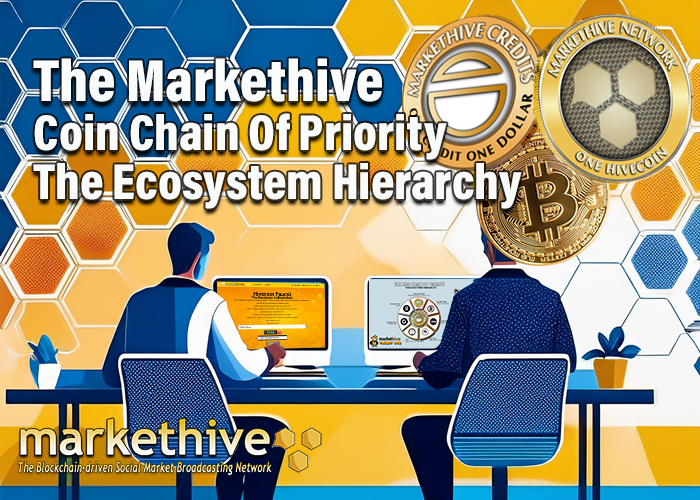
Markethive is a decentralized platform that merges social networking, inbound marketing, e-commerce, and cryptocurrency, aiming to empower entrepreneurs and challenge traditional business models. Central to this ecosystem are two tokens: the Markethive Credit (MHC) and Hivecoin (HVC). The Markethive Credit (MHC) functions as the native stablecoin, pegged at $1, serving as the currency for platform transactions like subscriptions and product purchases, and it is also the basis for a staking mechanism where larger MHC holdings correlate with higher monthly interest rewards paid out in Markethive Tokens (MHV). Hivecoin (HVC) is the premium transactional cryptocurrency traded on major exchanges, a utility token used for payment processing, smart contracts, and commerce, and users are encouraged to use it through a substantial 20% discount on Markethive Credits and services when purchasing with HVC.
Hivecoin's value is driven by its practical applications, which include purchasing diverse offerings like digital advertising and publishing services. It also underpins Markethive's gamification strategy, where users earn HVC through content creation, social engagement, referrals, and through "faucets" and "micropayments" after achieving a KEY qualification level. The platform also integrates other payment options for purchasing Markethive Credits, including Bitcoin, which is automatically converted to MHC once a user-set threshold is reached in a sub-wallet, and traditional methods like Visa, Mastercard, and Amex, ensuring a consistent user experience. Furthermore, alternative payment systems like Google Pay and Yandex Pay are integrated to aid users in regions with limited access to traditional banking, bridging the gap between fiat currency and the cryptocurrency ecosystem. Source
Ripple Labs is reportedly planning a fundraising effort through a special purpose acquisition company (SPAC) to purchase $1 billion worth of its XRP token, which will be held in a new Digital Asset Treasury (DAT). The company is already a major XRP holder, with 4.5 billion tokens in its stash and an additional 37 billion locked in a monthly-releasing escrow. The newly acquired XRP will be combined with some of Ripple's existing stockpile for the treasury, although the specific details of the transaction are still being finalized. If the $1 billion buy goes through, it could add an estimated 427 million XRP to Ripple's existing holdings of over 4.5 billion tokens, out of a total circulating supply of more than 59 billion.
This move follows Ripple's recent $1 billion acquisition of corporate treasury management company GTreasury, which is part of its strategy to expand its operations and provide infrastructure for managing digital assets in corporate treasuries, including stablecoins and tokenized deposits. While Bitcoin and Ether currently lead in corporate crypto treasuries, the reported $1 billion XRP purchase would establish Ripple as the leading XRP treasury holder. Currently, other companies planning significant XRP treasuries include Trident Digital Tech Holdings with up to $500 million, Chinese AI company Webus with a $300 million allocation, and VivoPower aiming for a $100 million XRP reserve. Source
New data from Electric Capital indicates that the Ethereum ecosystem is the most attractive to new developers, with over 16,000 joining between January and September of this year, a figure cited by the Ethereum Foundation. This influx places Ethereum's total active developer base at 31,869, making it the largest across all blockchain projects. Solana followed, attracting over 11,500 new developers, and Bitcoin saw nearly 7,500 join its ecosystem. These figures include the Ethereum layer-1 and its layer-2 networks, such as Arbitrum and Optimism, without double-counting developers working across multiple chains within the ecosystem. The Solana Foundation, however, suggested their numbers may be underestimated.
Despite Ethereum’s leading numbers, its growth in full-time developers was modest over the past two years, increasing by 6.3%. In contrast, Solana experienced a much more substantial two-year growth rate of 61.7%. The accuracy of the overall developer growth data has been questioned, particularly by the Solana Foundation, which claims a significant underreporting of its developer count. Additionally, some critics argue that the methodology for grouping chains is inconsistent, and others suggest that the overall figures for new developers might be inflated by AI-generated code and transient hackathon projects that don't represent sustained developer commitment. Source
The article details a sharp pullback in Bitcoin's price on Thursday, which saw the cryptocurrency drop 3.5% to $107,500, primarily driven by a cascade of short selling in the derivatives market. This bearish activity added over $1 billion in new exposure and triggered a massive $724 million liquidation event across 24 hours, with long positions accounting for the majority of the wipeout, indicating many bulls were overleveraged. A market divergence emerged as short perpetual sellers on offshore exchanges drove the decline, while spot buyers, particularly on U.S.-based exchanges like Coinbase, showed consistent buy-the-dip activity, attempting to absorb the heavy selling pressure.
The sell-off was attributed to a combination of factors, including macroeconomic uncertainty, rising geopolitical tensions, and the spike in liquidations from these overleveraged positions, which was compounded by profit-taking after a recent recovery. Despite the efforts of spot investors, the market is expected to face continued volatility and may require time to rebalance after the significant price flush. Some analysts remain bearish, suggesting that the probability for a rally is currently tilted to the downside, noting that short traders continue to dominate the perpetual futures markets and spot demand remains in contraction based on on-chain data. Source
Ghana's central bank, the Bank of Ghana, is advancing a bill to parliament with the goal of having official cryptocurrency regulations in place by the end of December. Governor Johnson Asiama stated during the IMF meetings in Washington that significant work has been completed over the past four months to establish the necessary regulatory environment and legislation. This push for regulation comes as the West African nation follows the recent passage of a virtual asset service providers bill in Kenya. The central bank is responding to the undeniable growth of the crypto economy in Ghana, where an estimated 3 million people, or roughly 8.9 percent of the population, already use digital assets in some form. This rising domestic demand has shifted the Bank of Ghana's initial cautious stance, making regulation a necessity for policymakers to gain some control over the industry and prevent its abuse.
The central bank governor emphasized that simply creating laws is only the beginning of the process, asserting that the key to effective regulation will be the ability to actively monitor crypto flows. To meet this challenge, the Bank of Ghana is actively developing the required manpower and expertise and is in the process of establishing a new department dedicated to overseeing this crucial sector. Experts within the country have stressed the urgency of this action, with one senior head of financial advisory warning that the nation is risking being left behind its regional peers like Nigeria, South Africa, and Rwanda. Inaction, he stated, results in a loss of tax revenue, exposure to illicit capital flows, and stifled innovation within the youth-led digital economy operating outside of state control. The Bank of Ghana is also currently running a digital sandbox environment to allow select companies to experiment with the technology as part of its ongoing preparation. Source
Decentralized exchange Uniswap has added support for the Solana network to its web application by integrating with Jupiter’s Ultra API, making over a million Solana tokens available. This move allows users to connect their Solana wallets and trade Solana-based tokens alongside those from other networks, with all resulting transactions being routed through the Solana DEX aggregator Jupiter. The company announced it is also exploring additional features like bridging, cross-chain swaps, and full Uniswap Wallet support for the Solana ecosystem. This integration aims to give Uniswap a leading position in the Solana DEX space, which processed 140 billion dollars in volume in the last 30 days, while Jupiter itself generated 17.5 million dollars in revenue during that period.
A Uniswap engineer clarified that the team designed platform-agnostic "architect layers" instead of building a specific integration specifically for Solana. Danny Daniil, the engineering lead of trading, explained that the addition of Solana will help Unichain, a layer-2 network launched in February by Uniswap Labs, become the best chain for trading. He noted that allowing assets from Solana and other ecosystems to be bridged to Unichain will enable traders to find the most favorable liquidity. The article also mentions Uniswap's prior achievement of becoming the first decentralized exchange to process 3 trillion dollars in aggregate all-time volume in May, and includes a broader industry perspective from 1inch co-founder Sergej Kunz that centralized exchanges will eventually function only as front ends for DEXs and their aggregators. Source
South Korea's Financial Intelligence Unit has officially approved Binance's acquisition of a majority stake in the local cryptocurrency exchange GOPAX, finally resolving a regulatory delay that had lasted over two years and paving the way for Binance's return to the Korean market. This decision allows Binance to assume control, restart operations in Korea, and honor existing repayment commitments to users affected by the collapse of GOPAX's GOFi lending product, which was tied to Genesis Global Capital. GOPAX confirmed that the regulator accepted its "board change report," framing the move as part of a process to enhance management stability and meet necessary regulatory requirements. The approval comes after prolonged scrutiny, partly related to compliance issues and the recent criminal conviction of Binance founder Changpeng Zhao, who served a four-month sentence for money laundering as part of a $4.3 billion settlement with the U.S. DOJ.
While the approval signals regulatory closure and remediation of past issues, analysts suggest that Binance's entry will not immediately disrupt the highly concentrated Korean crypto market, which is currently dominated by Upbit, holding roughly 72%, and Bithumb, with about 24% market share. The approval specifically concerns the majority shareholder change for GOPAX, rather than Binance's independent market entry, and its immediate impact is likely to be constrained by structural limits. Analysts point out that simply offering lower fees is unlikely to shift market dynamics, and operational advantages like orderbook sharing with Binance Global would likely conflict with strict Korean regulations regarding trade surveillance and capital controls. Longer-term success for GOPAX will depend on its ability to integrate Binance's technological and liquidity advantages while fully adhering to the domestic regulatory framework. Source
A recent surge in activity, dubbed ‘ETFtober,’ saw at least five new US crypto exchange-traded fund applications filed with the Securities and Exchange Commission, even amidst an ongoing government shutdown. Among the notable filings was VanEck’s S-1 form for the VanEck Lido Staked Ethereum ETF. This proposed product would track the performance of stETH, Lido’s liquid staking token, allowing the trust to accrue staking rewards through its ownership. StETH represents deposited Ether plus any accrued staking rewards, and Lido is currently the largest liquid staking platform. Furthermore, ETF issuer 21Shares also entered the fray, filing for a more specialized leveraged crypto ETF offering two times exposure to the Hyperliquid native token, HYPE, with the leverage applying strictly to the token’s single-day performance.
The flurry of applications continued with Cathie Wood’s ARK Invest, which filed for three new Bitcoin ETFs, each with a distinct investment strategy. These include the ARK Bitcoin Yield ETF, designed to generate income through yield-based Bitcoin strategies like selling options, and two DIET Bitcoin ETFs that offer varying levels of downside protection (50% and 10%) while allowing for participation in Bitcoin's upside under specified conditions. In additional crypto ETF news from the week, Volatility Shares submitted filings for a range of highly leveraged products, including 3x and 5x leveraged ETFs tied to both crypto and major US stocks. Separately, VanEck updated a previous application for a Solana Staking ETF, adjusting the proposed fees to 0.3%. Experts characterize the current environment as a total land rush, expecting a significant opening of the spot crypto ETF floodgates once the government shutdown concludes. Source
Disclaimer: These articles are provided for informational purposes only. They are not offered or intended to be used as legal, tax, investment, financial, or any other advice.
Featured Image - Source: Pixabay















