x





Texas has made a significant stride in its financial strategy by officially establishing a state-backed Bitcoin reserve. Governor Greg Abbott signed Senate Bill 21 (SB21) into law, authorizing the Texas Comptroller of Public Accounts to invest in Bitcoin. This move positions Texas as the first U.S. state to commit public funds to a standalone Bitcoin reserve, aiming to treat BTC as a long-term strategic asset. The newly formed Texas Strategic Bitcoin Reserve will operate independently of the state's general treasury system, with the goal of strengthening financial resilience and potentially serving as a hedge against inflation. Only assets with a market capitalization exceeding $500 billion are eligible for inclusion, a criterion currently met only by Bitcoin. An advisory committee of three crypto investment professionals will guide the fund's administration, and public reports on holdings and performance will be issued biennially.
This legislative action follows Abbott's earlier signing of House Bill 4488, which prevents the Bitcoin reserve from being absorbed into the state's general revenue fund, thereby insulating it from shifting budget priorities. While Arizona and New Hampshire have also approved Bitcoin reserve laws, Texas is unique in its commitment of public funds and the establishment of a separate structure for its Bitcoin holdings. This development is anticipated to increase demand for Bitcoin, potentially reducing market volatility and accelerating its mainstream adoption. The decision reflects a growing trend among U.S. states to integrate Bitcoin into their financial strategies, underscoring a broader shift in the perception of Bitcoin from a speculative asset to a legitimate store of value. Source
Wyoming is making significant strides in the digital asset space with plans to launch its state-backed stablecoin, WyST, on August 20. This initiative positions Wyoming as a trailblazer in regulated digital currency, aiming to provide a stable, transparent, and reliable digital payment method while potentially generating revenue for state programs. The WyST stablecoin will be pegged 1:1 to the U.S. dollar and fully redeemable, backed by a trust fund comprising cash, U.S. Treasury bonds, and repurchase agreements, with a minimum 102% capitalization requirement to ensure stability. The interest generated from these reserves is intended to be deposited into Wyoming's School Foundation Fund, showcasing a broader public utility for the project. The Wyoming Stable Token Commission is diligently evaluating various prominent blockchain platforms, including Aptos, Arbitrum, Avalanche, Base, Ethereum, Optimism, Polygon, Sei, Solana, Stellar, and Sui, to ensure the stablecoin's robustness, scalability, and security. This multi-chain approach is designed to enhance accessibility and interoperability for WyST.
The development and planned launch of WyST underscore Wyoming's proactive stance in integrating blockchain technology into its financial system. Executive Director Anthony Apollo emphasizes that WyST will allow for instant, dollar-denominated transactions of any size globally, with significantly lower fees compared to traditional methods like ACH or wire transfers, effectively making it a "digital public good." The state is partnering with LayerZero for technical deployment, enabling cross-chain capabilities. WyST is currently in a testing phase across multiple testnets, with the smart contract addresses publicly available for review and third-party integrations, promoting transparency and developer feedback. This pioneering effort by Wyoming could serve as a blueprint for other states and potentially influence federal discussions on stablecoin regulation, solidifying the state's reputation as a leader in digital asset innovation. Source
MapleStory N, the blockchain-driven MMORPG from Nexon's blockchain arm Nexpace, has been experiencing a significant influx of hackers and botters since its launch in May, prompting a robust response from the developers. The high stakes involved in crypto games, where players can earn real digital assets, make them particularly attractive targets for exploiters seeking to profit from illicit activities. Keith Kim, head of strategy at Nexpace, revealed that thousands of accounts are being banned daily, with reports from players indicating lobbies filled with bots auto-farming and instances of cheaters solo-defeating endgame bosses, highlighting severe security flaws. The scale of these attacks is reportedly larger than the entire existing Nexon game ecosystem, necessitating an emergency response from all internal teams.
To combat these persistent threats, MapleStory N is deploying a multi-layered defence strategy. One of the primary challenges is the low barrier to entry, allowing hackers to quickly create new wallets and resume playing after being banned. To counter this, the game has implemented a 30-hour delay for cashing out assets, aiming to deter malicious actors from quickly monetizing their ill-gotten gains. Nexpace is also significantly enhancing its security systems and improving its abnormal play detection mechanisms to more effectively identify and ban malicious actors. Furthermore, the platform is restricting off-ramps from its dedicated Avalanche L1 gaming network, Henesys, to isolate any damage caused by hackers, rendering their illicitly obtained funds useless if their accounts are banned. In cases where a significant volume of macro assets are tied to banned accounts, Nexpace has a "clawback" function, audited and controlled by a multi-signature wallet, to reclaim these assets and return their value to legitimate gamers, though community opinion will be considered before its use. Source
Norway is considering a temporary ban on the establishment of new data centres specifically designed for power-intensive cryptocurrency mining, a move that could significantly impact Bitcoin and other proof-of-work cryptocurrencies. The Labour Party government, through its Minister for Digitalization and Public Administration, Karianne Tung, stated its clear intention to limit crypto mining in Norway as much as possible, citing that it consumes significant electricity while generating few jobs or local income. This potential ban, which could be introduced in autumn 2025, aims to conserve electricity for other industries and economic sectors deemed more beneficial to the national interest. The government's decision comes amidst increasing energy costs for Norwegian residents, partly due to the war in Ukraine, and previous petitions from locals to shut down noisy crypto mining operations.
This proposed restriction marks a shift in Norway's stance, which has historically been attractive to Bitcoin miners due to its abundant hydropower, providing a high percentage of renewable energy. However, concerns over high energy consumption and limited economic contributions from crypto mining have led the government to prioritize its energy grid for other purposes. While Norway would not be the first country to consider such a ban (New York, for instance, had a moratorium on certain Bitcoin mining operations), it highlights a growing global trend among nations to scrutinize and potentially restrict energy-intensive crypto activities. The investigation leading to this potential ban will also require crypto mining data centres to register their activities, providing the government with more knowledge about the industry's scope within the country. Source
Chinese e-commerce giant JD.com is embarking on an ambitious plan to revolutionize cross-border payments by seeking stablecoin licences in major currency jurisdictions globally. Founder and Chairman Liu Qiangdong announced that the company aims to reduce cross-border payment costs by an astounding 90% and accelerate settlement times to under 10 seconds, a significant improvement over the traditional SWIFT system's typical 2-4 day settlement and high fees. This initiative, one of the most significant digital currency ventures from a major Chinese corporation recently, will initially focus on business-to-business (B2B) transactions, with a phased approach to expand into consumer payments eventually. The company's in-house blockchain network, Zhizhen Chain, which already handles approximately $7 billion annually in supply chain finance, will underpin this stablecoin infrastructure, allowing for direct company-to-company settlements without intermediaries.
JD.com's stablecoin push comes amidst a global surge in interest and regulatory developments around stablecoins, with the company already piloting HKD-pegged tokens through its subsidiary Jingdong Coinlink Technology within Hong Kong's regulatory sandbox. The goal is to obtain the necessary licences by early Q4 of this year, with a public blockchain issuance allowing for transparent tracking of issuance volume. This move aligns with JD.com's strategy to integrate blockchain technology to enhance its financial infrastructure and is seen as a way to revitalize the company's innovation efforts. JD.com joins other major players like Ant Group, which are also exploring stablecoin applications, highlighting a growing trend of e-commerce and tech giants leveraging digital currencies to disrupt the global payments market. Source
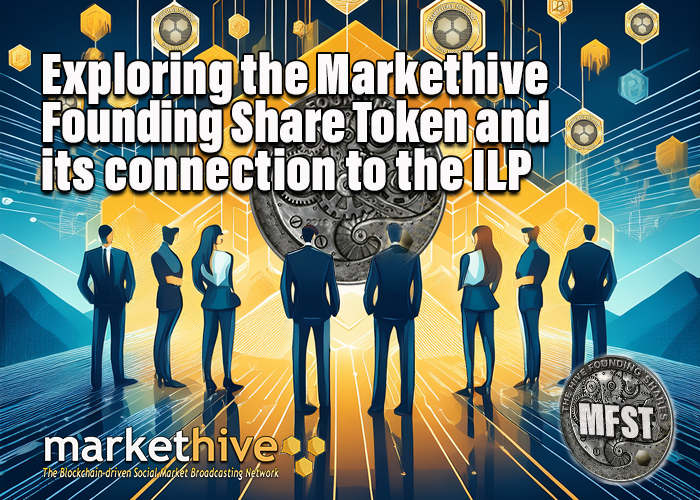
The Markethive Founding Share Token is presented as a cornerstone of the Markethive ecosystem, representing a unique form of digital asset designed to benefit its holders within the platform's broader financial and entrepreneurial framework. This token is intrinsically linked to the Incentivized Loan Protocol (ILP), a program that empowers Entrepreneur One (E1) account holders. The ILP, specifically unlocked by the E1 upgrade, offers a share of Markethive's net profits, access to ad impressions, and a suite of 17 exclusive perks. This structure aims to empower members by distributing value generated within the Markethive network, aligning with the platform's focus on fostering financial independence and freedom for its users. The Founding Share Token is thus a mechanism for users to participate directly in the success and revenue streams of the Markethive platform through their connection to the ILP.
The connection between the Markethive Founding Share Token and the ILP highlights Markethive's strategy to integrate cryptocurrency with a comprehensive marketing and social networking platform. While the article doesn't detail the exact issuance or technical specifications of the Founding Share Token, it implies that holding these tokens grants access to the benefits of the ILP. This incentivized model is designed to create a self-sustaining ecosystem where users are not just consumers but also beneficiaries of the platform's growth. The emphasis on empowering members through profit sharing and exclusive benefits suggests a move away from traditional centralized models, leveraging blockchain technology to create a more equitable and participatory environment for entrepreneurs and marketers within the Markethive network. Source
The X (formerly Twitter) account of a16z crypto, the venture capital firm Andreessen Horowitz's dedicated crypto fund, was reportedly compromised by hackers who used the platform to promote a suspicious airdrop. This incident highlights the ongoing vulnerability of high-profile social media accounts to cyberattacks, particularly within the cryptocurrency space where such compromises can be leveraged for fraudulent schemes. While specific details about the nature of the airdrop or the extent of any user impact were not immediately available in the provided search results, such compromises typically involve attackers posting malicious links designed to trick users into connecting their crypto wallets or revealing sensitive information, leading to potential asset theft. The venture capital firm is a significant player in the Web3 ecosystem, investing in a wide range of crypto and blockchain startups.
This incident is part of a broader trend of social media account compromises targeting prominent figures and entities in the crypto world. Previous attacks have seen X accounts of various crypto influencers, companies like MicroStrategy and Algorand, and even Ethereum co-founder Vitalik Buterin, hijacked to promote scam tokens or phishing links. These scams often employ "pump-and-dump" tactics or aim to steal users' private keys or wallet funds through deceptive airdrops. The ease with which such accounts can be exploited, even with two-factor authentication enabled in some cases, underscores the need for continuous vigilance and enhanced security measures by both platform providers and individual users in the digital asset landscape. Source
David Sacks, the White House's top advisor for crypto and artificial intelligence, believes that the passage of comprehensive stablecoin legislation could unlock trillions of dollars in demand for U.S. Treasuries "practically overnight." Sacks, who serves as President Donald Trump's "crypto czar," specifically cited the Guiding and Establishing National Innovation for US Stablecoins (GENIUS) Act as the key catalyst. This proposed bill aims to create a clear federal framework for stablecoins, requiring issuers to hold easily accessible and safe assets like cash and U.S. Treasury bonds as reserves to back every token in circulation. He argued that with over $200 billion in stablecoins already in existence but largely unregulated, providing legal clarity would legitimize and expand the market, thereby generating significant new demand for U.S. government debt and potentially strengthening the U.S. dollar's global dominance in the digital economy.
Sacks's optimistic outlook comes as the GENIUS Act has shown bipartisan support, having recently cleared a key procedural vote in the U.S. Senate. This momentum is despite some controversy surrounding the Trump family's financial ties to the crypto industry, which critics argue could create conflicts of interest. Nevertheless, Sacks asserts that the bill is a "national economic strategy" that will not only boost demand for Treasuries but also provide a more efficient, cheaper, and real-time payment system globally. The initiative is part of a broader push by the Trump administration to foster a favorable regulatory environment for the crypto industry within the U.S., aiming to bring innovation onshore and enhance consumer protection. Source
Gradient Network, an AI infrastructure firm, has successfully raised $10 million in seed funding to advance its decentralized artificial intelligence (AI) initiatives on the Solana blockchain. This significant investment, led by prominent venture capital firms Pantera Capital and Multicoin Capital, with additional participation from HSG (formerly Sequoia Capital China) and angel investors, underscores a growing confidence in the potential of decentralized AI solutions. Gradient's core mission is to create a more open, sovereign, and peer-powered "machine internet" where intelligence is distributed and owned by the people, aiming to address critical concerns such as privacy, equity, and the concentration of power prevalent in centralized AI platforms like OpenAI and Amazon. By leveraging Solana's high throughput and low transaction fees, Gradient plans to transform everyday devices, from smartphones to personal computers, into valuable nodes within a global decentralized network, enabling faster data streaming and computational tasks.
The funding will accelerate the development and implementation of Gradient's two core infrastructure protocols: Lattica and Parallax. Lattica is designed as a universal peer-to-peer data communication protocol, similar to Bitcoin or BitTorrent, facilitating direct and resilient data flow between devices without relying on centralized servers. The company claims Lattica has already supported over 1.6 billion connections across 190 regions. Parallax, on the other hand, is a decentralized inference engine that allows large language models (LLMs) to be broken down, distributed, and collaboratively executed across a global mesh of heterogeneous devices. This approach enables local data processing, enhancing privacy and reducing reliance on traditional cloud computing, while also offering scalable, cost-effective, and privacy-preserving AI solutions. Gradient envisions this infrastructure supporting the evolution of AI from static deployments to dynamic, multi-agent ecosystems, with Lattica providing the connective tissue for data movement and Parallax redefining how and where AI inference occurs. Source
North Korean state-sponsored hacking groups are intensely targeting the cryptocurrency and Web3 sectors through elaborate job scams, deploying sophisticated malware to steal funds and information. A recent campaign by BlueNoroff, a sub-group of the infamous Lazarus Group, involved deepfaked executives in Zoom calls to trick a Web3 employee into installing macOS backdoor malware. This deceptive tactic begins with an external contact via Telegram, leading to a Calendly link for a Google Meet event that redirects to a fake Zoom domain. During the fake video call, often featuring AI-generated personas of company leadership, the victim is prompted to download a "Zoom extension" to fix a supposed microphone issue. This "extension" is actually an AppleScript that executes multiple malicious payloads, including keyloggers and information stealers, designed to compromise the system and wipe forensic traces.
These crypto job scams are part of North Korea's broader strategy to generate illicit revenue for its regime, particularly for weapons development programs. Threat actors, like those involved in the "Contagious Interview" and "ClickFix" campaigns, create fake companies and recruiter profiles on platforms like LinkedIn and Telegram to lure unsuspecting individuals, especially freelance developers and those in the crypto space. They distribute malware disguised as coding assignments or interview tools, often leading to the deployment of cross-platform malware families such as BeaverTail, InvisibleFerret, OtterCookie, and the newly observed Python-based PylangGhost, which can steal credentials from crypto wallets and browser extensions. The FBI and cybersecurity firms continually warn organizations about these evolving threats, emphasizing the need for stringent identity verification and robust security measures to prevent infiltration and financial loss. Source
Thailand's Securities and Exchange Commission (SEC) has initiated a public consultation on proposed amendments to the rules governing the listing of digital assets on licensed cryptocurrency exchanges within the country. This move is part of Thailand's broader strategy to enhance its position as a global hub for digital assets by establishing a transparent and robust regulatory environment. Key proposals include allowing licensed crypto exchanges to list digital tokens or cryptocurrencies that they themselves issue, or that are issued by related entities, provided these assets are used within blockchain transaction services. The amendments also emphasize stricter disclosure requirements, compelling exchanges to clearly identify individuals associated with the original issuers of listed tokens. This will be supported by a new alert token system in the SEC’s electronic reporting system, aiming to monitor suspicious trading activities and curb insider trading. The public consultation period is open until July 21, 2025, inviting feedback from stakeholders and the general public.
The revised criteria reflect the SEC's commitment to balancing innovation with investor protection. Beyond enabling exchanges to list their own utility tokens under specific conditions, the new rules will require exchanges to ensure that issuers disclose all connected persons within 90 days of the system’s implementation. This effort to increase transparency is crucial in a market that has seen instances of alleged insider trading. Furthermore, this initiative coincides with other significant regulatory developments in Thailand, such as a five-year capital gains tax exemption for crypto trades conducted through licensed platforms and a ban on access to five major global platforms (including Bybit, OKX, and CoinEx) that were operating without local licenses. These collective measures demonstrate the Thai SEC's comprehensive approach to regulating the cryptocurrency market, aiming to foster growth while ensuring investor safety and combating illicit activities. Source
Disclaimer: These articles are provided for informational purposes only. They are not offered or intended to be used as legal, tax, investment, financial, or any other advice.
Featured Image Source: Pixabay















