x






Image Source: Pixabay
Auction House Christie’s Launches Ethereum NFT Marketplace
Christie’s, who long ago made its mark on the NFT scene by auctioning off Beeple’s “Everydays: The First 5,000 Days” artwork for $69.3 million in March 2021, is now stepping further into the space by launching its own marketplace in which auctions take place on the Ethereum blockchain, simply called Christie’s 3.0. on the newly launched marketplace, buyers are able to directly connect their wallets and bid on NFTs. in such a way, it functions very similarly to other well-known marketplaces such as OpenSea. The auction says it will also provide tools for tax and compliance purposes. Christie’s said on Twitter:
We recognize and bring young emerging artists to an international and digitally savvy market. Christie’s 3.0 deepens our ability to connect clients to the best of the NFT market now via a sophisticated and secure blockchain-native platform for sales. Read More
Lack of ‘qualified people’ without more Web3 education, say academics
Blockchain Academy International’s Huxley Peckham says there are already 60 different industries using blockchain tech today.
Australian blockchain academics and educators have called for more robust Web3 education in schools, preparing students for a world that will be dominated by blockchain technology.
Huxley Peckham, head trainer for Blockchain Academy International told Cointelegraph that there are “very few qualified people in the blockchain industry, but there is big demand for qualified people,” noting that worldwide, there are at least 60 different industries using blockchain tech.
Both Peckman, and Blockchain Academy International founder Tim Bowman said it was time to rapidly expand blockchain education in schools in order to prepare for a shift in the world economy. Read More
Warner Music Group Launches Partnership with OpenSea
The first joint project will be an IP-generative ‘NFT Label Pass’ from Web3 startup Probably Nothing.
Warner Music Group—the mega-record label conglomerate that counts Cardi B, Madonna, Dua Lipa and Ed Sheeran among its myriad signed artists—announced on Thursday that it would partner with NFT marketplace OpenSea to accelerate its artists’ expansion into Web3.
The collaboration will grant Warner Music artists early access to new OpenSea products, improved discoverability on the NFT marketplace, and dedicated and featured portions of the OpenSea site for upcoming NFT projects. Artists will also receive specialized support from OpenSea team members to aid both in the expansion of their Web3 fan bases, and in the onboarding of existing fan communities into the NFT space.
“Our collaboration with OpenSea helps to facilitate these [fan] communities by unlocking Web3 tools and resources to build opportunities for artists to establish deeper engagement, access, and ownership,” said Warner's Chief Digital Office Oana Ruxandra in a statement. Read More
Why this UK territory is adopting the Bitcoin Lightning Network
Gibraltar is becoming well known for its pioneering crypto regulations, support for blockchain development and Bitcoin adoption.
The British Overseas Territory of Gibraltar is known for its pioneering crypto regulations, support for blockchain development and Bitcoin adoption, with many retail businesses using the Lightning Network — a layer-two network that enables off-chain transactions — to accept Bitcoin as payment around the peninsula.
Albert Isola, the island city's Minister of Digital and Financial Services, told Cointelegraph:
"When you talk about adoption of the use of Bitcoin, is it going to come? Yes it is, more and more, as more jurisdictions begin to regulate. What is for me the ideal? The ideal is when there are enough countries doing it that we have an international standard regulation where everyone has to comply with. Then it will be enormous, in my opinion."
In April this year, Gibraltar introduced a new regulatory package for distributed ledger technology (DLT) service providers, providing clarity for crypto businesses in regard to threats of market manipulation and insider trading. Read More
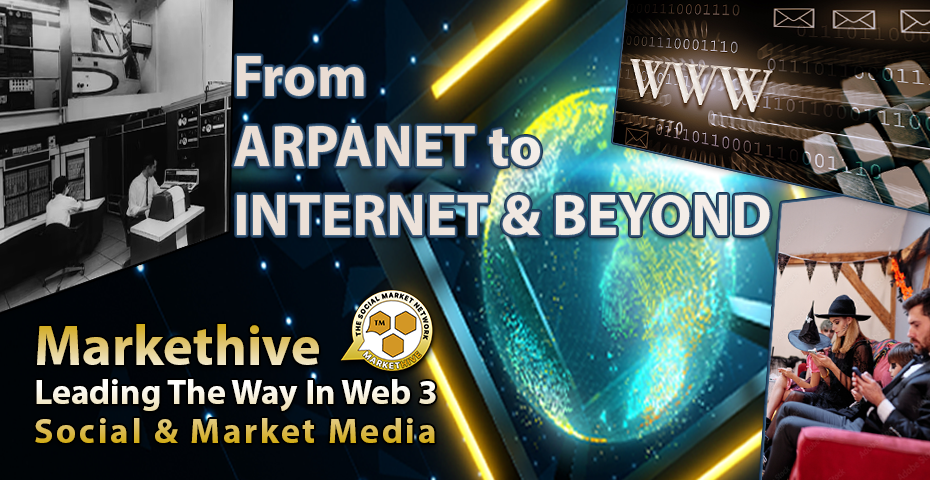
Markethive Leading The Way In Web 3 Social & Market Media
Web 3.0 is the next generation of the internet which people envision will be more decentralized and permissionless. One that's built on decentralized protocols, where users help with content creation and the governance of the web itself. They also have the ability to own a part of the network, so you can think of it as a Read-Write-Own Internet.
There are already several technologies that could serve as the backbone for a Web 3 world. Most point to blockchains like Elrond, Cardano, or Ethereum, for example, but other distributed technologies like IPFS can also be used to decentralize networks.
Thousands of dApps (decentralized applications) are already being built in the Web 3 environment. These often include native tokens to add value to the application to those who hold the tokens. These native crypto assets allow those who participate in the network to share in the value generated from it.
Web 3 promises a decentralized alternative where we are all users, owners, and developers. This quote from Fabric Ventures sums it up beautifully,
“Web 3.0 enables a future where distributed users and machines are able to interact with data, value, and other counterparties via a substrate of peer-to-peer networks without the need for third parties—the result: a composable human-centric & privacy-preserving computing fabric for the next wave of the web.” Read More

MetaMask's New Beta Portfolio dApp to Provide All-In-One Access to Cryptos, NFTs
MetaMask has launched a beta portfolio dApp that allows users to have an overview of their cryptos and non-fungible token (NFT) in one place. To do so, the app connects their accounts and crypto assets across multiple chains in one interface.
The portfolio dApp is available to extension and mobile users. Users must click the "portfolio" link on their browser's extension home screen to connect multiple accounts to access it.
Self-custodial wallet MetaMask is a crypto wallet & gateway to blockchain apps. It is also a tool for interacting with decentralized applications (dApps).
The dApp's "watch any wallet" feature allows users to add their offline or hardware wallet.
MetaMask is also currently developing a feature that will show NFT value and pricing estimate information along with an integrated view of the NFT collection.
Portfolio dApp currently supports assets from seven different networks: Ethereum, Optimism, BNB Smart Chain, Polygon, Fantom, Abritrum and Avalanche. Users can also add their friend’s ENS domain or public address to their watchlist through the dApp, and several tokens can also be added to the watchlist. Read More
Re is Creating a Decentralized Global Insurance Market Using Avalanche
Re is in the due process of constructing a decentralized insurance marketplace by perching itself on the Avalanche platform. This will be on a global level. The exercise will help and assist in tokenizing reinsurance and open the doors for the opportunity of being in a position to reach out and connect with a multitude of institutions, many more than its existing ones.
At this juncture, it is necessary to delve more into what this entity entails. Re is, in actuality, a blockchain-powered reinsurer, which after receiving funding, has parted ways with stealth mode and is presently engaged in the construction of decentralized reinsurance by attaching itself to the Avalanche platform and all of this globally.
The purpose behind this exercise is to be able to heighten all matters by becoming more open regarding its activities. Regarding Re’s present profile, it is a platform that allows recognized investors to connect and offer support to real-world-based insurance companies and have greater insight, so far as the associated insurance policies are concerned. Read More
Blockchain interoperability goes beyond moving data from point A to B — Axelar CEO Sergey Gorbunov
Axelar's co-founder shared his views on blockchain infrastructure and adoption at Converge22 in San Francisco.
Cross-chain communication between blockchains is more than just moving data from point A to B, but how it can connect applications and users for enhanced experiences and fewer gas fees in Web3, outlined Sergey Gorbunov, Axelar Network co-founder and CEO, speaking to Cointelegraph's business editor Sam Bourgi on Sept. 28 at Converge22 in San Francisco.
As the crypto industry has developed over the past few years, blockchain interoperability has seen a surge in demand, attracting venture capital and welcoming players, such as Axelar, which reached unicorn status in February. According to Gorbunov, the company, founded in 2020, started with a premise that cross-chain and multichain capabilities would come to define the crypto space. "The idea is not just to talk about how to connect A to B, but how to connect many to many, right? How to connect everybody with everyone else. And that includes applications and includes users," he explained.
Interoperability is a buzzword in the crypto industry that refers to the ability of many blockchains to communicate, share digital assets and data, and work together, thereby sharing economic activity. As an infrastructure, interoperability is crucial for broader adoption of the technology, as Gorbunov explained:
"We need an ability for the user to execute one call on one chain, and that transaction actually taking place on other chains without them having to go and get a native token of that chain, pay gas, execute themselves and move it back and forth." Read More
What is wrapped Ethereum (wETH) and how does it work?
wETH is the ERC-20 compatible and tradable version of ETH and can be used to interact with other ERC-20 assets.
Traders who use the Ethereum network are familiar with the ERC-20 technical standard and have most likely traded and invested in tokens that utilize it. After all, its practicality, transparency and flexibility have made it the industry norm for Ethereum-based projects.
As such, many decentralized applications (DApps), crypto wallets and exchanges natively support ERC-20 tokens. However, there’s one problem: Ether and ERC-20 do not exactly follow the same rules, as Ether was created way before ERC-20 was implemented as a technical standard.
So, why does wrapped ETH matter? Briefly put, ERC-20 tokens can only be traded with other ERC-20 tokens, not Ether. In order to bridge this gap and enable the exchange of Ether for ERC-20 tokens (and vice versa), the Ethereum network introduced wrapped Ethereum (wETH). That said, wETH is the ERC-20 tradable version of ETH. Read More
Disclaimer: These articles are provided for informational purposes only. They are not offered or intended to be used as legal, tax, investment, financial, or any other advice.















