x






Image Source: Pixabay
Crypto.com Snaps Up Naming Rights to F1 Miami Grand Prix
Following its $100 million sponsorship deal with Formula 1, Crypto.com has signed a nine-year deal for naming rights to F1's newest race.
Cryptocurrency exchange Crypto.com has signed a nine-year deal to become the official title partner of the Miami Grand Prix, the newest race in the Formula 1 calendar.
According to a press release accompanying the announcement, the sponsorship will see the race officially named the Formula 1 Crypto.com Miami Grand Prix, with Crypto.com's logo featuring on the podium and winners' trophies.
The newest event on the Formula 1 calendar, the race forms round five of this year's campaign and takes place on May 6-8, 2022, on a new 5.41km circuit in Miami Gardens. The Miami International Autodrome becomes the 11th venue in the U.S. to host a World Championship Formula 1 race.
The deal will also see the exchange's brand displayed on the Crypto.com Terrace, with views over the track and an exclusive observation deck at the race's fourth turn. Read More
Robinhood Plans to Be ‘Crypto First’ in Global Expansion Push
Trading app Robinhood wants cryptocurrencies to be a central part of its business strategy, according to one of the company’s top executives.
Popular trading app Robinhood is turning its attention to international expansion, a strategy that will also see the San Francisco-based company shift much of its focus on cryptocurrencies, according to Steve Quirk, the company’s chief brokerage officer.
According to Quirk, the company is “doing a lot of exploration about finding compliant ways to expand [the list of supported crypto assets].”
“We also have aspirations to take this brand global and we would do so crypto first,” he told CNBC on Wednesday.
When asked to explain what he means by “crypto first,” given the presence of Coinbase and other major crypto companies in the space, Quirk said that “the path for [Robinhood] to go global and have the most traction is probably through crypto.” Read More
What Will It Take For DeFi To Go Mainstream? Simplicity, Security, And Utility
Decentralized finance app Chainge Finance is bringing DeFi to new users by simplifying tasks like cross-chain bridging and decentralized escrow.
Complexity is the enemy of mass adoption—and if decentralized finance (DeFi) has been anything to date, it’s complex.
It’s true that a niche of crypto pioneers are comfortable navigating the often challenging DeFi ecosystem, from the various different protocols to the nuances of asset circulation.
But the average investor needs a simple, intuitive user experience that makes it easy to participate and provides a feeling of security while abstracting underlying infrastructure behind a familiar interface.
Without that, mainstream users will continue to shy away from DeFi, said DJ Qian, CEO of Chainge Finance. Chainge's DeFi app runs on the Fusion blockchain and allows users to perform complicated operations, including cross-chain bridging and decentralized escrow, with just a few taps. Read More
How One NFT Project Is 'Blurring The Lines' Between Artwork And Assets
ETH in Mellieħa bundles together a digitized painting with the legal right to own a personalized numberplate depicted in the artwork.
Non-fungible tokens (NFTs) can be used to represent almost anything—and while to date, they've mostly been associated with digital artwork, there's no reason that they can't be used to represent physical objects.
Now, an NFT project based in Malta is testing the boundaries of what's possible with these unique digital tokens, with an NFT representing a bundle of digital and physical assets—and tackling head-on the thorny question of what legal rights ownership of an NFT confers on the holder.
ETH in Mellieħa consists of an NFT representing a painting by local artist Debbie Bonello, depicting a street scene in the Maltese village of Mellieħa. After being digitized, the original artwork was destroyed in a clifftop ceremony—meaning that the NFT is the only visual record of it. Read More
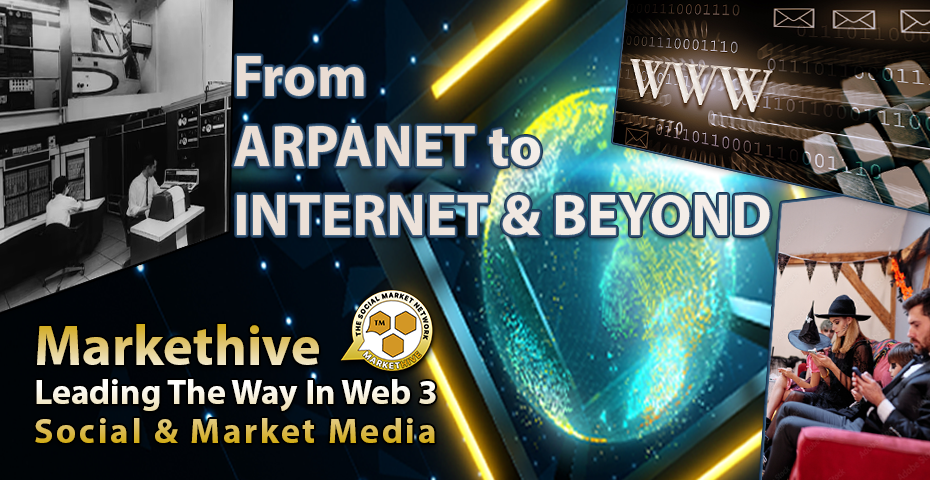
Markethive Leading The Way In Web 3 Social & Market Media
Markethive, the blockchain-driven ecosystem for entrepreneurs, has already successfully bypassed the centralized web services, like AWS and Microsoft, and operates on its own cloud system. The new login system Markethive has developed relinquished the need for 3rd party APIs that are potential vulnerabilities in Web 2 and threaten our freedoms.
Currently, Markethive is expanding its cloud system, called Mining Hives, worldwide. This means all data about Markethive and its users will not be stored on servers owned and controlled by a centralized entity.
Instead, it is a distributed database on the Markethive Blockchain with no single point of failure and no internet disruption or censoring by dictatorial authorities who may decide to shut off the internet.
Web 3 gives us a better chance at building a more inclusive internet that respects all who use it. Decentralized networks can win the third era of the internet for the same reason they won the first era: by winning the hearts and minds of entrepreneurs and developers.
Web 3 is an opportunity to distribute the wealth amongst the rest of us generally paid only to shareholders. Markethive stands tall and is dedicated to delivering the emerging environment of Web 3 to its community; one of self and financial sovereignty. Read More

K-Pop & NFTs: A New Binance Deal Shakes Up Audio On The Blockchain
A new partnership has emerged in the NFT world between global crypto exchange Binance and South Korean entertainment company YG.
Let’s dive into both properties, and how they are striving for a more eco-friendly and sustainable framework for the future non-fungible token (NFT) collaborations.
In this new partnership, Binance will provide the executional assets around the NFT platform and surrounding technological infrastructure, while YG will supply NFT content and gaming assets. The two companies said that creating eco-friendly NFTs will be one of the primary focal points for future collaborations, with a goal of bringing K-pop stars to the metaverse.
This week’s announcement states that the memorandum of understanding (MoU) will reportedly give Binance access to develop digital assets based on the intellectual property associated with these artists. Read More
Is the Future of Real Estate in the Metaverse?
Although the metaverse is not a new concept, it has recently gained much more attention. Many are now becoming familiar with the idea, and are looking into what its future offers and how they can be a part of it. The metaverse will completely transform the current way of life for the average individual, affecting work, trade, entertainment, leisure, exercise, social interactions, and everything in between.
Apart from the retail players, big tech companies are also getting into the space. Facebook, the world’s most popular social media platform as of 2021, has recently rebranded to “Meta”, showing its commitment to this new space. According to an official announcement, rebranding was necessary because the company is shifting its focus to bring the metaverse to life. Footwear and apparel giant Nike is also preparing for the metaverse and has signified interest in creating its own space, as well as Adidas, another powerhouse brand.
The metaverse will transform many aspects of life by improving interpersonal interactions, establishing communities, and helping businesses grow. The climate required to create and operate a successful business will also change considerably. Firstly, the metaverse will allow businesses, regardless of size, to establish digital stores for their goods and services. A significant advantage of these capabilities for the average company is that opening a physical store is no longer necessary. This could significantly reduce overhead costs without having to sacrifice customer reach. In a virtual world, a company can tap into wider audiences beyond the physical boundaries imposed in a real-life setting. Read More
Charge DeFi: How Algorithms Create Stability in a Decentralized Way
Charge DeFi is a combination of an algorithmic crypto token and rebase mechanics. A stablecoin is a cryptocurrency whose value is pegged to a single unit of a fiat currency, usually 1 USD. Normally, this is by means of “tethering” in which a company acquires an equivalent amount of say, USD and promises to back each unit of stablecoin 1:1. However, inherent in this mechanism is the requirement to trust the guarantor, which requires constant and often expensive monitoring.
An algorithmic crypto token takes stability to the next level. Instead of a fixed peg, an algorithm is used to adjust the price of a token-based on pre-set conditions which can be written into a smart contract and launched in a fully decentralized way. Consequently, there is no input by any 3rd party thereafter, with the algorithm executing according to demand, supply, and market movements.
Allowing for full, inexpensive independent monitoring as well as a lack of need to trust the word of a guarantor. Read More
Why Is NFT Ticketing the Future of the Ticketing Industry?
NFTs will take center stage in 2022. They have established themselves as a major market segment in the crypto industry, with more than $20 billion in trading volume and mainstream participation from all corners of the world. NFTs have now become a market-expanding technology. So, it is no longer limited to art or any type of digital collectible. Its true ownership and non-fungible characteristics enabled multiple use-cases in the real world.
Among many innovative use-cases of NFTs, the one that stands out and can immediately make a global impact is ticketing in the music industry. For years, the music industry has been stagnant, with incremental improvements that made no significant impact on artists and the music landscape as a whole.
In addition, the music ticket market is fragmented. Only a few handful companies control the market by scalping and using bots to scoop up tickets at low prices and benefit from the arbitrage. This creates a multi-billion dollar secondary market where fans have to purchase at exorbitant prices and still face uncertainty whether they will be allowed to an event.
To escape from this centralized system and give back control to artists, it is essential to incorporate NFT ticketing at scale. Read More
Disclaimer: These articles are provided for informational purposes only. They are not offered or intended to be used as legal, tax, investment, financial, or any other advice.