x




Image Source: Pixabay
What is Solana (SOL) Pay, and how does it work?
Solana Pay is an open protocol for developers to build on and customize, with standardized payment criteria.
PayPal was a massive innovation in the payments processing industry. The financial brainchild of Peter Thiel, Max Levchin, and eventually, Elon Musk aimed far ahead of its time, facilitating instant payments between customers, businesses, and more while utilizing the internet.
Solana (SOL) Pay is considered by many to be the next innovation in the payments processing arena, facilitating payments while taking nonfungible tokens (NFTs) and Web3 into account. Some are going so far as to call Solana’s new payment protocol the Visa or PayPal of Web3. This post will break down Solana Pay and how it works so you can decide whether the project is all it’s cracked up to be.
But first, it’s vital to understand Solana before getting into the digital payment platform Solana Pay. Read More
Web3 relies on participatory economics, and that is what is missing — Participation
Web3 needs to reframe around participation in terms of technology, architecture, design, and talent to achieve a decentralized internet.
Web3 is hailed as a technology paradigm that is fueled by the creator economy and is in the future, or rather, the next evolution of the internet. As we draw evolutionary comparisons of the technology that underpinned everything from information consumption to content creation, Web2 contributed an unparalleled economic growth and represented a significant era in human evolution with new ways to work, consumer information, and progress in human civilization. So with this enormous success of Web2, why is there a need for Web3?
As we rethink the internet, which relies primarily on a few centralized entities that have devices, channels of information that feeds the social media, mobile apps and provides connectivity points between service providers and seekers of these services, the control over these channels provides the custodian of this infrastructure not only monopolistic control but also a “too big to fail” economic choke point. So rethinking the internet, which was designed primarily to move information and morphed into moving value and truth, is a fundamental shift in empowering creators and participants and not just the custodians on the infrastructure. Read More
Going Legit: The Battle to Save NFTs’ Reputation
From rug pulls to scams to mocking the art, NFTs have faced criticism from regulators and mainstream media. Can the tech overcome the critics?
In just a few short years, NFTs have gone from a dry technical standard for non-fungible tokens to a $23 billion market. But as fast as interest in NFTs expands, so it seems that the volume of negative headlines around the space grows.
A crypto gold rush has cheapened the reputation of NFTs in the mainstream media. Once a transformative technology that could revitalize the worlds of art and business, they’re now painted as something to be avoided for fear of falling foul of authorities—or scammers looking to make a quick buck off your back.
From rug pulls to fart jars with sketchy backstories, the world of NFTs has come to encapsulate the worst of the Wild West at present. News that Crypto’s own sheriff—the SEC under Gary Gensler—has NFT artists and marketplaces in its crosshairs has, for many, confirmed the reputation of NFTs as a bonanza for crypto outlaws. Read More
StarkWare set to reach £4.5bn valuation for its blockchain scaling solutions
StarkWare, an Ethereum Layer 2 start-up, is on track to close a $100 million (£76m) funding round, according to Israeli news source Calcalistech.
Whilst not yet announced, the funding will follow a $50 million (£38m) Series C from November last year that pulled in investors such as Sequoia Capital, Paradigm, Three Arrows, and more. Back then, the company was pegged at a $2 billion (£1.53bn) valuation.
Now expected to push for a $6 billion (£4.57bn) valuation, StarkWare’s rapid growth highlights the trend in masses of capital being allocated to Layer 2 Ethereum solutions. Polygon, which offers a host of Ethereum scaling solutions, recently raised $450 million (£332m) at a $13 billion (£9.5bn) valuation.
Founded in 2018, StarkWare aims to use zero-knowledge proof to solve problems inherent to blockchain technology. It uses a highly-efficient method for blockchain computation, that, until recently, was only available to its clients through its scaling engine StarkEx. Read More
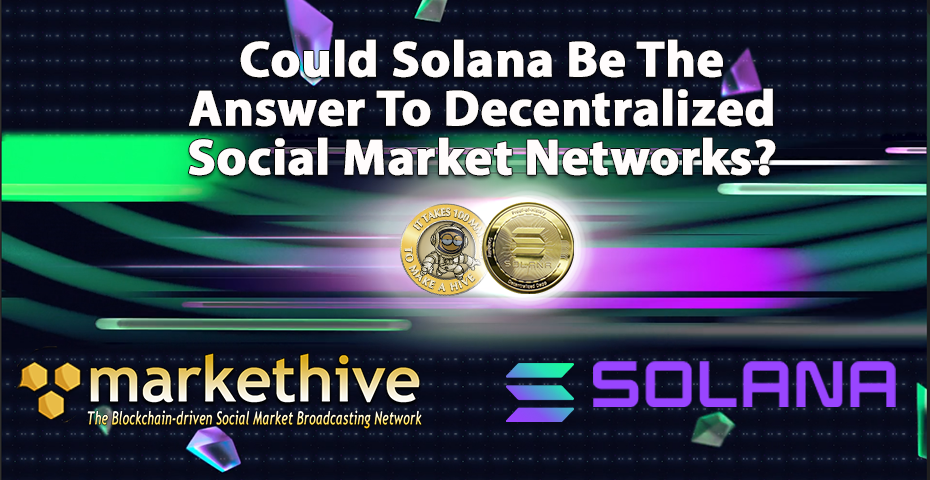
Because of Solana’s POH method, it can horizontally scale the rest of the blockchain, the same way that operating systems and databases scale their software. Each Solana team member has over a decade of experience working in operating systems GPU acceleration. Compilers, networks, etc., giving them extensive and deep experience optimizing software.
Solana is based on scaling software with hardware, with the vision of building the world's largest decentralized, single chart blockchain. The only way to do that is by scaling all the core technologies with hardware.
Scaling the Blockchain in this way delivers a cheap cryptographic base for financial transfers and, more importantly, outside of finance. It is a way for Solana to build a better web experience for social media communities regarding micropayments.
Also, advertising-based revenues can be relinquished for social networks, leading communities to generate value by self-expression, creating their own content, and growing the network and the connections within the community, creating a better world for all.
Solana and its technology look favorable as the conduit to assist in making Markethive the go-to for an alternative and autonomous, censorship-free platform providing all components of social media, marketing, broadcasting, publishing, eCommerce, and business facilitation. A cottage industry economy for people from all walks of life to thrive. Read More

Cryptocurrencies against the ‘silent thief’: Can Bitcoin protect capital from inflation?
Rising inflation forces investors to look for defensive assets. What can the cryptocurrency market offer them?
The world is becoming increasingly volatile and uncertain. The assertion that “inflation is the silent thief” is becoming less relevant. In 2021, inflation has turned into a rather loud and brazen robber. Now, inflation is at its highest in the last forty years, already exceeding 5% in Europe and reaching 7.5% in the United States. The conflict between Russia and Ukraine affects futures for gold, wheat, oil, palladium, and other commodities. High inflation in the U.S. and Europe has already become a real threat to the capital of tens of thousands of private investors around the world.
Last week at the Federal Open Market Committee (FOMC) meeting, Federal Reserve Chairman Jerome Powell said that he would recommend a cautious hike in interest rates. At the same time, Powell mentioned that he expected the crisis in Eastern Europe to not only result in increased prices on oil, gas, and other commodities but boost inflation, too. Powell also explicitly reaffirmed his determination to raise the rate as high as necessary, even if it will cause a recession.
Crypto to the rescue. Read More
More Than 80% of the Funds Locked in Decentralized Finance Are Kept on 5 Chains, 21 Different Defi Protocols
In mid-March, the top five blockchains — in terms of total value locked (TVL) in decentralized finance (defi) — currently command more than 82% of the $198 billion TVL in defi across all blockchains. Each of these chains offers different types of defi protocols like decentralized exchange (dex) platforms and lending applications, allowing people to designate their finances in various ways.
5 Blockchain Networks, 21 Defi Protocols
Today, there’s just under $200 billion in defi and that’s just the total value locked (TVL), as it doesn’t include the large quantity of tokens tied to these specific protocols. Right now, five different blockchain TVLs represent 82% of the $198 billion locked in defi protocols. The chains include Ethereum, Terra, Binance Smart Chain, Avalanche, and Solana. Read More
Solana to Replace Ethereum in Blockchain Gaming, Paradox Studios Founder Says
Compared to Ethereum’s Solidity language when developing play-to-earn (P2E) games, the ease of use of Solana’s building language- Rust will give Solana a competitive edge, according to AmioTalio- the founder of UK-based animation and game development platform Paradox Studios.
With blockchain gaming continuously accelerating the metaverse narrative, AmioTalio believes that the huge funding that Solana is offering developers is intended to woo them from the Ethereum network, and it is starting to take shape. He pointed out:
“Solana will leave Ethereum in the dust this year when it comes to gaming. They now have a huge list of games looking to launch this year on Solana, which will take them into the lead position in this area, in my opinion.” Read More
Decentralized finance as a new globalization accelerator
Decentralized finance provides the necessary financial freedom tools for digital nomads in a world with rigid borders.
Those who studied history well might remember the city-states of medieval Europe. Back then, caravans of merchants traveled from one city-state to another, bringing luxury goods and news from far-away places. It was this lifestyle that enabled these merchants with freedom of mobility and choice. It is a very similar concept to the one described by Michael Ondaatje in his book The English Patient. The author envisioned complete freedom, without borders or nationalities limiting people in their strive for development and progress.
Today, broader access to the financial markets through decentralized finance marks the beginning of the open world. DeFi has been highly positive from the standpoint of wealth accumulation and cheaper financing, giving new meaning to the concept of “finance for everyone.” By removing intermediaries via the use of blockchain technology, DeFi widens the scope of financial transactions while significantly lowering their costs. It is evident that DeFi is the future of finance and other industries. The only question remaining is: How fast will we get there? Read More
Disclaimer: These articles are provided for informational purposes only. They are not offered or intended to be used as legal, tax, investment, financial, or any other advice.















