x




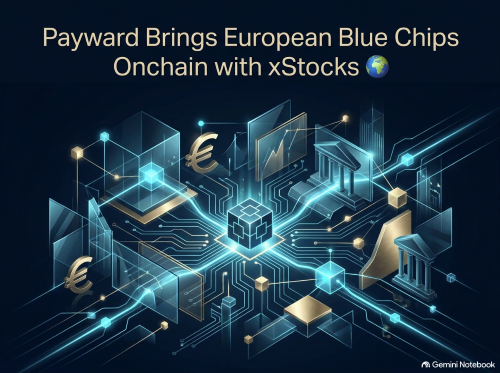
The boundary between traditional equity markets and decentralized technology is blurring faster than ever. Payward, the parent company of crypto exchange Kraken, has taken another major step toward 24/7 global investing. In its largest international expansion beyond American equities to date, Payward has launched over 200 UK and European Union tokenised stocks on its xStocks framework.
Household corporate names including HSBC, Shell, LVMH, and Airbus are now available as digital tokens onchain. The launch opens up unprecedented access for international investors seeking direct exposure to European heavyweights around the clock.
However, behind the headlines lies a striking regulatory twist: despite bringing iconic British companies onto the blockchain, retail investors based in the United Kingdom are currently prohibited from purchasing these newly minted tokens.
Here is an in-depth look at what this expansion means for real-world asset tokenisation, how the underlying infrastructure operates, and where tokenised stock markets are heading next.
With this latest wave of European listings, the xStocks framework has officially surpassed 1,500 tokenised assets. The platform’s suite spans a broad spectrum of single-name equities, exchange-traded funds (ETFs), and initial public offerings (IPOs), solidifying its position as one of the largest real-world asset (RWA) offerings in the digital asset space.
Since introducing tokenised equities, Payward’s growth metrics have scaled rapidly. The xStocks ecosystem now holds over $1.1 billion in assets under management, has processed more than $45 billion in total transaction volume, and boasts a global user base of over 550,000 unique token holders.
As highlighted in a recent Decrypt report, this rollout serves as a clear proof-of-concept that public blockchain rails can support traditional capital market assets at scale without sacrificing security or settlement efficiency.
For tokenised equities to command institutional credibility, strict collateralisation and regulatory compliance are essential. Every xStock token minted onchain is backed 1:1 by an actual share of the underlying public company.
When an investor buys an xStock token, an equivalent physical share is purchased and held in safe custody by a regulated financial institution for the entire duration the token trades. This ensures that trading volume onchain translates directly into order book demand for the publicly listed equities themselves.
To power this rapid expansion, Payward partnered with GTN, a global brokerage infrastructure provider handling execution and custody. Thanks to GTN's cloud-native global network, Payward was able to structure, tokenise, and deploy hundreds of European equities in a matter of weeks. The announcement, which Payward shared via an official update on Payward's X page, confirmed that this European expansion is merely the first wave of a broader international rollout.
The new UK and EU tokens are designed for seamless interoperability across decentralized finance (DeFi). Available for trading on Kraken and through member platforms in the xStocks Alliance, they operate natively across multiple blockchain networks, including Solana, Ethereum, TON, Ink, and X Layer.
Mark Greenberg, Chief Commercial Officer at Payward, framed the launch around a clear vision: an investment portfolio should not be constrained by geographical borders or traditional exchange opening hours. The ultimate ambition is a single, unified global market where any listed company can be owned by any investor, regardless of location or local broker constraints.
The expansion underscores an interesting paradox in modern digital asset regulation. Whilst premier London Stock Exchange listings such as HSBC and Shell are now tokenised and accessible to investors across more than 110 international markets, domestic UK investors remain locked out.
Due to local regulatory requirements and jurisdictional restrictions surrounding digital assets and tokenised derivatives, xStocks are unavailable to residents of both the United Kingdom and the United States.
This creates a peculiar situation: a retail investor in South America or Asia can trade tokenised shares of a London-headquartered energy company on Solana on a Sunday afternoon, while a trader sitting in London cannot legally touch the tokenised version of their local blue chip.
Payward’s push into tokenised equities is not occurring in isolation; established stock exchanges are actively backing the effort through strategic equity investments and commercial partnerships.
According to Payward's official press release, tokenising the top 100 London-listed equities fulfils part of a strategic partnership struck with the London Stock Exchange (LSE) earlier this year. Subject to regulatory approval, the LSE plans to list xStocks and enable trading on LSE 24, its planned near-24-hour trading venue, in 2027.
Furthermore, major global exchange operators have taken significant financial stakes in Payward:
With hundreds of Hong Kong-listed equities scheduled to join the xStocks ecosystem in the coming weeks, tokenised stocks are rapidly evolving from an experimental crypto primitive into a core component of global capital markets.
Bringing 200+ UK and European equities onchain marks a decisive step toward dismantling old geographical and operational barriers in stock trading. By combining institutional-grade custody with the speed, transparency, and continuous operating hours of blockchain technology, Payward is laying the groundwork for a borderless financial system.
While regulatory access in home markets like the UK will take time to catch up, the broader trajectory is unmistakable: capital markets are steadily moving toward a digital-native, 24/7 future.
Disclaimer: This article is provided for informational purposes only, mistakes may be made, and it's not offered or intended to be used as legal, tax, investment, financial, or any other advice.