x





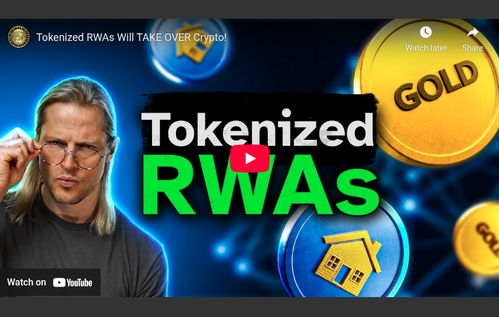
"Many people believe that crypto is the future of finance, but it looks like it’s going to be just one small part of the broader digital asset landscape.
The dominant player in this digital asset landscape is likely to be tokenized RWAs, which have already been growing exponentially over the last year.
Whereas crypto’s growth could stop during the bear market, tokenized RWAs look like they’re going to go keep going up and to the right, which is why today we’re doing a deep dive. Enjoy!"
~ Coin Bureau
Tokenized Real World Assets (RWAs) are set to dominate the digital asset ecosystem, moving beyond traditional cryptocurrency as the main niche. The current process for issuing and trading assets like stocks involves numerous intermediaries such as underwriters, auditors, broker-dealers, and clearing agencies, making the process lengthy and taking about a day to settle. By contrast, RWAs leverage blockchain technology—a shared, consensus-based database—to automate most of these functions. For instance, the blockchain can be designed to handle regulatory permissions and verify trades, eliminating the need for many intermediaries and making the issuance and trading process much faster and more efficient, only requiring a few forms for regulators like the SEC. While traditional crypto tokens often lack backing, RWAs are typically backed by real-world assets held in custody, such as stocks, bonds, or physical gold.
RWAs exist on two main types of blockchains: permissioned and permissionless. Permissioned blockchains are controlled by traditional finance institutions and offer regulatory compliance, which is expected to attract the largest pools of capital in the long term, potentially making them the future hub for RWAs. Permissionless blockchains, like most current crypto chains, allow anyone to participate, but large institutions are currently hesitant to commit large capital pools due to compliance concerns. RWAs can be further divided into "native" and "non-native." Native RWAs, such as Central Bank Digital Currencies (CBDCs) or tokenized stock issued directly on a blockchain without a physical counterpart, are expected to grow as stocks, bonds, and currencies become natively tokenized. Non-native RWAs, like tokenized gold, are backed by physical assets held elsewhere. In the short term, non-native RWAs like precious metals and stocks on permissionless blockchains have the most potential, but the long-term potential lies with native RWAs on compliant, permissioned blockchains. The growth of the RWA market is also intertwined with stablecoins, as investors will need to purchase stablecoins—which are typically backed by a country's debt—to access these markets, effectively subsidizing government spending.
0:00 Intro
1:00 What Are Tokenized RWAs?
5:04 How Do RWA Blockchains Work?
9:18 What Types Of RWAs Are There?
12:41 Which RWAs Have Potential?
Source - Coin Bureau YouTube: https://www.youtube.com/watch?v=EXT2cszmpyI
Disclaimer: This video is provided for informational purposes only, and not offered or intended to be used as legal, tax, investment, financial, or any other advice.















