x




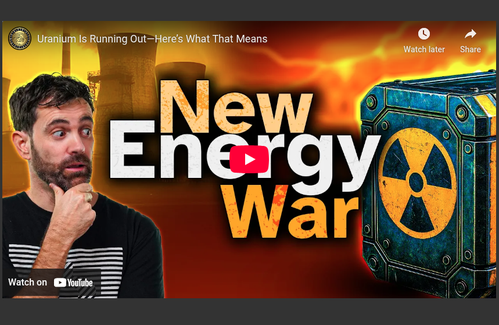
"Nuclear was supposed to be finished after Fukushima. Now Microsoft's resurrecting Three Mile Island, China's building 150 reactors, and even Germany's reconsidering.
Everyone's suddenly desperate for uranium - the commodity they spent decades trying to kill. But there's something nobody's discussing: a supply crisis that can't be fixed with money, and a dependency so complete that the west has to beg Russia for fuel."
~ Coin Bureau
The video discusses the resurgence of nuclear power and the looming global supply shortage of uranium, the commodity essential for fuelling nuclear reactors. With companies like Microsoft investing in nuclear to power AI, and China planning 150 new reactors by 2035, the demand for uranium is projected to more than double by 2040. However, current uranium mines are expected to be depleted after 2030, and developing new mines can take up to 20 years, creating a massive chasm between future demand and available supply. The uranium production cycle is complex, involving mining (often via in-situ leaching), conversion into gas, and enrichment to increase the concentration of the fissile U-235 isotope from 0.7% to the 3-5% needed for reactor fuel. This lengthy and challenging process, combined with geopolitical risks, makes the uranium supply chain highly vulnerable.
The second part highlights the stark geopolitical dependencies created by this supply-demand mismatch. Kazakhstan dominates mining, producing 43% of the world's uranium, but the enrichment capacity is highly concentrated, with Russia and China controlling nearly two-thirds of the global market. The United States, despite operating the world's largest fleet of 93 reactors, produces less than 1% of its annual uranium needs and relies heavily on imports, including from Russia for enrichment services. This dependency is the result of past policy decisions, such as the privatization and closure of American enrichment facilities in the 1990s and 2000s, while China adopted a state-backed approach to build its own sovereign nuclear fuel supply chain. This concentration of control over both the raw material and the enrichment process has granted enormous power to a few countries and companies, creating a market where political risk often supersedes economic fundamentals.
0:00 Introduction
1:01 What Is Uranium?
3:50 The Modern Fuel Cycle
8:08 Who Has It, Who Needs It
11:59 Corporate Control
15:26 The Supply Crunch
19:45 How the West Sold its Nuclear Future
Source - Coin Bureau YouTube: https://www.youtube.com/watch?v=nodScrkKLX0
Disclaimer: This video is provided for informational purposes only, and not offered or intended to be used as legal, tax, investment, financial, or any other advice.















