x




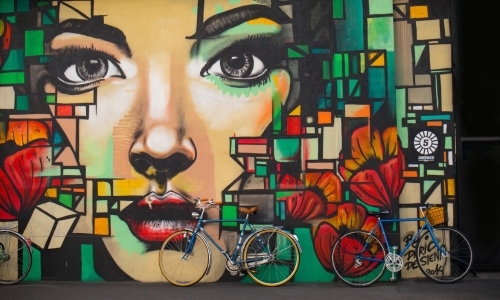

Guys, let’s use crypto to save the local arts centre! It sounds like the plot of a drama for young adults but, nope, it’s reality: a historic art and music venue in Miami is using blockchain to keep the lights on and to raise funds for local graffiti artists.
Graffiti artists come from all over the world to stay at Esquina de Abuela, an arts center in Alapatta, one of Miami’s hottest neighbourhoods for street art. Instead of paying money to stay there, some artists paint a mural at the location. But Esquina de Abeula’s running out of money—and wall space—so it needs a new way to raise cash.
Art Rozenbaum, who runs a mechanical engineering consultancy firm, came up with the idea to tokenize a mural painted on the center, called “Precolumbian,” by the Ecuadorian street artist Apitatán. Proceeds are to be split five ways between Rozenbaum, his partner Brian Cordoba, the artist Apitatán, and Esquina de Abuela.
“It's very difficult to monetize graffiti art. It's not like a regular painting that you can just sell,” Rozenbaum told Decrypt. “The nature of street art is such that it is very temporary. Somebody can paint a beautiful mural today. Then a couple months from now, somebody else can paint another beautiful mural over it, and the previous painting will be lost,” he said.
Tokenizing it keeps the “essence” of the mural alive forever, said Rozenbaum. “People would buy this token for the same reason someone might buy a print, or any other rare collectible. It just happens that this rare collectible is an asset on the blockchain, instead of a piece of paper or a ceramic wall plate,” he said.
On December 3, after about a year of development, the token, also called PRECOLUMBIAN, went live on the Counterparty platform, a decentralized exchange that runs on the Bitcoin blockchain. For each .0015BTC that is sent to its payment address, 1 PRECOLUMBIAN token will be sent to the address the payment came from.
The token economics includes a burn feature that’s designed to encourage people to buy more tokens. If you buy ten PRECOLUMBIAN tokens and burn them, you’ll get one PRECOLUMBIAN.rare token. Burn 10,000, and you’ll get the PRECOLUMBIAN.ultrarare. “By burning tokens, [burners] are reducing the total number in circulation, thus increasing scarcity, which should increase the value of the base token for all the people who have it,” said Rozenbaum.
The token supply is locked at one million, but, even after a soft launch during Art Basel Miami on December 8, then an official launch at the end of Blockchain Week in Miami on January 19, 2020, Rozenbaum hasn’t sold a single token. “We're trying to approach either the mayor or the City of Miami to be our first buyer,” he said. For now, artists and influencers are interested in helping out, said Rozenbaum.
If it works, the project could help save the historical site. Fabian Martinez, the owner of Esquina de Abuela—Spanish for “Grandma’s Corner”—inherited the house from his grandmother, a Cuban revolutionary who settled in Miami. When her grandson became the owner, he named it in her honor, and turned it into a center for the street art community. On blockchain’s immutable ledger, the legacy ought to last forever.
Article produced by Robert Stevens
https://decrypt.co/19453/why-street-art-in-miami-is-being-tokenized-on-bitcoin