x




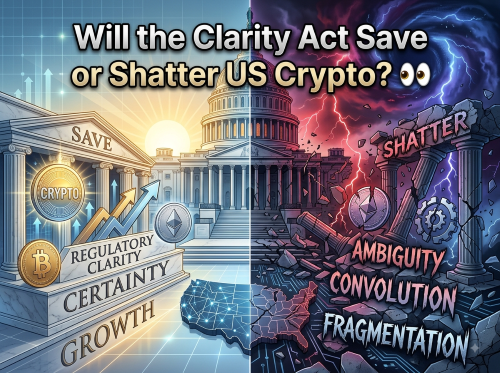
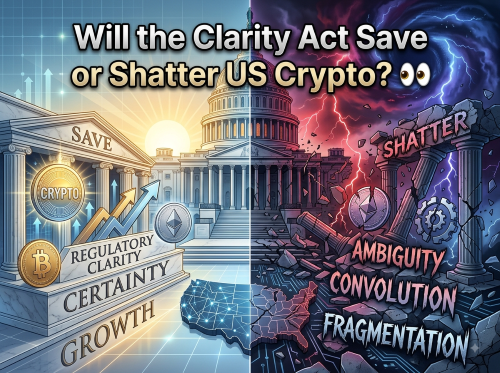
The debate surrounding cryptocurrency regulation in the United States has reached a critical turning point. While headlines across social media declared the Digital Asset Market Clarity Act dead after it failed to cross the finishing line before the August legislative recess, the reality behind Senate doors tells a remarkably different story. A crucial procedural filing has locked in an official date for a Senate vote, bringing unprecedented urgency to the future of digital asset oversight in America.
Despite widespread speculation that regulatory progress had ground to a halt, Senate Majority Leader John Thune filed a key procedural motion known as cloture on the motion to proceed. Under Senate Rule 22, this filing guarantees that the chamber must take a recorded vote on whether to formally take up the legislation. The vote is set for 2:15 p.m. on Tuesday, 15 September.
For four years, the cryptocurrency industry has campaigned for concrete regulatory schedules in Washington. Now, for the first time, every senator will be forced to take an official on-the-record position.
Currently sitting on the Senate calendar as Calendar Number 423, the Clarity Act is a sweeping market structure bill designed to establish clear boundaries for digital assets. Its primary objective is to resolve long-standing jurisdictional turf wars between the Securities and Exchange Commission (SEC) and the Commodity Futures Trading Commission (CFTC).
Every central exchange, token issuer, decentralised finance (DeFi) protocol, custodian, and market maker operating within the United States stands directly downstream of this decision.
The House of Representatives previously passed its version of the bill with a decisive 294 to 134 vote, supported by 78 cross-party Democrats. Since then, Senator Cynthia Lummis merged work from the Banking and Agriculture committees into a unified 616-page Senate legislative framework.
Passing cloture requires a three-fifths majority, meaning 60 votes are needed to limit debate and proceed. With Republicans holding 53 seats, the bill requires a minimum of seven Democrat crossover votes—assuming complete Republican unity.
However, achieving unanimous party support is rarely straightforward. Independent analyses indicate that internal Republican concerns regarding community banking, farm credit, and libertarian principles could trim solid Republican support closer to 50 votes. Consequently, proponents may need between seven and nine Democrat crossovers.
While a bloc of crypto-curious Democrats exists within the chamber, the primary obstacle is time. The Senate returns on 14 September with approximately 14 active session days before legislative business effectively halts for the upcoming midterm elections. Within that narrow window, Congress must also tackle a government funding deadline on 30 September, a Russia sanctions package, and a substantial backlog of judicial and executive nominations.
Surprisingly, the main friction point holding up negotiations is not an institutional agency power struggle between the SEC and CFTC. Instead, the central dispute revolves around ethical safeguards and conflict-of-interest disclosures surrounding high-profile political figures.
Disclosures revealing that President Trump earned over $1.4 billion from digital asset ventures altered the climate surrounding compromise negotiations. The current legislative text includes provisions prohibiting the president, vice president, and their spouses from directly issuing digital tokens while in office. However, critics highlight key limitations:
Lead Democrats, including Ranking Member Elizabeth Warren, contend that these guardrails are insufficiently robust. Conversely, proponents argue that no sitting administration has voluntarily accepted such self-imposed ethical boundaries, pointing out that exposure to individual state litigation poses severe legal risks.
Prediction platforms present a stark contrast between procedural certainty and actual legislative enactment. Probabilities for the Clarity Act being signed into law within the year hover between 13% and 21%. Conversely, prediction markets for the 15 September Senate vote occurring stand near 88%.
This sharp divergence highlights that while the market is confident a roll call vote will happen, investors remain sceptical about the bill surviving the broader legislative process.
In terms of asset prices, spot cryptocurrencies such as Bitcoin have largely held steady around $64,000, shrugging off the legislative friction. In contrast, crypto-adjacent equities like Coinbase have experienced noticeable downward pressure, reflecting market sensitivity toward long-term regulatory certainty in the United States.
The impending vote marks a pivotal moment for digital asset regulation in the United States. If the Clarity Act secures the requisite 60 votes to move forward, it represents the clearest step yet towards establishing formal, written statutory law for digital assets.
Even if the vote falls short of the necessary threshold, the filing of cloture eliminates regulatory ambiguity. For the first time, market participants will possess an exact record of where every lawmaker stands, providing a clear map for future legislative efforts. Come 15 September, the legislative debate will transition from speculation into absolute clarity.
Coin Bureau - The Vote That Could Break US Crypto
"The Senate has put the Clarity Act back on the calendar with a locked-in vote for September 15th. This bill decides which regulator controls US crypto, impacting every exchange, project, and investor.
We walk through the real state of play, the political odds, and why the market might be missing the true stakes. Clarity is closer and more complicated than anyone expected. Don’t get caught off guard."
~ TIMESTAMPS ~
0:00 – Is the Clarity Act Really Dead?
2:11 – The Crucial Senate Vote Breakdown
4:22 – Will Democrats Cross the Aisle?
6:32 – The Trump Family Ethics Roadblock
8:42 – What the Prediction Markets Are Missing
10:52 – How This Changes Crypto Forever
Source 👉 https://www.youtube.com/watch?v=7rUiQ0vnQpI
Election info changes quickly. Verify responses with official sources.
Disclaimer: This article is provided for informational purposes only, mistakes may be made, and it's not offered or intended to be used as legal, tax, investment, financial, or any other advice.