x




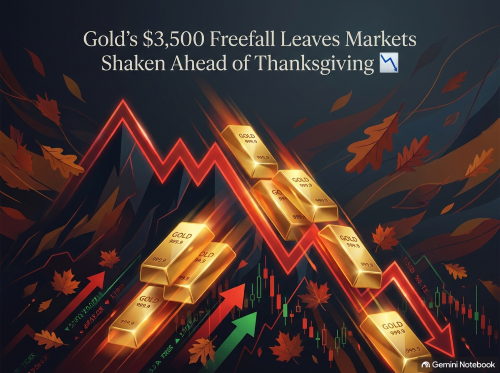
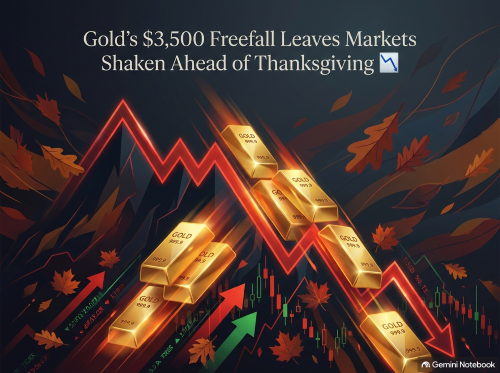
Precious metals have experienced one of their most turbulent trading weeks of the year, with spot gold plunging over eight per cent to hit a 14-month low near $3,500 per ounce. A toxic cocktail of hawkish Federal Reserve expectations, surging US Treasury yields, and forced liquidations driven by a tech-heavy equity sell-off has shattered short-term bullish momentum.
As traders prepare for a holiday-shortened trading week, pessimism has taken hold across both institutional trading desks and retail investor communities.
The trading week started on a relatively quiet note, with spot gold opening at $3,869.30 per ounce and briefly peaking at $3,901.40. However, the initial stability vanished rapidly as macroeconomic realities asserted themselves.
A sharp acceleration in selling pressure pushed bullion decisively beneath key psychological thresholds. By Friday afternoon, spot gold sank to a weekly low of $3,502.93 per ounce before settling slightly higher near $3,543.60. Over the course of five trading sessions, gold shed more than 8.7% of its value, registering one of its sharpest weekly retractions in recent memory.
Several macro catalysts combined to fuel the downturn:
Beyond interest rate expectations, market mechanics played a critical role in accelerating gold’s decline. As technology and financial stocks stumbled into a pronounced sell-off, leveraged institutional investors were hit with margin calls.
To cover losses in equity portfolios, fund managers were forced to raise cash quickly by liquidating their most liquid and profitable assets—primarily gold and silver.
Precious metals analysts note that this type of forced selling reflects systemic liquidity needs rather than a fundamental collapse in gold’s long-term thesis. When equity markets experience sharp drawdowns, gold often acts as an emergency source of liquidity before stabilising.
Another key factor influencing market sentiment is the shifting narrative surrounding inflation. For much of the past two years, investors flocked to gold as a primary hedge against rising consumer prices. However, recent economic indicators suggest that inflationary pressures may finally be cooling off.
Softening energy prices, lower crude oil benchmarks, and a drop in base metals like copper and silver have led several strategists to argue that disinflation is taking root. A noticeable drop in consumer inflation expectations in recent survey data reinforces the view that gold’s role as an immediate inflation shield is temporarily working against its price action.
Market sentiment across institutional desks and retail trading communities has turned distinctly cautious ahead of the holiday period.
According to the latest Kitco News sentiment analysis, a clear majority of market participants expect continued price weakness in the immediate future:
This widespread shift in mood underscores how quickly market momentum can reverse when technical support levels fail to hold.
Chartists and technical analysts are closely monitoring several downside zones to see where gold might establish a firm floor:
Trading volumes are expected to thin out significantly as US financial markets close for Thanksgiving. However, the days leading up to the holiday will feature a heavy concentration of crucial economic data releases, including:
Investors should prepare for potential volatility, as low liquidity during holiday periods can amplify price swings in either direction.
Market participants will be watching closely to see whether buyers step in to defend the $3,500 level or if thin holiday liquidity triggers another leg down.
Disclaimer: This article is provided for informational purposes only, mistakes may be made, and it's not offered or intended to be used as legal, tax, investment, financial, or any other advice.