x




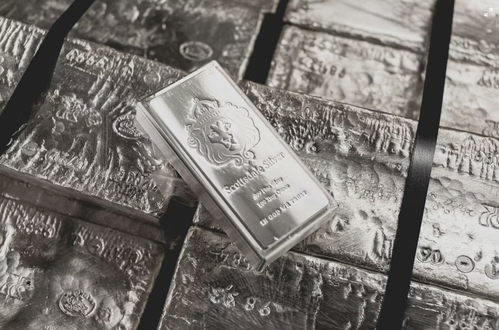
Gold and silver prices moved lower during midday U.S. trading as short-term futures traders took profits and strong technical resistance near recent record highs slowed further upside momentum. February gold fell sharply, while March silver posted a larger percentage decline, reflecting growing caution among traders. Silver’s price action over the past few sessions has raised concern that a bearish double-top reversal pattern may be forming, with a potential trigger level sitting just below the recent trough between the two peaks. If prices fall through that level, selling pressure could accelerate due to clustered stop orders, and silver is expected to continue leading gold’s near-term direction.
Despite the pullback, broader fundamentals remain supportive for gold, highlighted by continued buying from China’s central bank, which extended its gold accumulation streak to 14 consecutive months. Central bank demand, geopolitical uncertainty, and investor moves away from bonds and currencies helped drive gold to its strongest annual performance in decades, even as recent price swings have increased volatility. Outside markets showed a slightly firmer U.S. dollar, lower crude oil prices, and steady Treasury yields, while technical levels suggest gold remains in a strong bullish posture and silver faces a critical test that could determine whether the current decline is corrective or the start of a deeper reversal. Source
The FTSE 100 closed lower after pulling back from a recent series of record highs, pressured by declines in energy, financial, and precious metal mining stocks. Falling oil prices weighed heavily on energy shares after news that the United States had reached an agreement to import Venezuelan crude, while major banks also retreated following several days of gains. Gold’s drop of more than one percent dragged down precious metal miners, adding to the negative tone in the blue-chip index, which ended the session down 0.7%.
In contrast, the more domestically focused mid-cap index edged higher and remained near a four-year peak, reflecting continued strength in parts of the UK economy. Defence stocks advanced as geopolitical tensions involving Venezuela drew investor attention, while select individual stocks posted gains on company-specific news, including stronger quarterly revenue and shareholder activism. Despite the day’s decline, UK equities have started the year strongly, supported by expectations of interest rate cuts later this year and a recent milestone where the FTSE 100 surpassed 10,000 points for the first time. Source
Central banks continued to add to gold reserves in November, recording net purchases of 45 tonnes, as emerging-market institutions remained the primary drivers of demand. Year-to-date buying reached 297 tonnes, showing sustained interest in gold as a reserve asset, despite a slower pace compared with recent peak years. Buying activity remained concentrated among a small group of central banks, with gold holdings as a share of total reserves varying widely across countries.
Poland led purchases for the second straight month, adding 12 tonnes and lifting its reserves to 543 tonnes, close to 28% of total reserves. Brazil followed with an additional 11 tonnes, extending its three-month buying streak, while several other central banks across Central Asia, Europe, and Asia also added smaller amounts. Tanzania reported accumulating 15 tonnes under its domestic purchase program, while only Jordan and Qatar were net sellers. Analysts expect central banks to remain an important source of demand through 2026, with forecasts suggesting buying will stay well above pre-2022 norms even as higher prices reduce the need for large volume purchases to reach reserve allocation targets. Source
Gold and silver are increasingly viewed as core assets rather than simple inflation hedges, reflecting their expanding roles in the global financial and economic system. Gold is now widely regarded as a monetary asset and an alternative to the U.S. dollar, supported by concerns over fiscal sustainability, currency debasement, and shifting monetary alliances, while silver plays a critical role in electrification and industrial transformation. Despite sharp selling late in 2025 driven by higher margin requirements and market volatility, both metals rebounded strongly into early 2026, highlighting resilient underlying demand. Gold has recovered most of its losses and silver has regained a significant portion, reinforcing confidence that the drivers behind last year’s rally remain intact.
Looking ahead, gold is expected to remain supported by geopolitical fragmentation and global uncertainty, with long-term price targets extending higher as it continues to function as a geopolitical hedge. Silver, while benefiting from investment interest, is seen as having even greater upside potential due to its indispensable industrial use, though it is unlikely to be treated as a reserve asset by central banks. Strong performance in 2025 has pushed the gold-to-silver ratio to its lowest level in over a decade, but near-term risks remain as index-tracking funds rebalance portfolios. This process could trigger sizeable, technically driven selling in both markets, increasing short-term volatility even as broader fundamentals stay supportive. Source
Gold is expected to reach $5,000 per ounce by the end of the first quarter of 2026 as strong central bank buying, expanding fiscal deficits, lower U.S. real interest rates, and persistent geopolitical risks continue to support demand. UBS sees commodities playing a larger role in investment portfolios this year, driven by supply-demand imbalances, geopolitical uncertainty, and long-term structural trends such as the global energy transition. Alongside gold, UBS highlights opportunities across the broader commodities complex, including base metals and agriculture, with gold remaining a key portfolio diversifier during periods of macroeconomic stress.
UBS forecasts that gold will trade around $5,000 through much of 2026 before easing toward $4,800 by year-end, still well above previous projections. The bank expects demand for gold to rise steadily as low real yields, political uncertainty in the United States, and global economic concerns persist, with additional upside possible if financial or political risks intensify. Commodities more broadly are seen as offering attractive returns and diversification benefits, though UBS notes that short-term volatility remains a feature of the asset class, particularly during periods of heightened macro and geopolitical tension. Source
Axel Merk argues that the post-World War II economic framework has effectively ended, replaced by an unstable environment where geopolitical power and state intervention now dominate market behaviour. He sees the surge in commodities such as silver and copper as evidence of deeper structural fractures rather than simple monetary inflation, with traditional valuation tools like yield curves and price-to-earnings ratios losing relevance. According to this view, capital is no longer guided by efficiency and free-flowing global trade, but by national interests, fractured supply chains, and the strategic control of resources. Central banks are responding by shifting reserves away from sovereign debt toward gold, reinforcing demand for physical assets as governments face rising deficits and escalating debt-servicing costs.
Despite gold’s strong performance, Merk warns that mining equities may not deliver the leverage investors expect, as rising production costs, declining output, and increasing government intervention threaten profitability. He points to tightening control over mining sectors in multiple countries as a sign that state activism is reshaping resource extraction economics. In industrial metals, copper’s strength reflects genuine scarcity rather than speculative excess, with supply deficits magnified by geopolitical realignments and instability in key producing regions. Merk concludes that markets are entering a new paradigm where access to physical resources outweighs financial abstractions, and the greater risk for investors lies not in volatility but in relying on frameworks that no longer reflect geopolitical reality. Source
Watch the interview
Gold’s recent move back toward record highs has been fuelled by speculative interest, but its longer-term rise is being driven by structural changes in the global monetary system. David Miller argues that gold’s relevance today is primarily monetary rather than functional, and that traditional measures of overvaluation miss this shift. The erosion of the U.S. dollar’s dominance as the global reserve currency has accelerated since 2022, as sanctions, trade frictions, rising tariffs, persistent deficits, and expanding national debt have pushed foreign governments to reconsider their reliance on dollar-denominated assets. These dynamics have strengthened gold’s appeal as an alternative store of value.
Central banks are a key source of sustained demand, with little likelihood of becoming net sellers regardless of price levels, reinforcing a strong long-term tailwind for gold. Miller believes ongoing deficit spending implies a steady loss of dollar purchasing power, supporting expectations for continued gains in gold even if growth moderates. He is critical of bonds in an environment where inflation exceeds yields, arguing they lock in negative real returns, and sees gold increasingly replacing bonds as a defensive portfolio anchor. By focusing on wealth preservation and purchasing power, he favours thinking in terms of denominating portfolios in gold rather than fixed asset allocations. Source
Gold prices continued to face technical selling pressure despite signs of weakness in the U.S. private-sector labor market. ADP reported that 41,000 jobs were created in December, falling short of expectations for 49,000 and following a revised loss of 29,000 jobs in November. Hiring strength was concentrated among small businesses, which rebounded from prior losses, while larger employers reduced payrolls, highlighting uneven momentum in the labor market.
The softer employment data had little immediate impact on gold prices, as profit taking dominated trading after a strong start to the year. Spot gold was last trading at 4,436.30 dollars an ounce, down 1.26 percent on the day. Wage growth remained steady, with workers who stayed in their roles seeing no change at 4.4 percent, while those who switched jobs experienced faster wage growth of 6.6 percent, slightly higher than the previous month, suggesting ongoing resilience in labor compensation despite slower hiring. Source
The U.S. labor market showed further signs of cooling as job openings fell more than expected in December, with available positions declining to 7.15 million from 7.23 million in November, marking the lowest level since March 2021. Hiring activity remained largely unchanged, with 5.1 million hires and a hiring rate of 3.2 percent, while separations were also steady, including 3.2 million quits and 1.7 million layoffs and discharges. The weaker JOLTS data followed an earlier report from ADP that also pointed to softer private-sector job growth, reinforcing evidence of slowing labor demand.
Despite the disappointing employment figures, gold prices failed to attract buying interest and continued to face technical selling pressure after a strong start to the year. Spot gold was last trading at 4,440.80 dollars an ounce, down more than 1 percent on the day. Analysts noted that while prices were under pressure, the broader uptrend remains intact, supported by expectations that continued labor market deterioration could prompt Federal Reserve interest rate cuts through 2026. For now, market expectations remain largely unchanged, with futures markets indicating a strong probability that rates will be left unchanged at the Fed’s upcoming policy meeting. Source
U.S. services sector activity strengthened in December as the ISM Services PMI rose to 54.4 from 52.6 in November, beating expectations and signaling faster expansion. Business activity and new orders improved, while employment returned to growth for the first time in seven months, indicating broader stabilization across the sector. Supplier deliveries remained in expansion, reflecting continued supply-side constraints, while inventories and inventory sentiment stayed positive. Despite the stronger headline reading, the 12-month average PMI remained subdued compared with prior years, highlighting a longer-term slowdown even as recent monthly data showed improvement.
Gold prices weakened following the release, trading near the session low as stronger services data reduced demand for safe-haven assets. Spot gold fell more than 1 percent on the day, hovering near the lower end of its daily range. Meanwhile, price pressures in the services sector continued to ease, with the prices index hitting its lowest level since March 2025, suggesting moderating inflation trends. Although several subindexes moved back into expansion, order backlogs remained in contraction, underscoring mixed underlying conditions despite the near-term rebound in activity. Source
Global gold production is approaching its peak, with output expected to gradually plateau over the next few years rather than decline sharply. Mined gold reached 3,645 tonnes in 2024, the second highest on record, and early data from 2025 indicates a further rise supported by new projects, operational expansions, and increased artisanal and small-scale mining. Despite the recent surge in gold prices, production growth has been modest, reflecting structural limits in the industry such as declining reserves, lengthy mine development timelines, and challenges in permitting and constructing new mines.
The World Gold Council analysis highlights that global gold output has been remarkably stable over the past decade, with production volatility under 3 percent, aided by the geographical spread of mines. Rising gold prices can incentivize reopening old mines, extending existing operations, and expanding small-scale mining, but new production typically lags price increases by several years. These dynamics point to a peak in gold output around 2027, followed by a gradual plateau and a slow decline thereafter. The combination of stable production and steady demand underscores the resilience and balance of the global gold market. Source
Silver prices have struggled to maintain gains above $80 an ounce, with analysts warning of potential short-term volatility despite strong long-term support. Annual index rebalancing is seen as a key driver of near-term price swings, as gold and silver, which were among the best-performing assets in 2025, are expected to face significant outflows. Silver rallied nearly 150 percent last year, while gold rose 64 percent, and together they account for roughly 11 percent of the Bloomberg Commodity Index. Analysts estimate net selling of around $5 billion each for gold and silver during the rebalancing period, which could pressure prices in the coming weeks.
Banks and commodity strategists emphasize that this expected volatility is largely technical rather than fundamental, and any weakness may present buying opportunities. Other commodities, such as Brent and WTI crude, are expected to see inflows, while natural gas is likely to be a net buy following recent price declines. Despite the anticipated short-term repricing, gold and silver remain cornerstone assets within the global economy, and their long-term demand outlook remains strong. Source
TD Securities is shorting silver futures again, targeting a decline to $40 an ounce over the next three months as market fundamentals begin to rebalance. The bank initiated a short position in March silver futures at $78, with a stop loss set at $92, amid expectations of heavy selling pressure from annual index rebalancing and a normalization of the physical silver market. Silver’s record rally to $84 last month, driven by supply chain disruptions and strong industrial demand, is now seen as overextended, with the bank anticipating a correction as above-ground stocks recover and demand moderates.
Additional factors supporting TD Securities’ bearish outlook include the likely absence of U.S. tariffs on silver imports, which could release previously restricted metal back into the market and further ease supply constraints. The bank notes that supply deficits over recent years, combined with strong investor inflows, contributed to prior price surges, but those pressures are expected to diminish. This marks TD Securities’ second attempt at shorting silver, following an earlier position in October that resulted in a loss, highlighting the volatility and cyclical nature of the silver market. Source
Disclaimer: These articles are provided for informational purposes only. They are not offered or intended to be used as legal, tax, investment, financial, or any other advice.
Featured Image - Source: Unsplash















