x




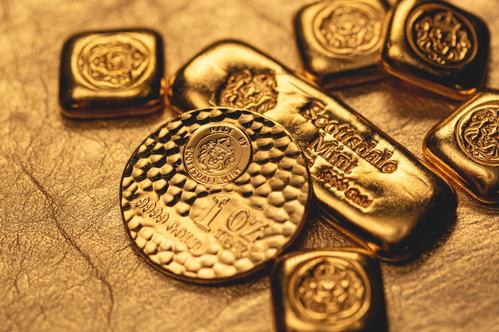
A dramatic surge in investor interest and capital allocation to gold exchange-traded funds has propelled the price of bullion to record highs, with spot gold reaching $3,990.85 per ounce and US futures topping $4,000. Analysts attribute this spectacular rally, which has seen gold prices rise 51% this year, to investors seeking a safe haven amidst uncertain economic policy, rising geopolitical tensions, and concerns over high stock market valuations. Firms like State Street Investment Management and the World Gold Council report record inflows into gold ETFs, with year-to-date global inflows hitting $64 billion, reversing a four-year trend of outflows. This intense interest is seen as unprecedented, driven by a desire for a hedge against potential economic policy headwinds or a failure of the artificial intelligence-driven tech boom to sustain its promises.
Institutional support is just beginning, according to commodities strategists, with gold ETFs globally now accounting for 2.6% of assets. The metal is now being viewed by some as a "barbell" hedge, a protective asset in portfolios that have seen big gains from soaring tech stocks. Notably, gold is also rising in tandem with bitcoin, as both are seen as decentralized stores of value. Analysts project further gains, with some expectations for gold to top $5,000 per ounce by 2026, and major financial institutions are suggesting that investors increase their allocation to gold as a resilient hedge against inflation. This advice from established names is contributing to the continued jump in inflows into both ETFs and vaulted bullion. Source
Silver’s rally has been exceptionally strong, with prices soaring nearly 67% this year to trade above $48 an ounce, outpacing gold’s 50% year-to-date gain and driving the gold/silver ratio to its lowest level in almost a year. However, the research firm Metals Focus warns that this price surge could negatively impact the industrial consumption of silver, creating potential market volatility. A key area of concern is the solar power sector, a major source of silver demand, where manufacturers are already working to reduce the amount of metal used per watt in photovoltaic (PV) panels—a process called thrifting. Analysts project that evolving technology and cost-reduction strategies, which are accelerating due to the recent price rally, could reduce silver consumption per watt in the PV sector by 15–20% this year.
Despite the potential for reduced industrial demand due to thrifting, Metals Focus does not expect the overall upward trend for silver to be significantly derailed. While industrial consumption is forecast to slightly decline this year, the silver market is still projected to face a substantial supply deficit of around 187.6 million ounces, which would be the third-largest on record. The firm’s Managing Director noted that industrial demand would need to weaken far more significantly to overcome this supply-demand imbalance. Instead, growing momentum is expected to attract increased investment demand, which will continue to support prices. Additionally, some analysts believe the sheer, massive growth of the solar sector will continue to drive overall demand, offsetting the impact of thrifting. Source
Goldman Sachs has significantly raised its December 2026 gold price forecast from $4,300 to $4,900 per ounce, driven by expectations of sustained central bank purchases and strong Western exchange-traded fund inflows. The investment bank anticipates that ETF holdings will rise as the Federal Reserve implements a 100 basis point reduction in the funds rate by Q2 2026. Furthermore, they project that central bank buying will average 80 tonnes in 2025 and 70 tonnes in 2026, as emerging markets continue to diversify their reserves away from the U.S. dollar and into gold. Goldman Sachs categorizes these groups—along with speculators—as "conviction buyers" whose thesis-driven flows determine the gold price direction, with every 100 tonnes of net purchases corresponding to a 1.7% rise in the gold price.
The investment bank also highlights gold's crucial role in portfolio diversification, advising investors to use commodities like gold to hedge against unexpected financial market risks, particularly during times of elevated global policy uncertainty or supply shocks that could lead to stagnant growth and high inflation. They note that gold has historically provided a positive return during 12-month periods when both stocks and bonds delivered negative real returns. Despite a current seasonal slowdown in central bank buying and a build-up of speculative long positions—which raises the risk of tactical pullbacks—Goldman Sachs sees the risks to their elevated forecast as skewed to the upside, suggesting private sector diversification could push ETF holdings even higher than their estimates. Source
China's central bank, the People's Bank of China, announced that it added to its gold reserves for the eleventh consecutive month in September. The country's gold reserves increased to 74.06 million troy ounces at the end of September, a slight rise from the 74.02 million ounces recorded at the end of August. This steady accumulation of the precious metal led to the total value of China's gold reserves increasing significantly, rising from 253.84 billion dollars at the end of August to 283.29 billion dollars by the end of last month. This consistent purchasing activity by the central bank follows a prior pause in May 2024, after a substantial 18-month buying period, with purchases resuming in November of the preceding year.
According to an independent precious metals analyst, this strong and continuous figure reinforces the view that China is actively pursuing de-dollarization. Such sustained purchases are seen as domestically positive for the price-sensitive gold market, potentially narrowing significant discounts and instilling confidence in institutions and investors that the metal's value will continue to appreciate. The wider gold market itself has experienced a significant gain of over 52% year-to-date in 2025, a surge attributed to escalating global political and economic uncertainty, including U.S. tariffs and geopolitical conflicts, alongside expectations of interest rate cuts, a weakening dollar, and robust buying from central banks worldwide. Source
The rally in gold, silver, and platinum is continuing, with all three precious metals achieving significant multi-year or all-time high prices despite attempts at profit-taking, according to analysts at Heraeus. Gold, which surged toward 4,000 dollars per ounce, is seeing buying momentum driven by a Fear Of Missing Out sentiment that is currently stronger than selling, alongside substantial increases in gold Exchange Traded Fund holdings. Further supporting gold are concerns over the level of US government deficit spending and market expectations for future interest rate cuts from the Federal Reserve.
Silver is following gold’s lead, hitting fresh 14-year highs above 48 dollars per ounce, but it also benefits from strong structural support due to rising industrial demand, which has helped it to outperform gold year-to-date. Silver ETF holdings are also growing, although aggregate holdings remain below their 2021 peak. However, US physical silver coin sales have shown signs of softening, contracting sharply year-on-year. Separately, platinum also surged, breaking above 1,600 dollars per ounce to a 12-year high, and reaching a record high in yen terms, while the South African 4E rand basket price for platinum group metals has risen to levels that ensure most producers are currently operating with healthy margins. Source
Despite being one of the most prominent gold optimists, Bank of America's technical analyst Paul Ciana is expressing caution as the price of gold approaches the 4,000 dollars per ounce target. Ciana suggests that gold's upside potential is largely met and that the metal appears slightly overbought based on various technical signals. He warns that this uptrend exhaustion could lead to a consolidation or correction in the fourth quarter. As a result, Ciana advises investors to consider risk management actions like raising stops or reducing long exposure, while a contrarian perspective might involve buying short-term puts. This advisory comes as spot gold is trading around 3,960 dollars per ounce, marking a 50 percent gain for the year.
Ciana compares the current rally, which has lifted prices by 130 percent since a 2022 correction, to historical bull markets, noting that past cycles often included significant mid-cycle corrections. He points out several technical warning signs, including an impressive but historically risky streak of seven consecutive weekly closes higher, which has previously resulted in lower prices four weeks later. Additionally, gold is trading at levels significantly above its key long-term moving averages, conditions that have historically coincided with price peaks. While Ciana does not rule out a massive longer-term run to 5,000 or even 7,000 dollars per ounce, he warns that the present rally is already mature and vulnerable to a significant correction, with initial support seen at 3,790 dollars and potential risks extending toward 3,525 dollars. Source
Saxo Bank’s head of commodity strategy, Ole Hansen, asserts that gold's breakthrough past 4,000 dollars per ounce signifies a profound change in investor psychology and global capital flows, rather than being solely driven by typical factors like US interest rate expectations or the dollar's value. This structural shift is rooted in geopolitical fragmentation, specifically the erosion of confidence in traditional Western safe havens, such as the US dollar and Treasuries, following the weaponization of markets and reserve assets. This move above the key 4,000 dollar level defies a recovering dollar and cautious Federal Reserve statements, and is instead sustained by a persistent structural bid for security from both sovereign and institutional investors seeking tangible assets outside the traditional financial system. This structural demand has weakened gold's historical inverse correlation with US real interest rates.
The turning point for this new dynamic was the 2022 freezing of Russia's central bank reserves, which prompted central banks worldwide to aggressively increase their gold reserves by over 1,000 tons annually, the strongest pace on record. This sovereign and institutional buying, along with significant demand from Chinese investors seeking alternatives to a troubled property market, has continually absorbed global supply and prevented price collapse even during aggressive Fed tightening. This persistent, structural demand from central banks and China drove gold’s breakout above the multi-year ceiling of 2,075 dollars in March 2024, triggering momentum that has since lifted gold's year-to-date gains to nearly 52 percent, with other precious metals like silver and platinum also posting substantial rallies. Source
Gold and silver prices saw sharp increases in midday U.S. trading, driven by safe-haven demand stemming from the ongoing U.S. government shutdown—now the fourth-longest in modern history—and other global uncertainties. December gold futures hit a new contract and record high of $4,072.40, settling near $4,067.20, while silver reached a 14-year high of $49.04, approaching its all-time record just above $50.00. The article notes that air travel delays, caused by staffing shortages due to the week-old shutdown, might pressure U.S. lawmakers to resolve the impasse, as similar delays ended the 2018-2019 shutdown.
Simultaneously, the U.S. dollar index climbed to a nine-week high, largely because the Euro currency sank to a two-month low amidst a French political crisis that is causing anxiety in European markets. The dollar also gained strength after New Zealand's central bank delivered a larger-than-expected interest rate cut. In related market news, the Bank of England issued strong warnings that stock markets are overvalued, particularly those focused on artificial intelligence, raising the risk of a sharp market correction. Crude oil prices were firmer, trading near $62.75 a barrel, and the yield on the benchmark 10-year U.S. Treasury note was around 4.1%. Technically, both gold and silver futures bulls maintained a strong near-term advantage, with the next major resistance levels at $4,100.00 for gold and $50.00 for silver. Source
Market analyst Bart Melek of TD Securities suggests that although gold's rapid surge above $4,000 an ounce could trigger near-term profit-taking and volatility, the overall bullish momentum is expected to continue. Given the metal's significant rally of over 50% since the start of the year, Melek warns that gold looks technically overbought, suggesting a robust downside correction is possible, potentially seeing prices fall as low as $3,600 an ounce. However, he views any such correction as a buying opportunity, forecasting that the uptrend will remain intact through the first half of 2026, with an expected average price reaching a new record north of $4,400 per ounce.
The forecast for continued gains is underpinned by several factors, including the Federal Reserve's expected easing cycle into a high-inflation environment, sustained official sector demand, and the renewed positioning of discretionary funds. Investment demand is rising as money managers move into gold, anticipating lower carry costs as the Fed cuts rates. Melek also highlights risks to the Fed's credibility, suggesting political pressure could force more aggressive easing, potentially suppressing real yields while inflation remains high. Additionally, he expects central banks, particularly China, to continue diversifying away from the U.S. dollar and into gold, noting that China has significant room to grow its gold holdings compared to the U.S. Source
The minutes from the Federal Reserve's September 16-17 Federal Open Market Committee (FOMC) meeting revealed that the central bank prioritized a weakening labor market over still-elevated inflation when deciding to cut the federal funds rate. Recognizing that economic activity growth had moderated and job gains had slowed, nearly all members agreed to lower the target range by 25 basis points to 4 to 4-1/4 percent. This decision reflected an acknowledgment that downside risks to employment had increased. The committee, however, remained attentive to inflation, which was still considered "somewhat elevated," adding a note to the official statement that inflation had moved up.
A key concern raised in the minutes was the risk that easing policy "too much or too soon" while inflation remained high could cause longer-term inflation expectations to become unanchored, making the restoration of price stability even more difficult. Conversely, keeping rates "too high for too long" risked an unnecessary increase in unemployment and a sharp economic slowdown. The sole dissenting vote came from Governor Stephen Miran, who argued for a 50-basis-point cut, believing the underlying inflation was closer to 2 percent and that the neutral rate of interest had fallen. Meanwhile, spot gold reacted by holding comfortably above the $4,000 per ounce level, last trading at $4,048.85 for a gain of 1.62% on the session. Source
Bernard Dahdah, a Precious Metals Analyst at Natixis, has cautioned investors about potential near-term volatility in gold, despite the metal’s momentum pushing prices past $4,000 an ounce. He warns that the next two to three months carry downside risks and that a shift in market sentiment could trigger a sharp correction, citing historical precedents like the 2011 debt ceiling crisis and the start of the Ukraine war in 2022, which resulted in 5% to 10% drops in price within days. Potential triggers for such a pullback include selling pressure following a hike in margins, profit-taking by leveraged investors, or a resolution to the current U.S. government shutdown, which has previously caused the gold market to "fizzle." Natixis maintains a neutral stance through 2026 and expects prices to average around $3,760 an ounce next year.
The analyst identifies U.S. monetary policy and sentiment in U.S. Treasury markets as the two most significant long-term drivers for gold. Although the Federal Reserve is expected to lower interest rates, uncertainty remains, especially with political pressure for aggressive cuts amid elevated inflation. Coupled with fears of stagflation and recession caused by ongoing trade tensions and tariffs, international investors are diversifying away from U.S. Treasuries, leading to major outflows from U.S. Money Market Funds, which have helped propel gold prices higher. However, Dahdah also warns that higher prices are beginning to hurt physical consumption, noting that demand destruction is already evident in the jewelry market and central bank buying is slowing—these two sources account for about 70% of global gold demand. Source
Disclaimer: These articles are provided for informational purposes only. They are not offered or intended to be used as legal, tax, investment, financial, or any other advice.
Featured Image - Source: Unsplash















