x



For the first time in five months, gold-backed exchange-traded funds (ETFs) experienced net outflows in May, as reported by the World Gold Council (WGC). Global gold-backed ETFs saw outflows of 19.1 tonnes, equivalent to $1.83 billion, primarily driven by North American funds. This shift in investor sentiment is attributed to a temporary easing of U.S.-China tariff threats, which improved risk appetite and led to a rebound in equities, thereby reducing demand for safe-haven assets like gold. While European-listed ETFs bucked the trend with modest inflows, Asian ETFs, surprisingly, posted their first outflows since November 2024, despite a month of historic demand in April.
Looking ahead, the WGC cautions that the Federal Reserve's neutral monetary policy stance could act as a headwind for gold during the summer. However, these risks may be mitigated by ongoing inflation concerns and unsustainable debt levels globally. The market's expectation of higher rates by the end of 2025 could lead to rising U.S. Treasury yields, increasing the opportunity cost of holding gold. Despite this, the WGC suggests that intensifying stagflation concerns could still drive investors towards gold, as the metal has historically performed well during such periods. The report also highlights that the full impact of global trade wars and rising tariffs on inflation might take up to six months to be felt by consumers, potentially positioning gold as a resilient asset in a stagflationary environment. Source
Gold prices experienced selling pressure on June 6, 2025, following a stronger-than-expected U.S. jobs report for May. The U.S. economy added 139,000 nonfarm payrolls, slightly exceeding the forecast of 130,000, while the unemployment rate held steady at 4.2%. This robust labor market data dampened expectations for imminent Federal Reserve interest rate cuts, which typically makes gold, a non-yielding asset, less attractive to investors. Spot gold fell by over 1%, settling around $3,316.13 an ounce, though it still managed to maintain some weekly gains. The general market sentiment shifted towards reduced safe-haven demand for gold as economic concerns eased, leading to a rebound in equity markets.
Despite the immediate downward pressure, the gold market is still being influenced by broader factors. While a strong jobs report suggests the Federal Reserve may maintain its current monetary policy for longer, increasing U.S. Treasury yields and reducing gold's appeal, ongoing global trade tensions and potential inflation concerns could provide underlying support for the precious metal. Analysts suggest that the market is currently pricing in fewer than two rate cuts by the end of 2025. However, if trade tensions escalate or if the full impact of tariffs leads to higher inflation, gold could still attract investors seeking a hedge against economic uncertainty, potentially limiting further significant declines. Source
While gold has traditionally commanded the spotlight in precious metals investing, silver and platinum are increasingly drawing attention as viable alternatives, particularly given their recent performance and evolving market dynamics. Silver, often dubbed "poor man's gold," has seen a significant surge, breaking through the $35/oz mark and reaching 13-year highs, driven by its dual role as both an investment and an essential industrial metal. Its demand is robust, especially from the burgeoning solar panel, electric vehicle, and electronics industries, contributing to a fifth consecutive year of supply deficits. This persistent imbalance between strong industrial demand and limited supply, coupled with a declining gold-silver ratio, indicates significant potential for further price appreciation for silver in 2025.
Platinum is also emerging as a metal of interest, with prices recently reaching four-year highs and gaining nearly 30% year-to-date. Its upward trajectory is fuelled by tight supply expectations, improving industrial demand (particularly in hydrogen fuel cells and automotive catalysts for green energy technologies), and renewed interest from jewelry houses seeking alternatives to expensive gold. Both silver and platinum are seen as relatively undervalued compared to gold, and as gold experiences periods of consolidation, investors are shifting focus to these "cheaper siblings" for momentum buying. The ongoing global economic uncertainties, including potential inflation and geopolitical risks, further bolster their appeal as tangible assets and hedges against instability. Source
A bipartisan congressional effort is underway to audit America's gold reserves, specifically targeting the approximately 147.3 million ounces stored at Fort Knox, Kentucky. This initiative, spearheaded by U.S. Representative Alex Mooney, aims to enhance transparency and ensure accountability regarding the nation's gold holdings. The last comprehensive audit of the U.S. gold reserves was conducted in 1953 by President Dwight D. Eisenhower, making the current push a significant development. The resolution seeks to mandate an independent third-party audit of the gold, a full accounting of all U.S. gold holdings, and the publication of a detailed report to Congress and the American public. This move reflects growing concerns among some lawmakers about the perceived lack of transparency and a desire to confirm the physical existence and integrity of the gold.
The motivation behind this renewed call for an audit extends beyond simple verification. Proponents argue that an audit is crucial for maintaining public trust in the U.S. monetary system and for understanding the true financial strength of the nation, especially in an era of unprecedented national debt. While the U.S. Mint, the custodian of Fort Knox, asserts that the gold is regularly inventoried and safeguarded, the proposed audit would involve a more rigorous, independent examination. This congressional scrutiny underscores a broader sentiment among some policymakers to re-evaluate the role of gold in the national financial framework and to ensure that the reported reserves accurately reflect the physical assets held, addressing long-standing questions and theories about the actual state of America's gold. Source
Silver is currently "sniffing out" stagflation, a period of high inflation combined with low economic growth, and is poised for significant price increases, according to Peter Krauth of SilverStockInvestor.com. Krauth predicts that silver prices could reach $40 per ounce this year and even surpass its all-time high of $50 per ounce in 2026. This bullish outlook is driven by persistent inflation, particularly the core Personal Consumption Expenditures (PCE) index, which is well above the Federal Reserve's target, indicating that consumers are increasingly accepting higher inflation. This inflationary environment, combined with rising Treasury yields and bond prices sliding, is creating a favourable backdrop for silver as investors seek a hedge against eroding purchasing power.
Krauth emphasizes that silver remains undervalued compared to gold, and he anticipates a narrowing of the gold:silver ratio in the second half of the year. He believes that while gold may consolidate, silver is likely to play catch-up, potentially pushing the ratio down to 75:1. This would imply a silver price of around $45, just shy of its historical peak. The key takeaway from Krauth's analysis is that once silver breaks through the $50 resistance level, it will enter "uncharted waters," as it has never traded above that price point before. This could lead to a significant upside, with Krauth suggesting that an additional $10 to $15 on top of $50 is not unrealistic, depending on the prevailing economic environment. Source
Gold's attempt to decisively break above the $3,400 per ounce level in early June 2025 has largely failed, leaving the market in a consolidative phase. Technical analysis suggests that gold saw a potential bull breakout on Monday, but the subsequent price action has shown a lack of follow-through, with gold retreating below key near-term support levels. This indicates that sellers have regained control, with prices falling to five-day lows. The failure to sustain a breakout above $3,400, a significant psychological and technical resistance level, suggests that gold may face further selling pressure in the short term, with potential downside targets around $3,260 and $3,245.
Despite this technical setback, the overall sentiment for gold's long-term outlook remains bullish. The metal's upward trend over the past year has been driven by persistent geopolitical tensions, inflation fears, and global economic uncertainties. While the recent retreat is attributed to factors such as improved risk appetite and a stronger U.S. dollar following certain economic data, many analysts believe that these are temporary headwinds. The underlying fundamental drivers for gold, such as ongoing inflation concerns and the potential for a less aggressive Federal Reserve monetary policy later in the year, continue to provide support. Therefore, while short-term volatility is expected, gold is anticipated to eventually resume its upward trajectory, with further upside potential once it overcomes these consolidation phases. Source
The gold-to-silver ratio is currently presenting a strong bullish signal for silver, indicating that the white metal may be poised for significant outperformance. Historically, when this ratio—which measures how many ounces of silver it takes to buy one ounce of gold—reaches extreme highs, it often precedes a period where silver catches up to and even surpasses gold's gains. Having peaked above 105 in April, the ratio is now contracting, suggesting that silver, which has lagged gold's record-setting performance, is entering a "catch-up rally." This dynamic makes silver a compelling investment opportunity for traders looking to bridge the widening price gap between the two precious metals.
This bullish outlook for silver is further supported by its industrial demand tailwinds and its relative undervaluation compared to gold. The long-term average for the gold-to-silver ratio is closer to 60, implying substantial room for silver to appreciate if it reverts to its historical mean. Kitco highlights that a continued normalization of this ratio could see silver prices targeting the $40-$50 range, mirroring its performance during previous precious metals cycles. The article also notes the strong performance of platinum and palladium, as traders increasingly look to these metals for opportunities, especially given platinum's significant discount to gold. Source
The latest Kitco News Weekly Gold Survey reveals a divergence in sentiment between Wall Street analysts and Main Street retail investors regarding gold's immediate future. Wall Street professionals remain largely cautious, with opinions evenly divided on gold's price trajectory. This guarded stance is influenced by factors such as fluctuating U.S.-China tariff threats and recent U.S. economic data, which have at times lessened the demand for safe-haven assets. Despite this, some long-term bullish outlooks persist, with analysts pointing to underlying issues like sovereign debt and ongoing geopolitical tensions as potential drivers for gold's continued growth through 2025.
Conversely, Main Street investors have shown increased optimism for gold, particularly after the metal demonstrated resilience by holding key support levels amidst market volatility. Retail traders have become more bullish, with a majority expecting gold prices to rise in the near term. This sentiment is fueled by a combination of factors, including persistent global uncertainties and the expectation that the Federal Reserve's actions, particularly concerning inflation data, could eventually become more favorable for gold. The resilience of gold prices around the $3,300 level has encouraged these investors, who see the metal as a valuable hedge against economic instability. Source
China's central bank, the People's Bank of China (PBoC), continued its consistent accumulation of gold in May, marking the seventh consecutive month of increasing its reserves. The PBoC added approximately 2 tonnes (60,000 troy ounces) of gold to its holdings, bringing its total reserves to 2,296 tonnes (73.83 million fine troy ounces). This strategic move underscores China's ongoing efforts to diversify its foreign exchange reserves away from the U.S. dollar and hedge against global economic uncertainties and geopolitical risks. Despite the physical increase in gold, the total dollar value of China's gold holdings slightly dipped in May, reflecting a general softening in gold prices during the month.
This sustained gold acquisition by the PBoC is part of a broader trend among central banks worldwide, which are increasingly turning to gold as a safe-haven asset. The consistent monthly purchases by China, even amidst fluctuating gold prices, suggest a long-term, dollar-cost averaging strategy rather than an attempt to time the market. This commitment to bolstering gold reserves provides a foundation for financial stability and underscores a growing global trend of de-dollarization, as nations seek to reduce their reliance on the U.S. currency in an unpredictable global economic and political landscape. Source
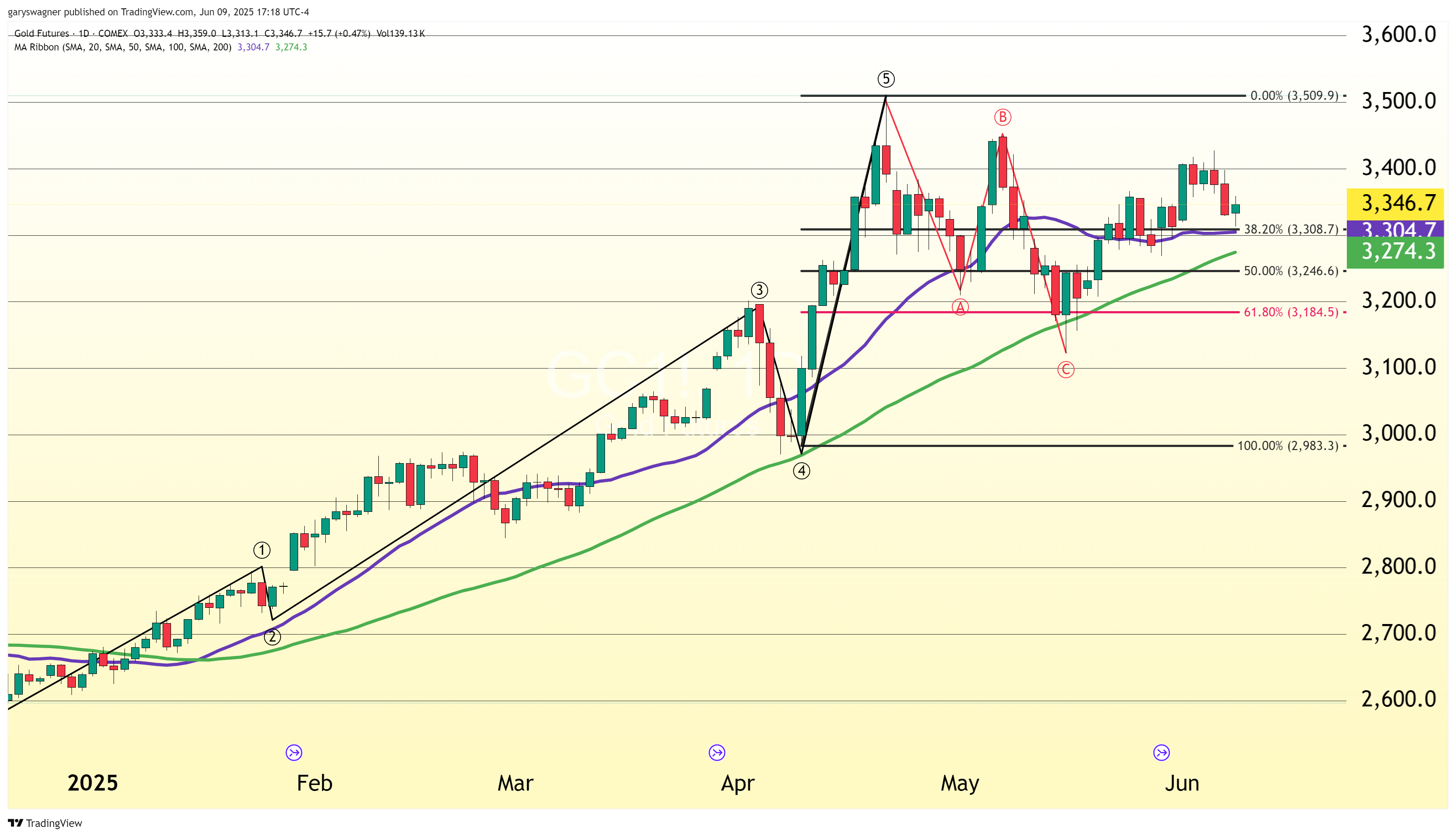
Image Source: Kitco News
Gold prices witnessed significant volatility on Monday, June 9, 2025, as ongoing U.S.-China trade negotiations created conflicting pressures on the precious metal. The trading session began with gold showing weakness across key overseas markets in Australia, Hong Kong, and London, with August futures initially falling by $26.60 to $3,320.00 per ounce. This early decline was counterintuitive given a simultaneous fall in the U.S. dollar, reflecting initial investor optimism that renewed trade dialogue between the two largest economies might resolve some of the economic uncertainty that has supported gold's safe-haven appeal. However, this optimism was short-lived as the market's sentiment underwent a remarkable transformation later in the session.
Despite the initial dip, gold staged a powerful recovery, with August futures hitting an intraday low of $3,313.10 before surging by $22.80 to $3,356.50 per ounce, representing an extraordinary intraday swing of over $43. This dramatic reversal suggests that while initial diplomatic hopes put downward pressure on gold, investors ultimately adopted a more cautious perspective on the negotiations. The market's eventual embrace of gold's safe-haven characteristics likely reflects the recognition that substantive progress in U.S.-China trade relations remains highly uncertain, and the significant economic damage already inflicted on both economies continues to reinforce investor concerns. The dollar's continued weakness throughout the day also provided additional support for gold's afternoon rally, further highlighting the complex interplay between geopolitical developments and precious metals markets. Source
Gold prices saw a mixed start to the trading week on June 9, 2025, largely consolidating recent gains and experiencing some volatility. After a significant rally last week, which saw gold climb to a near four-week high and silver surge past previous resistance levels, the market entered a holding pattern. While U.S.-China trade negotiations and a slightly weaker U.S. dollar provided some initial support, the overall sentiment was characterized by a pause as investors digested recent economic data and geopolitical developments. This led to minor fluctuations, with prices oscillating around key levels as traders awaited clearer signals for gold's next directional move.
Despite the short-term pause, the fundamental backdrop for gold remains generally supportive. Persistent global uncertainties, including ongoing trade tensions and inflation concerns, continue to underpin gold's appeal as a safe-haven asset. While a stronger-than-expected U.S. jobs report earlier in the month dampened some immediate rate-cut expectations, the broader economic outlook, coupled with sustained central bank gold purchases (like China's seventh consecutive month of buying), suggests that any dips in gold prices are likely to be seen as buying opportunities by many investors. The market is currently consolidating, but the underlying drivers for gold's long-term bullish trend are still in place, indicating potential for renewed upside once this period of indecision passes. Source
In this week’s Live from the Vault, Andrew Maguire welcomes Daniel Diaz, executive director of Citizens for Sound Money, whose family’s escape from communist Cuba inspired a lifelong fight for liberty, political sovereignty, and sound money.
Diaz shares how blockchain immutability, gold digitisation, and strategic US state legislation are converging into a global movement for financial self-determination – signalling a decisive shift away from centralised control towards economic freedom.
Disclaimer: These articles are provided for informational purposes only. They are not offered or intended to be used as legal, tax, investment, financial, or any other advice.
Featured Image - Source: Unsplash















