x



The People's Bank of China continued its trend of diversifying its reserves away from the U.S. dollar by increasing its gold holdings for the ninth consecutive month in July, adding 60,000 troy ounces. This steady accumulation highlights a broader global trend of central banks bolstering their gold reserves. Meanwhile, silver was the best-performing precious metal for the week, ending a three-week losing streak with a 4.34% gain. In company news, SSR Mining and OceanaGold both reported strong second-quarter earnings that beat consensus estimates, leading to significant increases in their stock prices.
Conversely, palladium was the week's worst-performing precious metal, falling by 6.74%. Gold consumption in China, particularly for jewelry, saw a decline in the first half of the year as prices remained high. The article also notes weaknesses in the mining sector, as a gold miner's debut bond deal was smaller than expected, and Allied Gold missed its earnings estimates, causing its stock to drop. These contrasting performance indicators highlight a complex and selective precious metals market. Source
Inflation, a continuous rise in the price of goods and services, has two main culprits: "money printing" and "government intervention" in the marketplace. Money printing is a straightforward cause, stemming from the over-issuance of paper currency and the expansion of credit. When vast amounts of new money and credit are introduced into the economy, people spend more, which drives up prices. The article also touches on a historical method of economic warfare, where warring states would flood an opponent's economy with counterfeit currency to create hyperinflation and social chaos.
The more subtle causes of inflation, according to the article, are various forms of government intervention. These include "government indebtedness", which leads to new taxes and fees to service the debt; and the "auctioning of rights and freedoms" to big businesses. This second point refers to the government selling limited licenses and permits that create monopolies, raising barriers for new competitors, and allowing established businesses to raise prices and lower quality. Additionally, "import tariffs", which are taxes on foreign goods, and "price controls", where the government sets maximum or minimum prices, are identified as inflationary measures that ultimately hurt consumers and create shortages. Source
Barrick Mining Corporation reported strong Q2 earnings, outperforming analyst expectations. The company's net earnings per share jumped 124% year-over-year to $0.47, with adjusted EPS also at $0.47, exceeding analyst forecasts. Revenue came in at $3.68 billion, just shy of the consensus estimate, while free cash flow for the first half of the year more than doubled to $770 million. This financial success was largely attributed to strong gold and copper production, as well as favorable commodity prices.
The company saw an increase in gold output, up 5% from the previous quarter to 797,000 ounces, although this was a 16% decrease year-over-year. The "Nevada Gold Mines" and Pueblo Viejo assets were key drivers of this growth, with production increases of 11% and 28% respectively, compared to Q1. Meanwhile, copper production saw a more significant boost, rising 34% quarter-on-quarter and 37% year-on-year to 59,000 tonnes, positioning the company to hit the high end of its annual guidance. The company also returned capital to shareholders by declaring a $0.15 per share dividend and repurchasing $268 million in shares. Source
Global gold demand in the second quarter of 2025 rose by 10% compared to the same period in 2024, although it did not match the performance of the first quarter. The report highlighted a period of volatility caused by tariff uncertainty. At one point, news that certain gold bars imported into the U.S. would be subject to tariffs caused the gold futures price to spike to a new high, with the futures contract trading at a significant premium to the spot price. This tariff scare drove a dramatic increase in gold bullion flows into the U.S., with COMEX vault stocks more than doubling earlier in the year before eventually easing. The White House later indicated that gold bars would likely not be subject to these tariffs, which helped futures prices to ease.
The report also noted that global investment demand for gold remained strong, supported by inflows into ETFs and solid bar and coin purchases in most regions. However, high prices led to a 14% year-on-year drop in jewelry demand across all major regions. In a separate analysis, Heraeus noted that primary silver miners, including Pan American, Hecla, and Coeur, reported increased production in Q2 after a weaker start to the year, putting them on track to meet their annual guidance. Despite the positive production news, both gold and silver prices saw a slight decline to start the week of the report's publication. The article concluded that continued political and economic uncertainty, particularly with regard to government and central bank policies, could provide further upside potential for gold. Source
Gold and silver prices experienced significant losses in midday U.S. trading on Monday, driven by market uncertainty surrounding a potential U.S. tariff on gold imports. This uncertainty followed a strong rally on Friday, as traders awaited clarification from the Trump administration. The administration had previously exempted precious metals from duties in April, but recent reports suggested certain gold bars could be subject to tariffs. Although the White House later indicated it would clarify the situation, this ongoing confusion has kept the precious metals market on edge.
The market's reaction also unfolded against a backdrop of other economic factors, including a stronger U.S. dollar and a steady crude oil price. The article highlights that while gold futures bulls maintain a technical advantage, bears are looking to push prices below key support levels. Similarly, silver futures bulls also hold a near-term advantage, with resistance and support levels being closely watched by traders. The article concludes by noting that while the market awaits definitive policy clarification, this uncertainty continues to influence price movements for both gold and silver. Source
Franco-Nevada, a royalty and streaming company, reported a record-breaking second quarter in 2025, buoyed by higher gold prices. The company's earnings per share and adjusted net income reached all-time highs, with revenue surging over 450% year-over-year. Operating cash flow more than doubled, and margins expanded significantly. This strong performance was attributed to a portfolio that produced largely as expected and benefited from rising precious metal prices. The company also made strategic acquisitions during and after the quarter, including royalties on the Côté Gold Mine and the Arthur Project, which are expected to support future long-term growth.
Despite these impressive financial results, the company's progress toward its full-year guidance suggests a need for a strong second half of the year. The report indicates that while first-half sales reached 238,678 gold equivalent ounces, this is only a fraction of the 465,000 to 525,000 GEOs needed to meet its annual target. The CEO expressed optimism for future growth, mentioning a potential restart of the Cobre Panama mine, which has been a source of pressure on cash flow. A restart of this mine, which has been in a state of suspended operations, could provide a significant boost to Franco-Nevada's portfolio. Source

Image Source: Kitco News
Gold prices experienced extreme volatility on Monday after a period of uncertainty regarding U.S. import tariffs. The market was initially rattled by a U.S. Customs ruling that threatened to impose a 39% tariff on certain gold bars from Switzerland, a measure that could have extended to all imported gold. This news sent gold futures soaring to new highs as traders anticipated a dramatic increase in import costs. The potential tariffs had significant implications for the global gold trade, particularly affecting key refining hubs like Switzerland and potentially disrupting established supply chains.
However, the market saw a sharp reversal following an announcement by President Donald Trump that gold would not be subject to tariffs. This clarification brought relief to traders, but it also caused gold prices to tumble, wiping out the gains from the prior days. This whipsaw price action created extraordinary volatility in gold futures, with the market moving within a nearly $55 range in a single 15-minute period. This situation echoed previous policy actions by the Trump administration, such as an exemption on precious metals in April that also led to a drop in gold prices and a collapse of the premium between New York and London gold. Source
Despite recent price volatility and a sharp drop caused by the clarification that gold will not be subject to U.S. tariffs, Bloomberg Intelligence strategist Mike McGlone believes gold still has a path to reach $4,000 per ounce by the end of the year. He notes that gold has maintained a solid foundation above the $3,300 support level since April. McGlone suggests that a key catalyst for gold's next rally could be a potential downturn in the equity markets, specifically mentioning the S&P 500, which he views as looking "heavy" near its all-time highs. He highlights that gold ETFs have seen a decisive shift to inflows after four years of outflows, signaling renewed investor interest.
McGlone also points to other factors that could support gold's price appreciation. He notes that the S&P 500's performance against the MSCI World Ex-US Index is pushing to record highs but is also testing its support trendline, which could be a warning sign. He suggests that gold keeping pace with the AI-driven stock index since 2017 could indicate excessive risk-asset valuations. Furthermore, he believes U.S.-driven geopolitical uncertainty and President Trump's challenges to U.S. statistical data and Federal Reserve independence could also serve as a boon for the gold market. Source
According to David Kelly, Chief Global Strategist at J.P. Morgan Asset Management, the Federal Reserve is likely to engage in preemptive rate cuts based on "dangerous logic" that will ultimately stoke inflation. In his forecast, Kelly predicts that while the economy is still growing, the Fed will cut the federal funds rate despite inflation remaining above its 2% target, largely due to political pressure. He believes this persistent inflation will be a result of new tariffs, a weakening dollar, a tight labor supply, and potential fiscal stimulus. Kelly warns that these rate cuts, while unlikely to boost economic growth, could inflate asset prices and erode investor confidence in the Fed's commitment to controlling inflation, which could in turn put downward pressure on the dollar.
Kelly advises that given the risk of continued elevated inflation, investors need to broaden their portfolios to include alternative and international assets to protect themselves. He specifically cites gold as a key asset for this diversification. This advice is in line with J.P. Morgan's broader strategy of encouraging geographic and currency diversification. The firm’s Global Head of Investment Strategy, Grace Peters, also expects gold to outperform in this environment, with a price target of over $4,000 per ounce by the first quarter of 2026. This positive outlook for gold is driven by anticipated demand from emerging market central banks, retail ETF buying, and resilient demand from the jewelry and tech sectors. Source
The gold market experienced significant volatility following a U.S. Customs ruling that threatened to impose a 39% tariff on certain imported gold bars, which caused the premium on U.S. gold futures to surge. However, this panic was short-lived. President Donald Trump announced on social media that gold would not be subject to tariffs, which immediately sent prices tumbling as the market digested the clarification. While this news brought some relief, analysts cautioned that the market could remain volatile as it adjusts.
According to Rhona O'Connell, Head of Market Analysis at StoneX, the recent volatility was "much ado about nothing," as the premium between spot and futures prices was not as dramatic as headlines suggested, and was already beginning to normalize. Beyond the U.S. policy turmoil, O’Connell noted that the physical gold markets globally were quiet due to economic uncertainty and the seasonal slowness of the year. The market will continue to be influenced by the dissipation of the futures premium and other global factors as traders look past the recent tariff scare. Source
In this week’s Live from the Vault, Andrew Maguire reveals how Trump’s escalating anti-Fed rhetoric may have lit the fuse for a gold revaluation, as US officials scramble to contain rising physical demand through synthetic price interventions.
With BRICS-aligned exchanges hoovering up undervalued metal and central banks abandoning short positions, Andrew suggests the Federal Reserve may be fighting a losing battle, as growing gold buying steadily shifts the market’s dynamics.
Disclaimer: These articles are provided for informational purposes only. They are not offered or intended to be used as legal, tax, investment, financial, or any other advice.
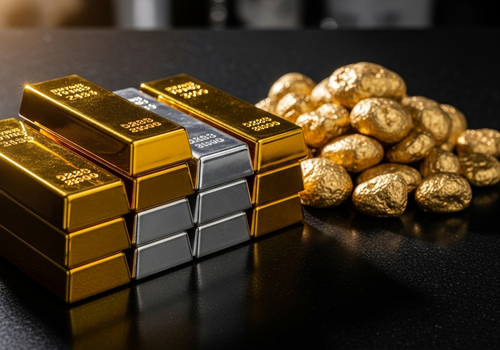
Featured Image generated with Google AI Studio















