x



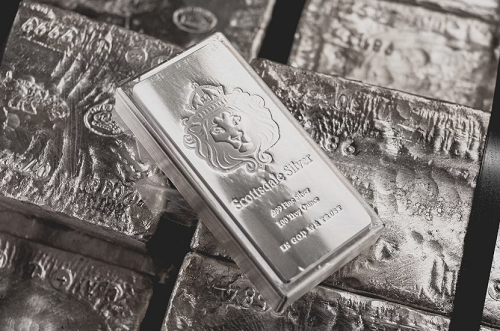
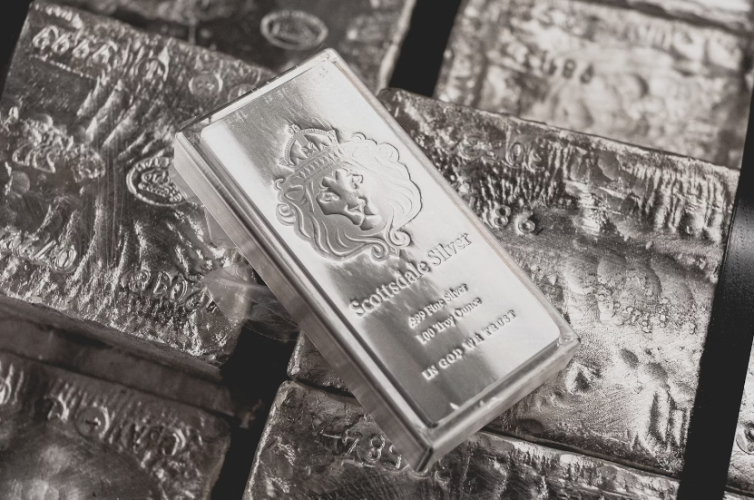
Image Source: Unsplash
Silver prices stabilize above $29/oz, but downside target of $24.66/oz is in play – FX Empire’s Hyerczyk
Silver prices are stabilizing following the sharp slide across precious metals on Friday, but China’s pullback on sovereign gold purchases could mean stagnation and further declines for the grey metal, according to analyst James Hyerczyk at FX Empire.
“Silver prices stabilized on Monday after experiencing the steepest decline in over three years on Friday,” Hyerczyk wrote. “This correction came as disappointing news from China and the U.S. curbed speculator enthusiasm, particularly those banking on Chinese bullion demand and an anticipated interest rate cut from the Federal Reserve.”
He said that Friday’s plummeting silver prices were driven by a double whammy of data from Asia and the United States. “This decline was triggered by a stronger-than-expected U.S. jobs report, which reduced the likelihood of a Fed rate cut in September,” he said. “Additionally, the People’s Bank of China (PBOC) paused its bullion purchases after 18 months, disappointing investors who had bet on continued Chinese demand for gold.”
Hyerczyk said that the PBOC has been exerting considerable influence on bullion prices of late, but their buying patterns have been inconsistent. Read More
Gold prices jump as U.S. CPI cools more than expected
Gold prices are seeing renewed buying momentum as consumer prices cooled more than expected in May, which, according to some economists, could give the Federal Reserve some room to ease interest rates this year.
The Consumer Price Index (CPI) was unchanged last month after April’s 0.3% increase, the U.S. Bureau of Labor Statistics said on Wednesday. The latest inflation data was weaker than expected, as economists expected a 0.1% increase.
The report said that in the last 12 months, headline inflation rose 3.3%
At the same time, core CPI, which strips out volatile food and energy prices increased 0.2%, also missing expectations; according to consensus forecasts, economists were looking for a 0.3% increase. Read More
U.S. dollar remains unchallenged, but small changes in reserves have major impact on gold price – HSBC’s Steel
The U.S. dollar’s place as the world’s reserve currency won’t be threatened for decades, but even minor changes to central banks’ reserves have a massive impact on the gold market, according to HSBC Securities Chief Commodities Analyst James Steel.
In a recent interview with Bloomberg, Steel was asked about the issue of de-dollarization.
“That's been ascribed to some of the reasons that central banks, not just China, have been buying gold,” Steel said. “We don't believe that there's going to be any loss of sovereignty for the U.S. dollar as far as the world's reserve currency goes, for the next 10, 20 years, as far as we can see, for reasons that would take an entire program, you and I could talk about it.”
But Steel made a point of saying that even a small change in central banks’ reserve allocations would have major implications for commodities like precious metals. Read More
Geopolitical uncertainty is impacting the global economy and driving gold demand
Geopolitical uncertainty, which has fueled the de-dollarization trend and fragmentation in the global economy, has been a significant factor in gold’s unprecedented run to record highs above $2,450 this year.
According to industry and government experts at the 30th annual Conference of Montreal by the International Economic Forum of the Americas, this trend remains firmly in place, which should continue to support the precious metal’s uptrend.
The deglobalization trend has been a key theme in many of the panel discussions organized during the three-day conference.
“It’s extraordinary to me to see how rapidly we've moved from a situation where globalization seemed inevitable to where today it increasingly seems impossible,” said Perrin Beatty, a former Progressive Conservative Cabinet Minister and President and CEO of the Canadian Chamber of Commerce. Read More
Gold, silver post sharp gains on tame U.S. CPI; FOMC on deck
Gold and silver prices are solidly higher in midday U.S. trading Wednesday, following a U.S. inflation report that came in tame and in turn sunk the U.S. dollar index and U.S. Treasury yields. Now, precious metals trades are bracing for this afternoon’s FOMC meeting conclusion. August gold was last up $25.00 at $2,351.80. July silver was last up $0.974 at $30.21.
The U.S. consumer price index report for May, out Wednesday morning, came in at unchanged, month-on-month and up 3.3%, year-on-year. Monthly CPI was seen up 0.1% and up 3.4%, annually. The core CPI (excluding food and energy) for May was up 0.2%, month-on-month and up 3.4%, annually. Both core numbers were also slightly lower than expected. This CPI report falls into the camp of the U.S. monetary policy doves, who want to see the Federal Reserve cut interest rates sooner rather than later.
Technically, August gold bulls have gained the slight overall near-term technical advantage. Bulls’ next upside price objective is to produce a close above solid resistance at last week’s high of $2,406.70. Bears' next near-term downside price objective is pushing futures prices below solid technical support at the May low of $2,308.70. First resistance is seen at $2,375.00 and then at $2,400.00. First support is seen at the overnight low of $2,327.20 and then at Tuesday’s low of $2,314.50. Wyckoff's Market Rating: 5.5.
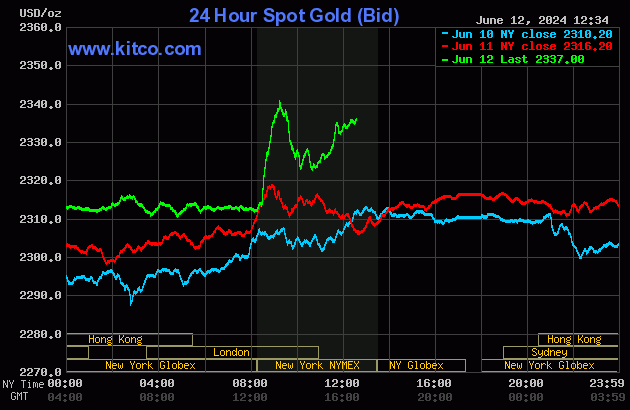
Image Source: Kitco News
July silver futures bulls have the overall near-term technical advantage. Silver bulls' next upside price objective is closing prices above solid technical resistance at the May high of $32.75. The next downside price objective for the bears is closing prices below solid support at $28.00. First resistance is seen at today’s high of $30.355 and then at $31.00. Next support is seen at $29.50 and then at this week’s low of $29.135. Wyckoff's Market Rating: 6.5. Read More
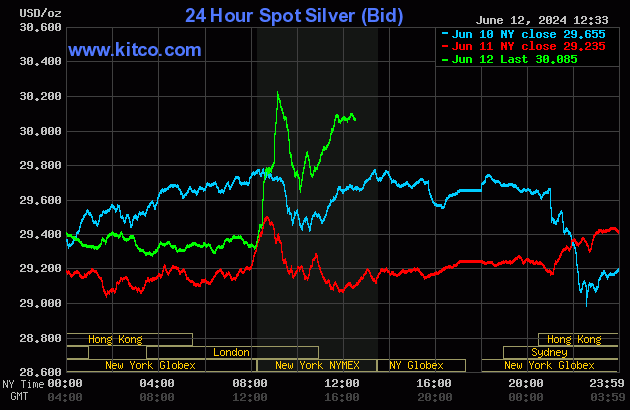
Image Source: Kitco News
Fed may cut later than ECB, BoC, but cut they shall, and gold will soar – David Rosenberg
The Fed may be late to the party, but once they begin cutting, history says gold will take off, according to David Rosenberg, founder and president at Rosenberg Research.
In a recent interview with BNN Bloomberg, Rosenberg was asked about the interest rate divergence between the Federal Reserve and other developed economies after both the European Central Bank (ECB) and the Bank of Canada cut rates last week, and whether he expects those banks to continue cutting. Read More
Gold prices trying to hold the line at $2,350 as Federal Reserve leaves rates unchanged signals one rate cuts this year
The gold market is struggling to hold the line at $2,350 an ounce as the Federal Reserve continues to pare down its interest rate cut expectations.
As expected, the Federal Reserve left interest rates unchanged within a range of 5.25% to 5.50%.
The updated economic projections show the central bank sees one rate cut this year, down from three estimated in March. The Federal Reserve's interest rate estimate, also known as the dot plot, shows the Fed funds rate ending the year above 5.00%.
While holding positive gains, the gold market has fallen slightly below $2,350 an ounce, which has proven to be a critical resistance point. August gold futures last traded at $2,345.80 an ounce, up 0.79% on the day.
According to some economists, the U.S. central bank continues to keep its options open as inflation remains stubbornly elevated. However, the central bank did tweet its comment on inflation. Read More
Disclaimer: These articles are provided for informational purposes only. They are not offered or intended to be used as legal, tax, investment, financial, or any other advice.















