x




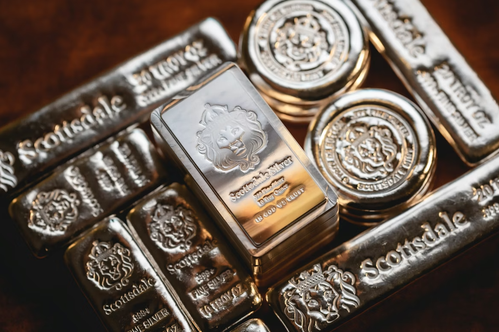
Gold and silver surged to fresh record highs amid strong safe-haven demand, with silver outperforming and approaching the 100 level while gold climbed above 4,600. Prices were supported by heightened global risk aversion linked to geopolitical tensions, including unrest in China, developments involving Iran, and aggressive recent U.S. foreign policy actions. At midday, February gold was up about 26 to around 4,626.90, while March silver jumped more than 5 to roughly 91.70. Outside markets were broadly supportive, with the U.S. dollar weaker, crude oil near 61.50 a barrel, and the 10-year U.S. Treasury yield around 4.15%.
U.S. economic data showed mixed inflation signals alongside resilient consumer demand. Producer prices rose 0.2% month on month in November, while core prices were flat, but annual headline and core producer inflation both climbed to 3.0%, above expectations. Retail sales increased 0.6% for the month, the strongest gain since July, driven by a rebound in auto sales after the expiration of electric vehicle tax incentives and solid holiday spending. Technically, gold bulls are targeting a move above 4,750, while silver bulls are focused on breaking above 100, with both metals holding strong chart positions and high technical ratings. Source
Gold surged to new record levels above 4,600 after Federal Reserve Chair Jerome Powell revealed that the U.S. Department of Justice had subpoenaed the central bank and threatened criminal charges related to his past testimony on the Fed’s 2.5 billion renovation project. Powell said the move was a pretext to undermine the Federal Reserve’s independence in setting interest rates, warning that monetary policy could become subject to political pressure. The Trump administration has also sought to remove Governor Lisa Cook from the policy committee and has been pushing to appoint more dovish officials to support aggressive rate cuts. The announcement triggered a sharp rally during Asian trading, with spot gold later holding near 4,602, up about 2% on the day.
Analysts said uncertainty over the future independence of U.S. monetary policy is likely to provide sustained support for gold prices. Market strategists noted that concerns over political influence on the central bank could fuel the next major upward leg in the metal, even as prices already reflect a significant risk premium. Additional support is expected from a weakening U.S. dollar and growing investor interest in hedging against rising public debt and potential currency debasement as confidence in traditional monetary institutions erodes. Source
A powerful late-year rally pushed gold, silver and platinum group metals to record highs, but Heraeus analysts warn that prices now face elevated downside risk despite many supportive factors remaining in place. They noted that U.S. tariff threats drove large metal flows into American vaults in 2025, tightening liquidity elsewhere and helping platinum and silver close long-standing valuation gaps with gold. Platinum is expected to remain in market deficit through 2026, while palladium and rhodium are less constrained, and limited South African output during the holiday period amplified recent price moves. Although ETF holdings and speculative futures positions rose in 2025, none of the metals reached historical highs in investor allocations, suggesting room for further inflows but also highlighting that the rally was not fully driven by long-term investment demand.
From a technical perspective, platinum became extremely overbought in December, trading more than 44% above its 200-day moving average and reaching record RSI levels, conditions that have historically preceded significant corrections. Heraeus said other precious metals show similar overbought signals. Gold has extended gains in January amid renewed geopolitical tensions involving U.S. actions in Latin America and Greenland, but analysts expect consolidation after what they described as extreme price movement last year. Silver has pulled back after hitting 84 late in December, pressured by ETF outflows, higher CME margin requirements, and new Chinese export restrictions that limit overseas shipments to a small group of firms. Despite these headwinds, silver has rebounded above 85, continuing to outperform in early 2026. Source
Gold and silver are trading near record highs and could reach major psychological milestones in the first half of 2026, according to Solomon Global analyst Nick Cawley, who forecasts gold at 5,000 an ounce and silver at 100 an ounce. He said the latest surge has been driven by escalating geopolitical tensions, particularly violent crackdowns on protesters in Iran over rising living costs and signals from the U.S. administration that cyber or military action remains on the table. Investor anxiety has also intensified following Federal Reserve Chair Jerome Powell’s announcement that the Department of Justice has subpoenaed the central bank and threatened criminal charges related to testimony on the Fed’s building renovations, a move Powell described as an attempt to undermine the Fed’s independence. These developments have accelerated flows out of the U.S. dollar and into safe-haven assets.
Cawley said any short-term pullbacks should be viewed as buying opportunities, even if prices become more volatile as they approach round-number targets that often trigger sharp trading activity. He expects gold to face initial resistance around 4,750 but still reach 5,000 before summer, while silver has little technical resistance after breaking above its previous highs. He added that both metals remain in strong upward trends supported by accommodative monetary policy, geopolitical instability, and supply constraints, though silver in particular is likely to experience frequent double-digit daily swings as prices climb. Source
Gold has returned to a strong upward trend early in 2026, setting multiple new record highs as persistent geopolitical tensions inject higher risk premiums into the market. The World Gold Council said prices have rebounded despite early-year pressures from tax-loss selling, portfolio rebalancing, and broader precious metals volatility, with additional momentum coming from political developments in the United States, including legal action involving the Federal Reserve. Spot prices pushed through 4,600 per ounce and briefly reached above 4,630, reinforcing gold’s role as a strategic hedge in an increasingly unstable global environment. Upcoming data releases, including U.S. inflation figures, UK and German GDP, and China’s gold export numbers, are expected to shape short-term sentiment but have not altered the broader bullish backdrop.
From a technical standpoint, the World Gold Council said gold is not yet extremely overbought at current levels, with more meaningful resistance near 4,770 per ounce based on longer-term chart patterns. Analysts noted that the metal has held above key short-term support around 4,447, suggesting the recent consolidation was temporary within a broader uptrend. While a pullback from the 4,600 area remains possible, positioning is not considered excessive, and deeper support levels are seen progressively lower near 4,408, 4,345, and the 4,275 to 4,265 zone. As long as these levels hold, the immediate bias remains tilted toward further gains. Source
VanEck’s emerging markets bond analysts examine what gold would be worth if it once again had to back the global money supply, rather than trading as a market commodity. Using current central bank money liabilities and official sovereign gold reserves, they calculate an implied reserve price by dividing total money in circulation by available gold holdings. Under this framework, gold would need to trade around $39,210 per ounce to cover base money (M0), which includes physical cash and bank reserves, and about $184,211 per ounce to cover broad money (M2), which also includes savings deposits and money market funds. The exercise is presented as a solvency test rather than a forecast, highlighting how far modern fiat systems have expanded since the gold standard ended in 1971, particularly during recent financial crises when definitions of money widened and liquidity support grew sharply.
The analysis also reveals large differences between countries depending on how much money they have created relative to their gold reserves. Highly developed economies such as Japan and the United Kingdom appear the most leveraged, with implied M2 gold prices of roughly $301,000 and $428,000 per ounce respectively, suggesting their currencies would face heavy pressure in any reset toward asset-backed money. The United States and the euro area fall into a middle group, with implied prices near $85,000 and $53,000, while countries like Russia and Kazakhstan hold enough gold to cover their money supplies at far lower prices, making them comparatively solvent. VanEck argues this matters because rising government debt in developed markets is pushing central banks to keep expanding money supply, which should, in theory, raise the value of scarce assets like gold over time, even as the dollar gradually shares reserve status in a more multipolar financial system. Source
Gold prices remained near session highs after U.S. retail sales data showed stronger-than-expected consumer spending in November. The Commerce Department reported a 0.6% monthly increase, beating forecasts of 0.4% and reversing October’s revised decline of 0.1%. On a year-over-year basis, retail sales rose 3.3%, also above expectations of 3.0% and matching October’s revised pace. Core retail sales, excluding vehicles, increased 0.5%, compared with forecasts of 0.4% and an upward move from October’s revised 0.2% gain.
Following the release, spot gold continued trading near the top of its daily range, reflecting sustained demand despite data pointing to resilient consumer activity. The metal was last quoted at $4,631.97 per ounce, up 1.00% on the day, indicating that bullish momentum in gold remained intact even as economic indicators suggested ongoing strength in the U.S. economy. Source
Gold prices remained near record territory above $4,630 per ounce after new data showed U.S. producer prices continuing to climb. The Labor Department reported that headline PPI rose 0.2% in November and 0.1% in October, following a 0.6% increase in September, with the annual rate accelerating to 3.0%, well above expectations of 2.7%. The October and November figures were released together due to delays caused by a 43-day government shutdown. Despite the hotter inflation reading, economists still view overall inflation as manageable and not a major obstacle to the Federal Reserve’s expected policy easing through 2026.
Markets showed little concern that higher wholesale prices might complicate the pace of future rate cuts, as gold continued to attract strong buying interest. Spot gold was last trading around $4,632 per ounce, up about 1% on the day. Core PPI, excluding food and energy, rose 0.1% in November after a sharp 0.7% gain in October, pushing the annual core rate to 3.5%, the highest since March. The persistence of elevated core inflation suggests price pressures are becoming more entrenched across the economy, reinforcing gold’s appeal as an inflation hedge. Source
CME Group announced it will introduce a new 100-ounce silver futures contract aimed at retail traders, responding to strong investment demand that has pushed silver prices to record levels. The contract will be cash settled rather than physically delivered, distinguishing it from existing offerings that require trading either 5,000-ounce standard contracts or 1,000-ounce mini contracts. CME said the smaller size is intended to broaden access and allow more participants to benefit from the liquidity and efficiency of its futures markets, as retail interest in precious metals grows amid geopolitical uncertainty and the global energy transition.
The exchange reported sharp growth in smaller precious metals products in the second half of 2025, with record average daily volumes in Micro Gold and Micro Silver futures and more than 6 million contracts traded in its 1-ounce gold futures since launch. The new silver contract arrives as physical demand remains exceptionally strong, with spot silver trading above $86 an ounce and futures near $83, indicating a premium for immediate delivery. Analysts note that years of heavy industrial use have depleted above-ground supplies, intensifying competition between manufacturers and investors, and expect demand for hard assets to remain robust, with some forecasting the possibility of prices reaching $100 an ounce. Source
Citigroup strategists led by Kenny Hu forecast that gold will rise above $5,000 per ounce and silver will reach $100 per ounce within the next three months, extending the precious metals bull market into early 2026. The upgrade is driven by elevated geopolitical risks, tight physical supply conditions, and renewed uncertainty over the independence of the US Federal Reserve. While both metals have already set new records this year, the bank expects silver to outperform gold and sees the rally gradually broadening into industrial metals, which it believes will ultimately become the strongest performers.
The analysts highlighted severe tightness in physical markets, especially for silver and platinum group metals, and warned that pending US tariff decisions under Section 232 could sharply disrupt trade flows and prices. A high-tariff outcome could initially worsen shortages and trigger sharp price spikes as metal moves into the United States, followed by price pressure once inventories flow back out after policy clarity. Citi cautioned that a tariff-driven collapse in silver could spark a wider selloff across metals, though it would view such a move as a buying opportunity. Looking further ahead, the bank expects geopolitical tensions to ease after the first quarter, reducing safe-haven demand and leaving gold particularly exposed to a correction later in 2026, while industrial metals such as aluminum and copper are projected to perform strongly in the second half of the year. Source
Spot gold is testing key support around $4,600 per ounce following stronger-than-expected U.S. housing data for December. Total existing-home sales rose 5.1% to a seasonally adjusted annual rate of 4.35 million, exceeding economists’ forecast of 4.21 million and marking the strongest monthly performance in nearly three years. While sales were down 1.4% from a year earlier, gains were broad-based across all regions, and month-over-month increases were recorded everywhere. The housing inventory fell to 1.18 million units, representing a 3.3-month supply, reflecting tight market conditions that continue to constrain buying options.
The median existing-home price edged up to $405,400, continuing a 30-month streak of year-over-year price growth, though the rate of increase remains modest. Analysts note that lower mortgage rates and slower price growth have begun to improve market conditions, encouraging more transactions despite persistent supply limitations. The tight inventory and cautious seller behavior suggest that more homes may enter the market in early 2026, but the current scarcity helped support gold as investors weighed broader economic signals against ongoing demand for safe-haven assets. Source
Gold and silver have reached record highs as investors react to political tensions in the U.S., particularly perceived challenges to Federal Reserve independence, but the market now faces more two-sided risks than in recent years. TD Securities’ Daniel Ghali explained that while gold benefits from concerns over the dollar’s purchasing power and ongoing debasement trends, the dynamics supporting prices are shifting from central bank demand to sentiment-driven flows. The rise in institutional holdings of physically-backed gold ETFs has amplified potential gains but also increased the risk of sharper corrections if investor sentiment turns, as trust in U.S. institutions remains tested but not broken.
Despite the bullish backdrop, Ghali emphasized that platinum-group metals now offer the strongest upside potential compared with gold and silver. He noted that gold’s recent gains largely reflect sentiment rather than market-based inflation pressures, and that the continuation of the debasement trade depends on further shifts in institutional asset allocation or missteps by U.S. authorities. With two-way risks in gold prices, TD Securities is currently neutral on the yellow metal, highlighting that opportunities for gains may be more pronounced in other precious metals, particularly PGMs, as they are better positioned to benefit from broader market trends in 2026. Source
Disclaimer: These articles are provided for informational purposes only. They are not offered or intended to be used as legal, tax, investment, financial, or any other advice.
Featured Image - Source: Unsplash















