x




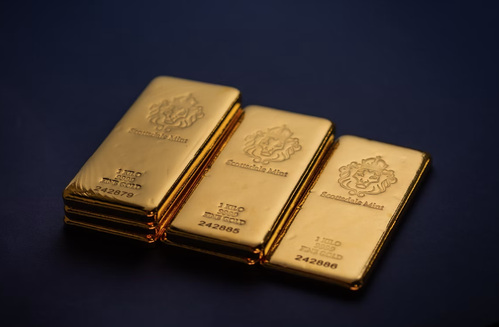
Gold and silver slipped in midday U.S. trading as traders reacted to the absence of new supportive developments for the already elevated precious metals markets. With major U.S. economic data delayed by the recent government shutdown, the metals are awaiting fresh signals, including the upcoming jobs report and inflation-adjusted earnings. Market sentiment is also being influenced by warnings from prominent bond investor Jeffrey Gundlach, who sees mounting risks in equities and the rapidly expanding private credit sector. His concerns about speculative behaviour and “garbage lending” have raised the possibility that future financial market turbulence could eventually boost safe-haven demand for gold.
Broader market conditions provided little direction, with the U.S. dollar slightly higher, crude oil steady around 60.00 a barrel, and the 10-year Treasury yield at 4.125 percent. Technical readings show gold futures facing strong resistance near recent record highs and support just above 4,000.00, while silver retains a near-term advantage with resistance near its own recent peak and key support at 50.00. Traders continue watching both spot and futures activity as liquidity dynamics shift toward the actively traded December contracts. Source
Gold is holding firm around 4,200 an ounce as markets shift their attention from the recently ended U.S. government shutdown to broader concerns over rising federal debt. Despite improved geopolitical sentiment, the metal continues its recovery from last month’s selloff, supported by expectations that mounting fiscal risks could undermine confidence in traditional assets. Analysts note that new spending initiatives proposed by President Donald Trump, including direct payments to Americans, bonuses for certain workers, and even the idea of 50-year mortgages, reflect a more aggressive fiscal stance that could further strain government finances.
Weaker demand in recent Treasury auctions highlights growing investor unease, particularly for longer-term debt. Analysts warn that expanded stimulus measures and unconventional policies could push the U.S. toward even greater deficits, a trend viewed as supportive for hard assets like gold and silver. With the administration expected to keep the economy running hot ahead of the 2026 elections, some market strategists anticipate continued strength in precious metals and even the potential for a seasonal rally into the new year. Source
Gold is stabilizing above 4,000 an ounce after failing to sustain a move beyond 4,200, with analysts suggesting the market may need more time to consolidate before attempting another push toward recent record highs. Growing doubts over a potential Federal Reserve rate cut next month have kept gold in a neutral trading range, especially as the recent 43-day government shutdown has disrupted the reliability of key economic data. This uncertainty has pushed rate-cut expectations sharply lower, weighing on short-term momentum and contributing to broad market volatility across metals, equities, and digital assets. Still, many analysts maintain that gold’s longer-term outlook remains positive, supported by persistent macroeconomic risks, central bank demand, and its growing role as a strategic asset.
Even with uneven near-term sentiment, several market strategists continue to view pullbacks as buying opportunities, noting that gold remains in an established uptrend as long as it holds above key technical levels near 3,900. While some analysts warn that a deeper decline is possible if prices slip below late-October lows, others argue that limited economic data will not meaningfully alter the Fed’s overarching policy path. Broader economic indicators scheduled for release next week, including manufacturing surveys and housing data, may offer partial insight into underlying conditions, but not enough to fully clarify the policy outlook. Source
Gold is set to finish the week higher despite profit-taking, holding firm above 4,000 an ounce and establishing a new support level after a failed attempt to break 4,200. Analysts note rising short-term bearish sentiment but also see any pullback as a potential buying opportunity, with Main Street investors still largely optimistic. Shifting expectations for a December Federal Reserve rate cut have contributed to a broader market pullback, affecting not only gold but also equities and digital assets. The end of the 43-day government shutdown has added uncertainty to upcoming U.S. economic data, further complicating the market’s ability to gauge the economic outlook and influencing the Fed’s cautious stance.
Survey results show that Wall Street analysts are divided, with nearly half expecting lower prices next week, while most retail investors anticipate further gains. Some analysts warn that gold may retest recent lows around 3,930, while others say price dips remain attractive as the metal continues to benefit from long-term macroeconomic drivers. Market strategists highlight the importance of the 4,000 level, suggesting consolidation may continue until stronger catalysts emerge. Broader risk sentiment, developments in equity markets, and upcoming economic indicators will likely shape gold’s next move, with some expecting further volatility before the longer-term uptrend resumes. Source
Silver outperformed this week, rising 4.85 percent, but analysts note the rally may not last unless gold strengthens further. Gold saw mixed performance as markets reacted to progress in ending the U.S. government shutdown and growing uncertainty over a potential Federal Reserve rate cut. Meanwhile, strong operational results from Harmony and increased silver inventories in London added to shifting market dynamics. Platinum lagged despite remaining in positive territory, as traders assessed the impact of new Chinese futures markets and evolving supply conditions.
Opportunities across the sector included Sibanye-Stillwater’s settlement with Appian Capital and new permitting progress for Silver Tiger Metals, both viewed as positive catalysts. J.P. Morgan’s Alex Wolf projected that gold could reach 5,200 to 5,300 per ounce by late 2026, supported by ongoing central bank purchases. However, risks remain, including gold’s role in driving China’s rising core inflation, modest physical coin demand from the U.S. Mint, and regulatory shifts in Senegal that could reshape the mining landscape. Source
Gold is finishing the week under pressure as technical selling has offset early gains, with prices slipping back after failing to hold above 4,200. Investors are struggling to interpret shifting economic signals following the end of the 43-day government shutdown, which has disrupted key data such as October CPI. This lack of reliable information has contributed to expectations that the Federal Reserve will leave interest rates unchanged in December, unsettling markets and prompting broad selling, including in gold. Despite the turbulence, gold still ends the week with a modest gain, though well below Thursday’s highs.
Looking beyond short-term volatility, analysts note that the broader economic backdrop remains supportive for gold. The U.S. labor market shows signs of cooling, inflation is elevated but not accelerating, and political pressure on the Fed increases the likelihood of rate cuts in 2026 even if December is skipped. These factors reinforce that one meeting will not alter gold’s long-term fundamental drivers. Source
Gold remains under pressure below 4,100 an ounce as stronger-than-expected U.S. manufacturing data weighs on market sentiment. The Empire State Manufacturing Survey jumped to 18.7 in November, its highest level in a year and well above expectations, reflecting broad improvements across new orders, shipments, employment, and easing price pressures. Although the metal showed little immediate reaction to the report, it continues to lose momentum after last week’s failed attempt to hold above 4,200, prompting investors to take profits. Spot gold last traded at 4,067.20, down modestly on the day.
The stronger regional data reinforces a picture of steady economic activity, reducing the urgency for Federal Reserve easing and contributing to headwinds for gold in the near term. While firms expect conditions to improve, their optimism has tempered, mirroring broader market uncertainty as the metal struggles to establish clear direction. With labor market gains and easing inflation pressures supporting a more resilient economic backdrop, gold may remain vulnerable to further consolidation unless new catalysts emerge. Source
Gold and silver have rebounded strongly, supported by the end of the U.S. government shutdown and expectations for Federal Reserve rate cuts. Heraeus analysts note that ongoing fiscal deficits and the possibility of looser monetary policy are raising concerns about dollar depreciation, which could keep gold attractive to investors. Although gold is slightly lower after last week’s rally to 4,200, it continues to hold comfortably above 4,000, with weak labor data and delayed government statistics adding to expectations for a December rate cut.
Silver has also gained momentum, rising 6 percent last week and tightening the gold-to-silver ratio to 79:1. Primary silver producers have benefited significantly, with First Majestic and Aya Gold & Silver reporting record quarterly output and revenue driven by higher prices and expanded processing capacity. Long-term support for silver remains strong as solar energy demand is expected to stay elevated, even if global capacity additions plateau in the coming decade. Source
Italy is weighing a one-off measure that would let households certify undeclared gold holdings by paying a 12.5 percent tax based on current market value. The plan is intended to encourage people to bring inherited or unrecorded gold into the formal market, avoiding the current 26 percent tax applied to the entire sale value when proof of purchase is missing. Lawmakers argue that the existing rules have pushed many transactions into informal channels and reduced liquidity, despite estimates that Italians hold between 4,500 and 5,000 metric tons of gold privately.
Under the proposal, individuals could certify their bullion, jewelry, and collectible coins by June 2026, paying the tax in one or three instalments and receiving a revised fiscal value for future sales. Authorities expect the process, overseen by authorised intermediaries, to improve compliance and generate up to 2.08 billion euros in one-off revenue if even a small portion of private gold is regularised. Supporters also say the reform would remove what is viewed as a punitive regime for long-held assets lacking documentation. The amendment still requires parliamentary approval and government review. Source
Silver is set to record a fifth consecutive annual supply deficit of 95 million ounces, with industrial demand expected to decline by 4 percent amid a slowing global economy. Despite weaker consumption from sectors such as photovoltaics, jewelry, and silverware, the deficit remains large enough to help keep prices elevated, with silver trading near 50.75 dollars an ounce after a strong annual gain. Supply chain disruptions have compounded the imbalance, as significant volumes of metal remain concentrated in New York due to tariff concerns, leaving London facing tight availability and record lease rates.
The deficit persists largely because surging investment demand has more than offset industrial weakness, driven by concerns over stagflation, geopolitical tension, and questions about monetary and fiscal stability. Exchange-traded funds have absorbed roughly 187 million ounces so far this year, supporting expectations of continuing shortfalls in the years ahead. Analysts note that consumption would need to fall sharply to rebalance the market, and Metals Focus forecasts that prices could climb toward 60 dollars an ounce in 2026. Source
Gold prices are experiencing mixed pressures as weakening expectations for a December rate cut by the Federal Reserve are putting downward pressure on the metal, while concerns about a slowing U.S. economy and potential risks to Fed independence are supporting safe-haven demand. Over the past week, gold saw a sharp rally followed by a pullback, with prices peaking intraday at $4,245 before retreating below $4,100. Technical levels suggest support around $4,050 to $4,000 and resistance near last week’s high, reflecting the ongoing tug-of-war between bullish flows and macroeconomic pressures.
The market’s volatility is amplified by low correlations with the U.S. dollar, Treasury yields, and equities, making gold prices more sensitive to flows than traditional macro factors. Hawkish signals from Fed officials and the delayed release of key economic data due to the government shutdown have contributed to uncertainty, reinforcing gold’s appeal as a safe haven. Upcoming reports, including September nonfarm payrolls and FOMC minutes from October, are expected to influence short-term price direction, with analysts projecting gold to trade within a $4,000–$4,250 range as investors weigh the balance between economic risk and policy expectations. Source
In this week’s Live from the Vault, Andrew Maguire explains how the engineered paper-market correction in gold and silver has backfired, with physical metal moving into the hands of long-term holders and setting higher, physically backed price floors.
The precious metals expert comments on persistent BRICS and central bank buying, China emerging as a global price-setting hub, and signals that the market of unallocated contracts is losing control, positioning investors for a brand new gold target.
Disclaimer: These articles are provided for informational purposes only. They are not offered or intended to be used as legal, tax, investment, financial, or any other advice.
Featured Image - Source: Unsplash















