x



Gold and silver surged to new record highs as renewed trade war tensions between the United States and Europe drove investors toward safe-haven assets. President Donald Trump threatened tariffs of 10 percent rising to 25 percent on several European countries to pressure support for his push to acquire Greenland, prompting European Parliament members to freeze ratification of a recent trade deal and discuss possible retaliation. The escalation weakened the U.S. dollar and lifted precious metals, with gold trading around 4,666.90 an ounce and silver near 93.49 an ounce, as markets reacted to the risk of broader economic disruption and supply chain damage.
Analysts said policy uncertainty and geopolitical risk are now stronger drivers of investor behaviour than growth or inflation expectations, encouraging defensive positioning in metals. Expectations that the Federal Reserve will hold interest rates steady until at least June have not slowed gold’s momentum, as confidence in other U.S. assets softens and volatility is expected to rise when markets fully reopen after the holiday. Silver has outperformed gold due to tight supply, strong industrial and investment demand, and currency weakness, even as technical indicators suggest it is overbought. Source
Gold is attracting growing investor interest as a hedge against escalating geopolitical uncertainty, with prices approaching $4,675 an ounce. The World Economic Forum’s Global Risks Report 2026 highlights geoeconomic confrontation, interstate conflict, and societal instability as top risks, reflecting widespread concern among global leaders and experts. The report shows that roughly half of respondents expect a turbulent world over the next two years, with expectations for instability rising further over the next decade. Recent trade tensions, including President Trump’s threats of tariffs on multiple European nations, have added to market uncertainty and disrupted global trade agreements, reinforcing gold’s appeal as a safe-haven asset.
Analysts say gold’s rally is underpinned by long-term structural factors rather than short-term market speculation. Geopolitical uncertainty, policy unpredictability, and concerns over fiat currencies are supporting sustained demand, while technical overbought conditions are seen as temporary adjustments rather than signs of a trend reversal. Investors are increasingly treating gold as a core component of risk management strategies, and despite potential short-term pullbacks, expectations remain for prices to reach—or even surpass—$5,000 an ounce in the coming months. The metal’s role is shifting from a defensive hedge to a strategic asset as markets navigate a complex and uncertain global environment. Source
Gold remains in a strong upward trend, with the probability of prices reaching $5,000 an ounce within the next six to nine months now estimated at 30 to 40 percent. State Street’s Head of Gold Strategy, Aakash Doshi, points to elevated geopolitical risks, policy uncertainty, and record levels of government and corporate debt as key structural supports for bullion. Despite short-term volatility or periods of consolidation, gold’s role as a low-volatility hedge in portfolios is reinforced by equities trading near record highs, unstable stock–bond correlations, and investor focus on tail risks rather than traditional interest-rate drivers.
Physical demand and investment flows continue to underpin gold’s price floor, with central bank purchases and gold-backed ETF inflows providing strong, price-insensitive support. Doshi notes that even a temporary pause in price growth allows investors to re-engage, as previous dips have been aggressively bought. Monetary policy is now considered a secondary influence, with inflation stabilizing above the Federal Reserve’s target and no immediate rate cuts expected. Analysts see the structural case for gold remaining intact, with room for allocations to increase globally and prices comfortably trading between $4,000 and $5,000 an ounce. Source
Silver pulled back sharply after the White House confirmed it will not impose tariffs on processed critical minerals and related products for the time being, opting instead to pursue new trade agreements to secure supplies. The decision eased immediate fears that silver would face import restrictions after being added to the U.S. critical minerals list, a move that had triggered a tariff investigation and fuelled market anxiety. Prices dropped from a recent high near 93 an ounce to around 90.09, down more than 3 percent on the day, though they recovered from overnight lows near 86. The announcement also highlighted the United States’ heavy reliance on imports, being fully dependent on foreign supply for 12 critical minerals and more than 50 percent reliant for another 29.
Analysts said the news could reduce liquidity stress and ease a prolonged supply-driven short squeeze, but structural shortages and strong industrial and investment demand are likely to limit how far prices fall. Elevated stockpiling throughout 2025, driven by tariff fears, drained available supplies in major hubs such as London and China, creating persistent tightness in the physical market. While some expect short-term consolidation or further weakness, most see ongoing deficits, limited refining capacity, and fragile global supply chains supporting prices through 2026, even as London inventories slowly rebuild, and Chinese exports remain broadly stable. Source
The Canadian dollar rose to its strongest level in nearly a week as the U.S. dollar weakened broadly, and new data showed inflation in Canada picked up in December. The loonie traded about 0.4 percent higher at 1.3865 per U.S. dollar after touching an intraday high of 1.3860, while the U.S. dollar fell as investors sought safe havens such as the Swiss franc following fresh tariff threats from President Donald Trump toward Europe. Canada’s annual inflation rate climbed to 2.4 percent, boosted mainly by base effects from last year’s sales tax break, exceeding expectations for it to remain at 2.2 percent, even as core inflation measures cooled for a third straight month.
Analysts said the higher headline inflation strengthens the case for the Bank of Canada to keep interest rates steady or potentially raise them later this year. Markets expect the central bank to hold its benchmark rate at 2.25 percent next week but see about a 40 percent chance of a hike by year-end. Business sentiment remains subdued due to ongoing trade tensions with the United States, with companies anticipating only modest sales growth. Meanwhile, oil prices edged up to around 59.57 a barrel, and Canadian bond yields were mixed, with short-term yields slightly lower and long-term yields marginally higher. Source
Canada’s main stock index reached a new record as gains in metal mining shares offset broader market weakness, supported by rising gold prices and domestic inflation data that reinforced expectations the Bank of Canada will hold interest rates steady. The S&P/TSX Composite Index closed up 0.2 percent at 33,090.96, surpassing its previous high, with lighter trading volumes due to U.S. markets being closed for the holiday. Global equities fell and the U.S. dollar weakened after President Donald Trump threatened additional tariffs on European countries opposing his Greenland plans, prompting investors to seek safe-haven assets and driving gold to a record high.
The materials sector climbed 2.2 percent on the back of higher gold prices, while energy stocks rose 0.5 percent and consumer staples gained modestly. Canadian inflation accelerated to 2.4 percent in December, mainly due to base effects from last year’s sales tax break, while core inflation continued to cool, strengthening expectations the central bank will keep its benchmark rate at 2.25 percent next week. Despite the index’s advance, six of ten major sectors declined, led by technology and financials, as investors remained cautious amid rising geopolitical and trade tensions. Source
TD Securities closed its silver short position for a second time since October after being stopped out with a loss of 606,000 as prices surged to fresh record highs. The bank exited the trade when March silver futures hit 93.70 an ounce, triggering a stop-loss at 93.15, after entering the position at 78 an ounce just a week earlier. Silver climbed more than 19 percent over that period and remains up over 21 percent for the year so far, highlighting the strength of the rally that has repeatedly wrong-footed bearish positioning.
The bank had expected annual index rebalancing to push about 5 billion out of the market and improve physical liquidity, easing the supply-driven squeeze, but said those flows were absorbed by new buying instead. Its analysts still view silver as heavily overbought and believe a turning point could emerge, potentially helped by President Donald Trump’s decision not to impose tariffs on the metal despite its designation as a critical mineral. They also argue that future physical availability could deteriorate as inventory dynamics shift and large stockpiles become more accessible to global markets, which could eventually alter price behaviour, though no forced selling has yet materialized. Source
Silver has continued its rapid climb, reaching above 93.50 this week and pushing closer to the widely anticipated 100 level, a target that has become the consensus among analysts and traders. The strong rally has been accompanied by signs of capitulation in inverse silver exchange-traded funds, where trading volumes have surged to unprecedented levels, suggesting aggressive positioning by market participants. While further upside remains possible based on momentum indicators, the increasingly crowded nature of bullish bets raises the risk that prices could stall or reverse before reaching the psychologically important target, potentially leaving late buyers exposed.
At the same time, U.S. equities are showing signs of vulnerability, with the S&P 500 trading at valuation multiples well above historical averages, a condition that has often preceded sharp corrections. The combination of stretched positioning in silver and elevated stock market valuations points to growing downside risks across assets. The commentary argues that investors should avoid complacency, manage risk carefully, and consider exit strategies even during periods of strong performance, as rapid reversals can undermine profits just as quickly as they are made. Source
Precious metals extended their strong rally into early 2026, with gold above 4,500 dollars an ounce, silver over 80 dollars, and platinum at its first record highs since 2007, while palladium also rebounded sharply. Since the end of 2024, silver, platinum and palladium have outperformed gold after years of lagging, largely reflecting catch-up dynamics. The gold–silver ratio has fallen to its lowest level since 2013, suggesting silver is no longer clearly cheap relative to gold, even though its smaller market size makes it more volatile and more sensitive to gold’s moves. Structural demand shifts have also mattered: silver suffered earlier this century from the decline of photographic use but has gained new support from batteries and solar panels, while platinum and palladium have been hurt by reduced demand for diesel vehicles and the global rise of electric vehicles.
Platinum still looks historically inexpensive compared with gold, which is now roughly twice as expensive, and palladium trades near long-term lows relative to gold and silver despite potential short-term support if EV sales slow as subsidies are cut in major markets. Norland also stresses market size: gold mining output by value is about 6.5 times larger than silver’s and around 35 times larger than platinum’s and palladium’s, so even modest diversification out of gold could significantly lift prices of the smaller metals. The broader outlook depends heavily on macro forces, including whether core inflation stays above target, how central banks respond—especially the US Federal Reserve amid a leadership change in 2026—and the persistence of large fiscal deficits across major economies, which are likely to remain supportive for metals. Geopolitical tensions could further boost demand for gold and spill over to other precious metals, while any stabilization could reverse some of these flows. Source
Silver has surged back above 91 dollars an ounce, nearing recent record highs, driven by strong speculative inflows, robust industrial demand, supply-chain tightness, and a prolonged short squeeze. This has pushed the gold-to-silver ratio down to around 50, its lowest level since 2012, after peaking above 100 in 2025. Over the past year silver prices jumped nearly 150% and are already up more than 27% in early 2026, far outpacing gold, which has risen just over 6% this year while holding above 4,600 dollars an ounce. BMO Capital Markets notes that although the ratio could fall slightly further in the near term due to geopolitical risks and speculative enthusiasm, the scale of silver’s outperformance relative to gold is increasingly difficult to justify.
BMO argues that when silver’s market balance is measured by actual consumption rather than investment flows, supply typically exceeds industrial, jewellery, and silverware demand, pointing to a growing physical surplus over time. Solar power has driven more than half of the increase in silver consumption since 2020, but demand from this sector is expected to peak due to slower installation growth and continued reductions in silver use per panel. While future technologies such as solid-state batteries could add meaningful demand later in the decade, they are not yet commercially significant, and mine supply is expected to continue rising. As a result, BMO expects silver to underperform gold over the longer term and the gold-to-silver ratio to trend higher again, even if short-term speculation temporarily pushes it lower. Source
Gold prices in India tracked a powerful global rally into early 2026, with international prices rising nearly 6% in the first half of January after a 67% surge in 2025, while domestic prices reached about 139,799 rupees per 10 grams. The rise was driven by geopolitical uncertainty, policy concerns, and strong safe-haven demand, reinforced by sustained inflows into gold ETFs. High prices softened jewellery volumes as consumers shifted to lighter and lower-purity products and relied heavily on old-jewellery exchanges, which now account for over 40% of sales at some retailers, though wedding demand remained steady. Retailers tightened inventory management, and listed jewellery companies reported strong late-2025 revenue growth largely due to higher prices rather than volumes, alongside a sharp increase in gold coin sales and rapid expansion of digital and e-commerce channels.
Investment demand dominated the market in 2025, with Indian gold ETFs recording record inflows of about 430 billion rupees, equivalent to 37 tonnes, and assets under management rising to roughly 1.28 trillion rupees. December alone saw a record 1.29 billion dollars of net inflows, lifting total ETF holdings to 95 tonnes, while the investor base expanded by 60% to 10.2 million accounts. Digital gold purchases via UPI nearly tripled in value over the year to 21 billion rupees per month, totaling an estimated 13.5 tonnes, despite brief regulatory concerns. In contrast, central bank buying slowed sharply, with the Reserve Bank of India purchasing only 4 tonnes in 2025 after heavy buying in 2024, even as the value of its gold reserves rose due to higher prices. Gold import values held steady for the year at about 59 billion dollars despite a drop in volumes of over 20%, and the WGC expects upcoming festival and wedding demand to support jewellery while investment demand remains the main driver. Source
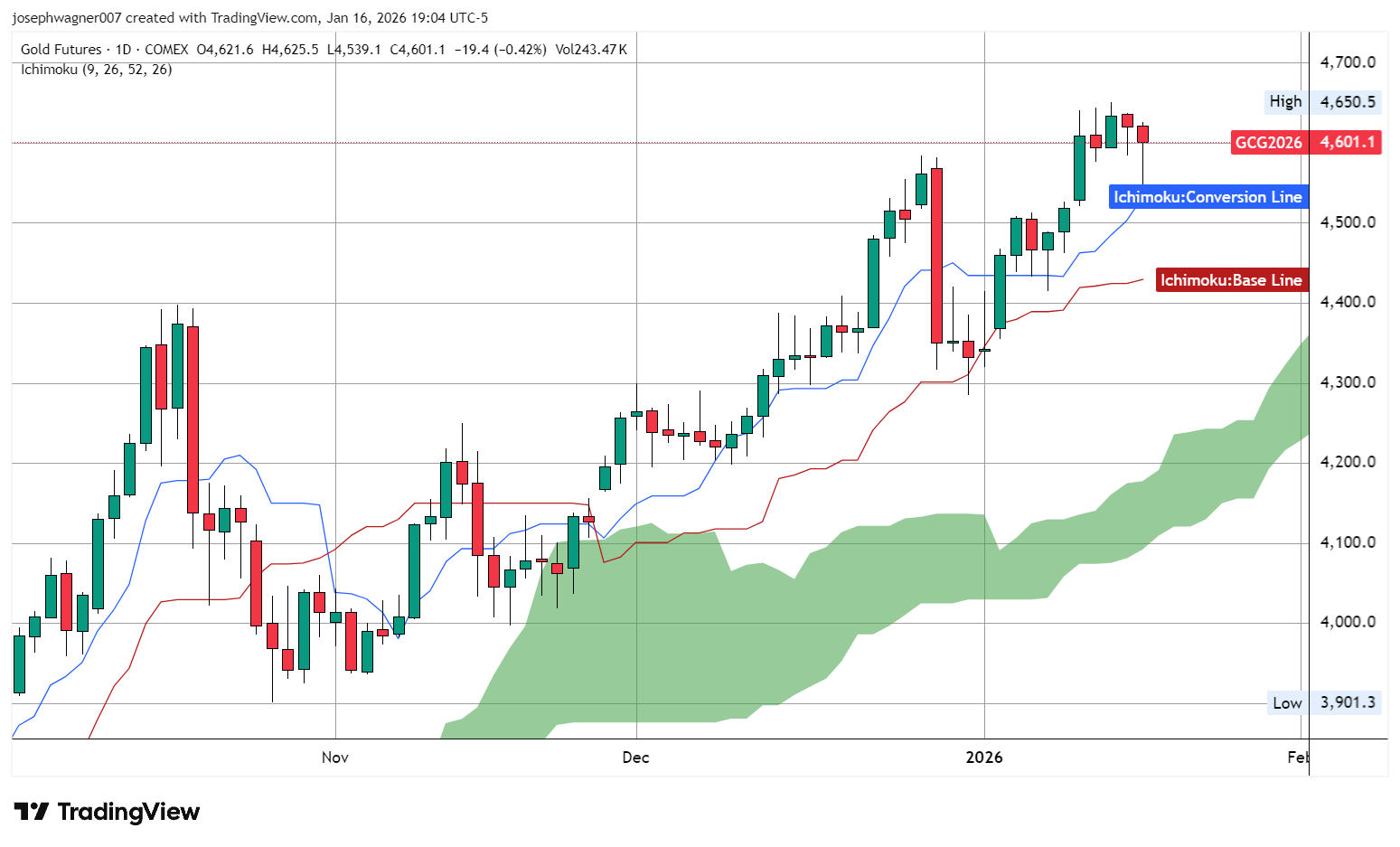
Image Source: Kitco News
Gold fell sharply as uncertainty over the future leadership of the US Federal Reserve unsettled investors and reduced expectations for interest rate cuts. Prices briefly dropped as much as 1.7% before futures settled around 4,601 dollars an ounce, after comments from President Donald Trump cast doubt on the appointment of Kevin Hassett as the next Fed chair. The prospect that a more hawkish candidate such as Kevin Warsh could emerge lifted the dollar and Treasury yields, weighing on non-yielding gold. At the same time, recent inflation and employment data led several regional Fed presidents to signal openness to pausing rate cuts, reinforcing market views that monetary easing may be more limited in 2026 than previously anticipated.
Silver suffered heavier losses, sliding about 6% to near 90 dollars an ounce after Chinese regulators moved to curb speculation in domestic futures markets. Authorities tightened trading limits and targeted high-frequency traders following extreme volatility and surging volumes that had helped drive silver to record highs, with much of the speculative momentum centered in China rather than Western markets. While gold continues to benefit from longer-term support linked to geopolitical risk, central bank diversification, and fiscal concerns, the short-term boost from expectations of looser US monetary policy has weakened. For silver, the regulatory crackdown highlighted how far prices had moved away from underlying physical demand, suggesting continued near-term pressure even though both metals remain technically supported at lower levels. Source
Silver has surged more than 24% in the first two weeks of 2026, marking its strongest start to a year since 1983, while gold is up about 6%, approaching last year’s January gains. The rapid rally has begun to slow, with gold dipping below 4,600 dollars and silver falling under 90 dollars an ounce, as traders reassess the market after the sharp early-year momentum. The supply-driven narrative that propelled silver higher through late 2025 appears to have eased, particularly after the US government announced it would not impose tariffs on critical metals following a Section 232 review, reducing urgency for stockpiling. Despite this pullback, constrained supply and persistent demand continue to shape both markets, keeping overall support intact.
Gold faces headwinds from higher bond yields and a stronger dollar as the Federal Reserve is not expected to cut rates until at least mid-year, limiting immediate catalysts for further gains. Geopolitical uncertainty, however, continues to underpin safe-haven demand. Analysts suggest gold may have a modest advantage over silver in the near term, as silver’s 150% rally over the past year has driven the gold-to-silver ratio to its lowest point since 2012, levels many believe are unsustainable. While some short-term consolidation is likely, underlying tightness in supply and ongoing macro factors indicate that neither metal is likely to return to fully normal market conditions anytime soon. Source
Gold prices experienced extreme volatility this week, initially surging past $4,600 per ounce amid geopolitical tensions and domestic turmoil, including news of a Department of Justice lawsuit against the Federal Reserve and comments from the Trump administration. After peaking at $4,640, gold fell sharply to $4,536 before stabilizing near $4,600, with trading ranges fluctuating between $4,585 and $4,620. Analysts noted that while Wall Street remains divided on near-term prospects, Main Street investors are increasingly bullish, driven by uncertainty in the Middle East, U.S. policy decisions, and ongoing macroeconomic concerns. Despite profit-taking and temporary pullbacks, many observers see the overall trend as upward due to continued geopolitical and economic uncertainty.
Looking ahead, gold is expected to consolidate as markets digest both geopolitical developments and domestic economic data, including inflation, employment, and trade policies. Analysts highlighted risks and opportunities, noting potential sharp moves from volatility in silver and other precious metals, while central bank buying and the weak U.S. dollar support the market. Technical levels suggest resistance near $4,650 and support around $4,550, with sentiment reflecting a mix of caution and continued bullish interest. Market participants are preparing for possible short-term pullbacks but remain focused on gold as a hedge against global instability. Source
Gold and silver are ending the week near record levels, although prices have pulled back slightly from their recent highs. Spot gold traded just below $4,600 an ounce, up 1.6% for the week but down 1.2% from midweek peaks, while silver saw a weekly gain of nearly 11% despite a 5% drop from its intraday high. The metals have seen historic gains in the first two weeks of 2026, with gold up $256 and silver up nearly $17.50 so far this month. Analysts note that the current pullback reflects consolidation rather than a loss of momentum, as the markets recalibrate following strong gains in late 2025, and continued geopolitical and economic uncertainty supports ongoing bullish interest.
Market observers caution that technical indicators show overbought conditions, and minor setbacks could push gold toward $4,500 or even $4,450 before recovering, while a break above $4,645 could propel it to $4,700. Geopolitical tensions, particularly around Iran, alongside steady central bank buying, keep fundamentals supportive, even as expectations for a delayed Fed rate cut may temper short-term demand. Analysts warn that a crowded market and one-sided positioning could trigger sharp, short-term corrections, but the structural drivers for gold and silver remain strong. Volatility could increase next week as the World Economic Forum begins, President Trump speaks in Davos, and key U.S. economic data, including GDP and PCE reports, are released. Source
In this week’s Live from the Vault, Andrew Maguire explains why forced index selling failed again, as billions in gold and silver futures were converted into physical metal, exposing a decisive shift away from Western price-setting influence.
With Shanghai-led demand absorbing every sell-off, Andrew outlines how tightening supply, rising bullion market pressure, and accelerating institutional buying are laying the foundations for significantly higher gold valuations through 2026.
Disclaimer: These articles are provided for informational purposes only. They are not offered or intended to be used as legal, tax, investment, financial, or any other advice.
Featured Image - Source: Unsplash















