x



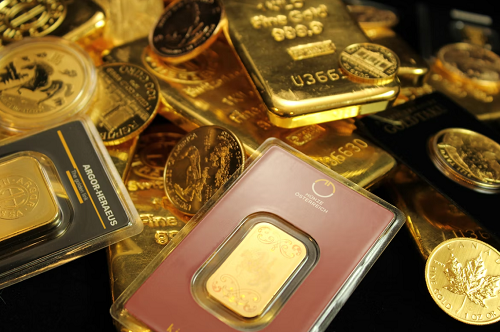
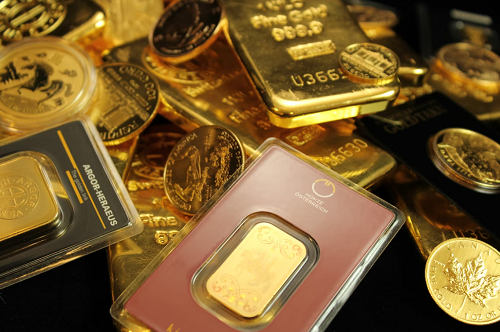
Image Source: Unsplash
Gold Price News: Gold Stabilises Near $1,850 as Markets Take Stock
Gold is showing signs of stabilising after last week’s fall with the precious metal trading just below $1,850 an ounce.
With little in the way of macroeconomic data releases or geopolitical news to drive prices today, traders and investors are taking the opportunity to fully assess the true state of markets, as well as the likeliest interest rate curve trajectory for the Federal Reserve and other major central banks.
In this environment, gold’s tumble has paused with the $100 an ounce drop in price since the start of February deemed sufficient punishment for an asset that was trading on a future scenario rather than present-day reality.
Later this week the minutes from the Federal Open Market Committee meeting from three weeks ago will be released, which should provide better insight into how hawkish the Fed remains after recent remarks by central bankers suggested a return to 50 basis point hikes was on the cards. Read More
Silver Price News: Silver Finally Points Upward Again as Markets Stabilise
The silver price graph is finally showing an upward move with the price edging back up towards $22 an ounce, having lost over $2 an ounce since the start of February.
A pause in the strengthening of the US dollar allied to a quieter day of macroeconomic data has given silver the opportunity to recover some of the ground it has lost in recent weeks on the prospect of the Federal Reserve hiking interest rates for longer and higher than previously anticipated.
While the likelihood of more Fed hikes hasn’t changed, silver had more punishment meted out to it than its fundamental outlook reflected – indicating there is plenty of upside room for the metal to make further gains. Read More
Commerzbank lowers mid-year gold price forecast to $1,800 due to shifting interest rate expectations
Hawkish comments from U.S. central bank officials and persistently high inflation is taking their toll on the gold market and one international bank sees potential for lower prices in the first half of the year.
In their latest research note published Friday, commodity analysts at Commerzbank said that they are lowering their mid-year gold prices forecast to $1,800 an ounce, down from the previous estimate of $1,850, as growing interest rate expectations continue to weigh on the precious metal.
The comments come as gold prices look to end the week with substantial losses as prices fall further below $1,850 an ounce. April gold futures last traded at $1,848.40 an ounce, down 0.18% on the day more than 1% on the week.
"Hopes of an end to the rate hike cycle in the near future in the US have turned out to be premature. The correction of the gold price has been correspondingly pronounced: currently, a troy ounce of gold costs a good $130 less than it did at the beginning of the month. Presumably, a number of investors have had their fingers burnt. Market participants are, therefore, likely to proceed with caution…" the analysts said.
The most significant influence on Commerzbank's near-term bearish outlook for gold is the rise in bond yields, as some members of the Federal Reserve have said the central bank might have to continue aggressively raising interest rates to cool down inflation. Read More
Central banks are replacing dollars with gold
The economy started the year on a strong note, and the gold market is taking a hit. The Federal Reserve might need to raise rates more than expected since inflation is not coming down fast enough.
Video - Kitco News
Gold market cautious as investors spooked by risk of Fed hiking 50 bps in March
Gold is down for the fourth week in a row as markets are worried about how aggressive the Federal Reserve will have to be to bring inflation down to 2%.
Markets were hit with stronger-than-expected economic data and stubborn inflation numbers this week.
In response, gold struggled, with April Comex gold futures down 1.3% on the week and last at $1,851 an ounce.
"Inflation will be more sticky than many anticipated. And we got confirmation that economic data is firm," TD Securities global head of commodity strategy Bart Melek told Kitco News. "The next Fed move could be 50 basis points. And the central bank might not be able to stop there. And that means higher rates for longer."
The problem for gold is that the U.S. dollar has been climbing. "The hypothesis that the U.S. dollar will weaken in a big hurry is being questioned," Melek said.
For those playing the long game, OANDA senior market analyst Edward Moya told Kitco News that there are two drivers to keep an eye on.
The first is the new expectations for additional Fed tightening. "The Fed is clearly going to remain aggressive in tightening. The 50 bps startled a lot of traders," Moya said. "Even though half a point rate increase might not play out, the Fed will be hiking in March, May, and probably in June."
The CME FedWatch Tool currently sees an 18% chance of a 50 bps hike in March. Read More
Gold prices can go lower, but now is the time to build a strategic position - Incrementum' Ronald-Peter Stöferle
Now is the time for investors to look at building a strategic position in the gold market, according to one market strategist, as prices are expected to struggle in the near term due to rising bond yields on the short end of the curve.
In an interview with Kitco News, Ronald-Peter Stöferle, managing partner and fund manager at Incrementum AG and one of the authors of the annual In Gold We Trust report, said that he is expecting to see lower gold prices in the near term as markets begin to price in further aggressive monetary policy action from the Federal Reserve.
Persistently higher inflation has prompted markets to price in a 21% chance that the Federal Reserve will raise interest rates by 50 basis points next month. These shifting expectations have pushed the yield on U.S. two-year notes above 4.6%, its highest level since 2007.
At the same time, the yield on one-year notes is above 5%. Stöferle noted that when looking at inflation expectations, real bond yields are currently seeing positive returns.
"This is a tough environment for gold and I expect to see further downside risks in the next couple of weeks," he said.
The comments come after April gold futures ended last week in neutral territory at around $1,850 an ounce. Markets are closed Monday for the Presidents' Day long weekend. Read More
Rising geopolitical uncertainty could create a war-time economy that drives gold to $2,000 - BCA
Rising geopolitical tensions could provide critical support for gold and eventually push prices above $2,000 an ounce, according to commodity analysts at BCA Research.
In a research note published late last month, the Montreal-based research firm said it was increasing its year-end gold price target to $2,000 an ounce as war-time economies start to be established in the West and the risk of 'fiscal dominance' continues to grow.
"The risk of fiscal dominance, when monetary authorities peg rates at low levels, will intensify as government policy driven by environmental and defense imperatives continues to expand in the West," wrote Robert Ryan, chief commodity and energy strategist at BCA and the lead author of the latest report.
Since BCA's comments last month, political relations between the U.S. and China have deteriorated further after the U.S. shot down a suspected Chinese spy balloon two weeks ago.
This weekend, the U.S. stoked fears that the war in Ukraine could continue to escalate as China is considering supplying Russia with "lethal support."
At the same time, China held joint military drills with Russia and South Africa as the war in Ukraine reached the one-year mark.
Ryan noted that the rise in geopolitical uncertainty comes as economic conditions continue to deteriorate. He added that in the current environment, he doesn't see the Federal Reserve raising interest rates beyond 5% this year. Read More
Live From The Vault - Episode:110
Are we close to becoming a cashless society? Feat Bill Holter
In this week’s Live from the Vault, Andrew Maguire is joined by the iconic financial commentator and lifelong stockbroker, Bill Holter, who compares the impending bankruptcy of the Western economy to a planned demolition of a Ponzi scheme.
The two industry veterans continue to ferret out the uncomfortable truths about the real intentions of financial elites, investigating the risks of a cashless society system, in which CBDCs could serve as a tool of control.
.png)
Disclaimer: These articles are provided for informational purposes only. They are not offered or intended to be used as legal, tax, investment, financial, or any other advice.















