x




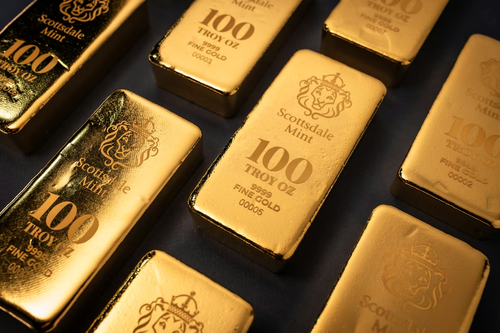
Russia’s central bank sold 300,000 ounces of gold from its reserves in January, marking the first reduction since October and bringing total holdings down to 74.5 million ounces. With gold prices averaging around $4,700 per ounce and peaking near $5,600 during the month, the sales are estimated to have generated between $1.41 billion and $1.68 billion. Despite the disposal, the overall value of the country’s gold reserves rose sharply, climbing 23% to reach $402.7 billion as soaring prices more than offset the decrease in volume.
Exports of precious metals have continued to strengthen, particularly towards China, where trade data cited by Bloomberg indicated a substantial rise in imports of Russian metal ores and concentrates. The sustained rally in gold prices, which have surged over the past year, has amplified export revenues while also fuelling domestic retail demand, with Russian consumers purchasing record quantities of gold to protect savings. Russia remains the world’s second-largest gold producer after China, although central bank buying has slowed since 2022. Meanwhile, major miners such as MMC Norilsk Nickel PJSC have benefited from strong gains in palladium and platinum prices, further boosting the sector’s earnings. Source
Rising geopolitical tensions in the Middle East have pushed gold and silver to extreme levels, but Jen Bawden argues that investors should look past short-term volatility and focus on structural fundamentals. She views recent US threats against Iran as part of broader negotiation tactics rather than a likely trigger for escalation, noting ongoing diplomatic efforts. While a diplomatic breakthrough could unwind the safe-haven trade and trigger a sharp correction, Bawden believes any pullback would reveal persistent supply constraints, particularly in silver, where global consumption has exceeded mine output for six consecutive years. She expects a post-crisis correction could drive silver down to around $50 an ounce.
Beyond geopolitical drivers, Bawden highlights longer-term forces supporting precious metals, including expanding physical deficits, rising US debt levels, inflation risks, and growing industrial demand from AI infrastructure and high-voltage data centres. She also points to mounting financial system stress, especially in commercial real estate and regional banking, as a potential catalyst for renewed flows into hard assets. While anticipating a significant correction in junior silver explorers, she sees buying opportunities in North America-based projects and maintains positions in several major producers. She further expects Asian demand to strengthen following the Lunar New Year period, while warning that a broader regional conflict could drive prices sharply higher, creating conditions to take profits. Source
Analysts at UBS argue that gold prices have not fully reflected the impact of escalating geopolitical tensions linked to Iran and believe the metal could climb to $6,200 per ounce by mid-year. They contend that persistent geopolitical uncertainty, particularly given the US military build-up in the region and the unpredictability of US foreign policy, will continue to support safe-haven demand. While such events may not produce lasting effects across global markets, they are seen as catalysts for volatility spikes that reinforce gold’s appeal as a portfolio hedge.
UBS also highlights supportive macroeconomic and structural factors, including expectations for further Federal Reserve rate cuts, which would likely weaken the US dollar and reduce real interest rates — conditions historically favourable for gold. The bank points to record global demand, strong central bank buying, rising incomes in Asia, and stagnant mine supply as key longer-term drivers. Against this backdrop, UBS maintains a positive stance on gold, recommending a modest allocation within diversified portfolios while also encouraging investors with significant gold exposure to consider broadening into other commodities such as copper and aluminium. Source

Image Source: Kitco News
Gold jumped to a fresh monthly high, rising $117 to $5,248 per troy ounce, as investors reacted to a wave of legal and geopolitical uncertainty. The surge followed a Supreme Court ruling that invalidated President Donald Trump’s global tariffs, a decision that unsettled markets by casting doubt over anticipated tariff revenues and the broader direction of US trade and fiscal policy. The administration’s rapid announcement of a replacement 15% global tariff did little to calm sentiment, as its legal limitations and temporary nature reinforced perceptions of prolonged policy instability, a climate that traditionally favours safe-haven assets.
Geopolitical tensions added momentum, with US-Iran nuclear negotiations stalling ahead of a Geneva meeting and a parallel military build-up amplifying risk-off behaviour. Renewed buying from China after a national holiday further supported prices in both gold and silver. The rally aligns with increasingly bullish institutional forecasts, with major banks projecting gold prices well above $6,000 in the coming cycle, driven by structural demand, persistent inflation risks, and sustained central bank purchases. Silver also advanced strongly, reflecting its combined appeal as a defensive asset and an industrial metal amid ongoing macroeconomic uncertainty. Source
Gold’s renewed strength above $5,000 has been met with caution from Mike McGlone of Bloomberg Intelligence, who argues that the metal’s elevated volatility and extended price action may limit further gains into 2026. He notes that gold has dramatically outperformed US Treasuries and other commodities, but recent advances have come with noticeably higher volatility, a shift that has led some analysts to view gold more as a risk asset than a traditional defensive hedge. With spot prices trading around $5,216 an ounce, McGlone warns that gold’s historically extreme premium relative to broader commodity benchmarks and Treasury yields raises the probability of a reversion to the mean.
He suggests that such a reversion could favour US Treasuries, pointing to the TLT/GLD ratio’s record lows and the recent return of long-term Treasury yields to levels not seen since before the financial crisis. McGlone also highlights unusually subdued equity volatility, arguing that stress in cryptocurrencies and precious metals could spill into wider markets. Weakness in Bitcoin, alongside the possibility of sharp corrections in gold and silver following parabolic moves, is seen as a potential signal of rising risk aversion and a broader deflationary shift. In this scenario, falling bond yields and shifting asset correlations could reshape the investment landscape through 2026. Source
Heraeus analysts note that gold’s consolidation phase continues, with near-term pressure emerging from a strengthening US dollar, while interest rate cuts are expected to provide more meaningful support later in the year. Market expectations currently point to no immediate changes at upcoming Federal Reserve meetings, with rate reductions viewed as more likely from mid-year onwards. Despite currency headwinds, gold remains near elevated levels following its late-December record highs, reflecting resilient investor demand amid a mixed macroeconomic backdrop.
High precious metals prices are also reshaping producer strategies and government policy. Ghana’s gold output rose sharply in 2025, supported by increased artisanal production and new mine developments, reinforcing the country’s position as Africa’s leading producer. At the same time, proposed royalty adjustments highlight how governments are seeking greater participation in elevated revenues. In corporate markets, silver demand strengthened significantly, as reflected in surging retail bar and coin sales, while Hecla Mining’s planned divestment of its Casa Berardi gold operation signals a stronger emphasis on silver-focused growth. Silver prices likewise remain firm, benefiting from both investment flows and industrial demand dynamics. Source
Gold and silver prices surged to multi-week highs as investors sought safe-haven assets amid renewed market uncertainty. The rally intensified after weak U.S. factory orders data showed a 0.7% decline instead of the expected increase, strengthening expectations that the Federal Reserve may face pressure to cut interest rates more aggressively. The softer data weighed on the U.S. dollar index, further supporting precious metals. Prices were also buoyed by geopolitical unease, including escalating tensions involving Iran and concerns surrounding global trade policy.
Market anxiety was amplified after Donald Trump announced an immediate increase in the global tariff rate, while legal and political complications followed a ruling by the U.S. Supreme Court challenging previous tariff measures. The European Union signalled delays to trade negotiations, and shifting dynamics were noted in relations with Xi Jinping and China. Meanwhile, crude oil prices firmed amid fears of potential conflict in the Middle East, particularly risks to shipments through the Strait of Hormuz. Technical indicators suggested continued bullish momentum in both gold and silver futures trading on the CME. Source
Silver led the precious metals complex with a strong weekly gain, reinforcing its tendency to amplify moves in gold during bullish cycles as haven demand and monetary uncertainty support prices. Pan African Resources reported exceptional half-year results, with revenue, profit and margins surging on higher production and record gold prices, driving a notable rise in its share price while management maintained ambitious full-year output guidance. Centerra Gold also exceeded earnings expectations, benefiting from elevated bullion prices and strengthening its longer-term growth optionality through continued strategic investment. Despite gold extending its advance above $5,000 per ounce, it was the weakest performer among major precious metals. Royal Gold faced pressure following earnings and cautious near-term guidance, with investor concerns centred on capital commitments and debt obligations, while Newmont signalled a production decline tied to planned operational upgrades.
Strategic developments highlighted potential upside drivers across the sector, including Wheaton Precious Metals Corp’s multibillion-dollar expansion of its silver stream exposure through BHP Group’s Antamina Mine, a move that materially increases future attributable production but introduces higher debt levels. Sovereign appetite for gold-linked instruments remained evident as Turkey issued gold-denominated bonds, underscoring bullion’s monetary role amid currency volatility. Fiscal uncertainty also emerged as a structural tailwind for gold following the U.S. Supreme Court’s tariff ruling, which may necessitate additional Treasury borrowing and weigh on the dollar. At the same time, risks persist, including geopolitical shifts in gold supply chains following Sudan’s agreement with a Saudi partner, rising cost pressures flagged by Bank of America and UBS, and the prospect of prolonged Federal Reserve hawkishness after comments from Stephen Miran, which could elevate the opportunity cost of holding non-yielding assets. Source
Gold continues to stabilise around $5,000 per ounce, with recent rallies reinforcing the argument against betting on a sustained decline. Despite elevated volatility and a sharp correction earlier in the year, only a small minority of analysts view the metal as nearing a peak. Major financial institutions are instead projecting higher long-term price targets, with forecasts clustering between $5,800 and $6,500. These outlooks are driven by persistent central bank demand, entrenched fiscal deficits, inflation risks, and an ongoing geopolitical backdrop characterised by instability and policy uncertainty.
Although price swings remain a defining feature of the market, particularly as crowded positioning increases the risk of short-term pullbacks, corrections have repeatedly attracted buyers rather than triggering broad exits. Gold’s appeal lies less in speculative momentum and more in its role as a store of value insulated from sovereign debt concerns, monetary credibility challenges, and geopolitical shocks. A meaningful reversal would likely require structural improvements in fiscal discipline, global stability, and policy confidence. In the absence of such shifts, aggressively shorting gold is framed as an unfavourable risk-reward strategy. Source
Gold moved back above $5,000 per ounce ahead of the weekend as investors increased safe-haven positioning amid rising geopolitical tensions in the Middle East. The advance followed a relatively subdued trading week, with prices still set to close with only a modest gain. Market participants reacted to the significant build-up of U.S. military assets near Iran, although analysts observed that gold’s response remained measured, reflecting uncertainty over whether the escalation represents a strategic bluff or a genuine precursor to conflict. Forecasts suggest that a direct U.S. strike on Iran could trigger a sharp but potentially short-lived surge in prices, with expectations of an initial spike followed by stabilisation as markets reassess the implications.
Beyond geopolitical drivers, gold continued to draw support from weaker U.S. economic data and persistent inflation pressures. Fourth-quarter GDP growth slowed markedly while core inflation remained elevated, reinforcing expectations that the Federal Reserve may face pressure to ease monetary policy, a scenario that could reduce real yields and improve gold’s relative attractiveness. However, policymakers have signalled caution regarding rate cuts, leaving the policy outlook uncertain. Technically, gold remains locked in consolidation around $5,000, with analysts highlighting resistance near $5,100 and support below the psychological threshold. With limited economic data scheduled, investor focus is expected to shift toward political developments and geopolitical headlines in the coming week. Source
The U.S. Supreme Court struck down former President Donald Trump's trade tariffs in a 6-3 decision, ruling that the International Emergency Economic Powers Act did not grant him the authority to impose such tariffs. Chief Justice John Roberts wrote that the president must have clear congressional authorisation to enact tariffs, which Trump lacked, while Justice Brett Kavanaugh’s dissent suggested the ruling would not significantly limit presidential tariff powers under other legal frameworks. Following the decision, gold initially dipped but quickly resumed its upward trajectory, reaching fresh daily highs as markets appeared to have largely priced in the ruling. Analysts noted that with the IEEPA tariffs accounting for about 60% of all imposed tariffs, the immediate economic impact was limited, benefiting retail stocks and easing inflation pressures.
Experts believe the decision is unlikely to be the final chapter in the tariff saga, as the administration could pursue alternative legal avenues to maintain tariffs and related revenue. Analysts highlighted that lower tariffs could support inflation expectations and strengthen the case for Federal Reserve rate cuts later in the year, though any gains may be tempered by broader fiscal concerns. Gold, which last traded at $5,070.84 per ounce, has continued to benefit from the uncertainty, with the ruling viewed as a short-term positive for markets but not a decisive end to trade policy disputes. Source
In this week’s Live from the Vault, Andrew Maguire is joined by Alasdair Macleod to examine the silver squeeze and the shift of price control to the east, showing how heavy short positions in China and strong physical demand are stressing paper markets.
The two precious metals experts discuss the wider effects of currency debasement, highlighting why gold and silver are increasingly serving as reliable, strategic monetary assets rather than speculative investments in a changing financial landscape.
Disclaimer: These articles are provided for informational purposes only. They are not offered or intended to be used as legal, tax, investment, financial, or any other advice.
Featured Image - Source: Unsplash















