x





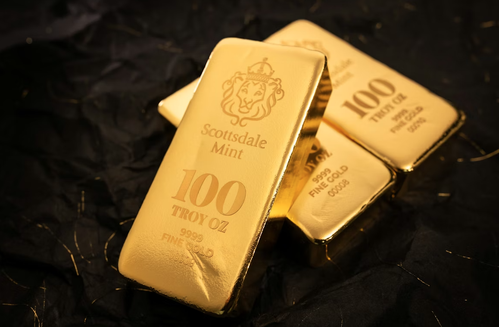
Tokenized gold is gaining traction as investors seek protection from inflation, geopolitical risk, and weakening confidence in traditional financial systems, with gold prices moving above $5,000 per ounce. Tether Gold, the largest gold-backed stablecoin, reported that it now represents more than half of the global digital gold market. The total valuation of this market reached about $4 billion in 2025, up from $1.3 billion at the start of the year, while Tether Gold alone grew to a record market capitalization of over $2.24 billion, fully backed one-to-one by physical gold.
By the end of the fourth quarter of 2025, Tether Gold held 520,089.35 ounces of gold, after selling more than 409,000 tokens during the year, with around 110,000 tokens still available. Its holdings placed the company among the top 30 gold holders worldwide, surpassing several national reserves, and its investment entities added roughly 27 metric tons of gold in the final quarter, more than most central banks purchased in the same period. Tether expects further expansion in 2026, arguing that rising gold prices reflect a long-term structural shift and that gold-backed stablecoins are increasingly viewed as a practical, transparent, and liquid way to hold and transfer gold digitally. Source
German lawmakers and economists are renewing demands to bring home the country’s gold reserves stored in the United States, citing worsening transatlantic relations and concerns over the unpredictability of the Trump administration. Germany holds 3,350.25 tonnes of gold, the second-largest national reserve after the United States, with about 1,236 tonnes, roughly 37 percent, kept at the Federal Reserve in New York. Critics argue that geopolitical tensions, trade disputes, and U.S. pressure on institutions such as the Federal Reserve increase the risk that Germany could face restrictions on accessing its bullion. Senior figures from the European Taxpayers Association, the Green Party, and parts of the Christian Democratic Union have called for repatriation or at least regular physical inspections of the gold by German officials to ensure control and transparency.
The German government and central bank have pushed back, saying the reserves are secure and that the Federal Reserve remains a reliable partner. Bundesbank president Joachim Nagel has repeatedly stated that he has full confidence in the safety of the holdings and sees no reason for concern, while the current coalition government has said repatriation is not under consideration. Germany already holds about half of its gold in Frankfurt, with additional portions in London and Paris, and previously carried out a major repatriation program between 2013 and 2020 that moved hundreds of tonnes back from the U.S. and France. The New York Fed continues to act as the world’s largest gold custodian, storing around 6,300 tonnes for more than 30 foreign central banks, even as political pressure in Germany to reduce reliance on U.S. storage grows. Source
Gold and silver prices surged to new record highs in U.S. trading as investors intensified their move into safe-haven assets amid global political and financial uncertainty. Gold futures climbed above $5,100 an ounce after briefly touching $5,107.90, while silver reached around $113.60 an ounce, marking an all-time high. The rally has been driven by investor concern over shifting U.S. foreign policy under President Donald Trump, weakening confidence in sovereign bonds and currencies, and heightened geopolitical tensions, reinforcing gold’s traditional role as a hedge during periods of instability.
Precious metals were further supported by a sharp decline in the U.S. dollar, which fell to a four-month low on speculation that the United States could join Japan in coordinated foreign-exchange intervention to weaken the dollar. At the same time, global central banks, including the U.S. Federal Reserve, are meeting this week and are widely expected to hold interest rates steady despite political pressure for cuts, contributing to uncertainty in currency and bond markets. With oil prices weakening and Treasury yields relatively stable, investors continued shifting into gold and silver, pushing both markets deeper into technically strong territory as bullish momentum dominated trading. Source
Heraeus analysts say silver’s sharp outperformance relative to gold over the past nine months suggests the rally may be nearing a peak, with historical patterns indicating late-stage behaviour similar to previous major cycles. The gold-to-silver ratio has fallen from 105 in April 2025 to around 49, its lowest level since 2013, reflecting how rapidly silver has gained. Prices above $100 per ounce place silver more than 50 percent above its 200-day moving average, a level previously seen only during extreme episodes such as 1974 and 1980. While momentum and speculative futures positioning remain strong and could still drive further gains, technical indicators point to overbought conditions and heightened volatility. Analysts warn that although rallies can persist even when stretched, history suggests the current phase is closer to its end than its beginning.
High prices are also starting to curb industrial demand, particularly in photovoltaics, where manufacturers are reducing silver usage and shifting toward copper-based or hybrid alternatives that are already entering large-scale commercial production. This adaptation could weaken one of the key fundamental supports for silver over time. Gold, by contrast, has continued climbing despite easing geopolitical tensions over Greenland, surpassing $5,000 per ounce and reaching new record highs above $5,110. Heraeus notes that while the $5,000 level may attract short-term trading interest, the durability of the rally will depend on investor sentiment and profit-taking behaviour. On the supply side, gold production in Mali dropped sharply in 2025 due to disruptions at the Loulo Gounkoto mine, though output is expected to recover gradually following a settlement between the government and Barrick. Source
U.S. durable goods orders jumped 5.3 percent in November, rebounding strongly from a 2.1 percent decline in October and exceeding expectations for a 3.1 percent increase. Orders excluding transportation rose 0.5 percent, also beating forecasts, while non-defense capital goods excluding aircraft increased 0.7 percent, signalling steady business investment and a sustained improvement in demand conditions across the manufacturing sector.
Gold prices briefly softened after the data but remained firmly above the 5,000 dollars per ounce level, trading around 5,062.30 dollars and up about 1.6 percent on the day. The resilience reflects strong underlying bullish momentum in the metal, although analysts note that continued strength in U.S. economic indicators could weigh on gold if it reinforces expectations that the Federal Reserve will keep interest rates unchanged through the first half of the year. Source
Platinum led precious metals with a 19.10 percent weekly gain, supported by tight supply, shrinking above-ground inventories, and rising investor interest in physically backed products as diversification away from gold continues amid macro uncertainty. Major producers also reported stronger-than-expected output, with Hochschild Mining forecasting 2026 gold production well above market estimates and Pan American Silver exceeding expectations for both silver and gold, helped by strong results at the Juanicipio mine. Silver prices surged past 100 dollars per ounce for the first time, reinforcing bullish sentiment across the complex despite gold being the weakest performer of the week, though still up 8.37 percent and outperforming Bitcoin as investors favoured traditional safe havens.
Investment banks and institutions see further upside, with Goldman Sachs lifting its end-2026 gold forecast to 5,400 dollars an ounce and gold ETFs recording 5.5 billion dollars of inflows in a single week, mainly from North America. Strong project economics at higher metal prices are encouraging new mine development, but this is also driving threats, including rising costs, intensified competition for mining services, and policy risks such as Ghana’s proposed royalty increase. Meanwhile, silver’s rapid price rise is increasing input costs for China’s solar sector, and operational challenges in countries like South Africa are constraining supply, adding both support to prices and uncertainty for producers navigating higher expenses and regulatory pressure. Source
Silver surged past 100 dollars an ounce after rising 44 percent this month and more than 180 percent since its breakout rally in the second half of last year, highlighting the power of momentum even as some signs of overheating appear. Gold is also nearing the 5,000 dollars level, less than 20 dollars away, and both metals have been driven higher despite warnings that the rally is becoming irrational. Analysts note that traders who step aside too early risk missing further gains, as markets can remain disconnected from fundamentals longer than expected.
Part of the recent acceleration has been linked to geopolitical tensions after President Donald Trump threatened tariffs and suggested possible military action related to Greenland, triggering renewed interest in selling U.S. assets and boosting demand for hard currencies as protection against currency debasement. Some analysts believe this environment could push gold beyond 5,000 dollars and silver toward 150 dollars an ounce, although others caution that elevated prices may eventually dampen industrial demand and increase volatility. Daily swings of 10 percent are already common, and while corrections are expected to be shallow, investors are advised to wait for pullbacks rather than chase prices at extreme levels. Source
Gold surged to repeated record highs during a volatile week, ultimately peaking just below 5,000 dollars per ounce after strong buying from U.S. traders and renewed safe-haven demand tied to geopolitical tensions surrounding President Trump’s comments on Greenland. Prices climbed from the mid-4,600s early in the week to nearly 4,990 by Friday, with sharp intraday swings driven by global trading sessions and shifting risk sentiment. Although a brief pullback followed Trump’s reassurance that military action was off the table, renewed momentum on Thursday and Friday pushed gold back toward record territory, reflecting strong dip-buying, expanding futures activity, and sustained interest from institutional investors.
Wall Street analysts overwhelmingly expect gold to break above 5,000 in the near term, citing persistent geopolitical risks, a steadily weakening U.S. dollar, capital flows out of Treasuries, and broad momentum across commodities, while retail investors have become more cautious after the rapid rise. Looking ahead, markets are focused on the upcoming Federal Reserve meeting, where policy guidance and signs of internal dissent may influence short-term direction, even though no rate change is expected. Analysts remain divided between those warning of a technical correction after an exceptionally steep rally and others who argue that political uncertainty, currency debasement concerns, and strong demand for precious metals could drive prices higher still, possibly toward the 5,100 to 5,200 range before any sustained pullback occurs. Source
Silver has pushed above 100 dollars an ounce and gold is approaching 5,000 dollars, with analysts arguing that the surge is being driven by solid fundamentals rather than speculation alone. Strong central bank buying, portfolio diversification away from fiat currencies, and concerns over government debt and long-term fiscal sustainability are reinforcing gold’s role as a reserve asset, while silver is benefiting from tight supply and heavy investment demand. Although momentum and fear of missing out are contributing to the speed of the rally, market strategists say the broader macro backdrop, including persistent geopolitical uncertainty and currency debasement fears, justifies elevated prices. Some analysts believe gold could extend toward the 5,200 to 5,400 range before any meaningful correction, while silver remains technically overbought but supported by heavy buying on every pullback.
Geopolitical tensions linked to President Trump’s pressure on the European Union over Greenland have also prompted some European funds to reconsider their exposure to U.S. bonds, adding to demand for precious metals as alternatives to traditional reserve assets. This safe-haven bid is overpowering traditional headwinds such as stable interest rates, even as inflation remains stubborn and economic data in the United States stays resilient. Markets expect the Federal Reserve and the Bank of Canada to keep policy unchanged at their upcoming meetings, with the first potential U.S. rate cut not priced in until June. Upcoming manufacturing, consumer confidence, and inflation data could add short-term volatility, but analysts broadly see the structural drivers behind gold and silver remaining firmly intact. Source
Silver has climbed above 100 dollars an ounce after consecutive weekly gains of around 12 percent, marking a long-anticipated milestone following a powerful rally that began last year. Despite the sharp and volatile price action, analysts say the move is grounded in strong fundamentals, including rising geopolitical and economic uncertainty and growing demand for assets outside the fiat currency system. While central banks tend to favor gold, institutions and private investors are increasingly turning to silver as a cheaper alternative within the precious metals space, supported by declining confidence in the U.S. dollar and sustained interest in real assets.
Analysts expect industrial demand, retail investor inflows, safe-haven buying, and a structural supply deficit to continue underpinning prices, with some projecting a possible move toward 120 dollars in 2026 and even higher levels in more bullish scenarios. At the same time, silver’s extreme volatility is a key risk, with daily swings of 10 percent considered possible as profit-taking increases at higher prices. Several market strategists report reducing their exposure while maintaining a constructive long-term outlook, identifying potential support levels between 85 and 95 dollars as important markers for whether the broader uptrend remains intact. Source
In this week’s Live from the Vault, Andrew Maguire welcomes back Peter Krauth to explain why silver surges past key caps, climbing relentlessly since February 2024 as long-term supply-demand fundamentals suggest a possible upward trend.
Peter highlights key drivers including AI, solar, and data centre demand, alongside limited supply and underperforming mining stocks, pointing to a bullish environment that could support higher silver prices and opportunities for investors.
Disclaimer: These articles are provided for informational purposes only. They are not offered or intended to be used as legal, tax, investment, financial, or any other advice.
Featured Image - Source: Unsplash















