x




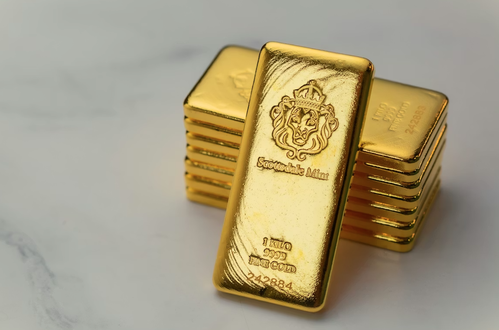
Gold and silver rose in midday U.S. trading as markets processed a full slate of mixed economic indicators ahead of the Thanksgiving holiday slowdown. Jobless claims declined for a third straight week, durable goods orders continued to grow, and the Chicago Business Barometer signalled deeper contraction. Despite the varied signals, none of the data significantly shifted expectations for Federal Reserve policy, with traders maintaining strong confidence that another interest rate cut is likely at the December meeting. Speculation that Kevin Hassett may become the next Fed chair, reinforcing a more aggressive stance on rate cuts, added further support to precious metals.
Broader market dynamics saw a slightly weaker U.S. dollar, modest gains in crude oil and steady Treasury yields, contributing to the firmer tone in gold and silver. Technical outlooks remained favorable for both metals, with gold bulls aiming to break resistance near the November high and silver bulls maintaining a strong near-term advantage as prices approach record levels. Futures activity remained concentrated in the December contracts due to year-end liquidity patterns, helping drive the current momentum. Source
Kevin Hassett’s rising odds of becoming the next Federal Reserve chair have sparked quiet concerns among investors that his preference for faster interest rate cuts could weaken the dollar, even though markets have so far shown limited reaction. Short-term yields briefly dipped on the speculation before stabilizing, while traders continued to price in a high probability of a December rate cut. Hassett’s close alignment with President Trump’s push for lower rates has fuelled expectations that his nomination would tilt policy in a more dovish direction, though analysts note that recent declines in Treasury yields may have muted market sensitivity to the news.
Despite worries about political influence, investors broadly maintain confidence in the Fed’s institutional independence, emphasizing that monetary policy decisions require committee approval rather than unilateral action by the chair. The shortlist for the role includes several other candidates, but Hassett’s surge on betting markets keeps attention on how his leadership might affect the dollar, yield curve dynamics and perceptions of neutrality. While some see risks of a more politicized central bank, others argue Hassett’s traditional economics background and public support for independent policy limit those concerns, especially as future rate decisions will hinge on incoming data and evolving economic conditions. Source
Gold is holding near the $4,100 level as solid investment demand continues to provide support, even as volatility in equities and cryptocurrencies introduces short-term downside risks. Prices have retreated from last month’s record but remain far more stable than Bitcoin, which has seen a much steeper decline. Standard Chartered’s Suki Cooper noted that margin calls could temporarily pressure gold if broader markets weaken further, and uncertainty around Federal Reserve policy is limiting fresh bullish momentum as the bank is expected to keep rates unchanged.
Despite these headwinds, Cooper emphasized that gold’s downside remains limited due to strong and diversified investor demand, particularly from gold-backed exchange-traded products and expanding participation from institutional and advisory channels. Physical markets have held up better than expected at high price levels, and declining short interest suggests traders are increasingly comfortable with gold consolidating above $4,000. While volatility remains elevated, the broader investment base and steady trade flows point to sustained support for prices in the current range. Source
Gold is holding near $4,100 an ounce, but Kathy Lien warns that momentum has slowed, and the metal is increasingly vulnerable to stronger economic data. She sees the trade as crowded in the short term and believes that any positive surprises in U.S. data, especially around inflation or consumer strength, could reinforce expectations that the Federal Reserve will pause further rate cuts. That shift would support the dollar, which has already regained technical strength, and could prompt speculators to exit gold positions, raising the risk of a sharp correction toward $3,500.
Holiday shopping numbers and inflation data are key triggers Lien is watching, noting that strong consumer spending would undermine the narrative of a weakening economy that has supported gold. She also cautions that many newer investors have yet to experience a significant gold downturn, which could intensify volatility if a correction unfolds. Even with her near-term bearish outlook, Lien maintains that gold’s long-term fundamentals remain intact, and a deeper pullback could attract substantial buying from investors and central banks seeking diversification. Source
China is believed to be accumulating far more gold than its official data suggests, with analysts estimating true purchases at around 250 tons instead of the publicly reported 25. This would place the country’s real reserves near 5,000 tons—second only to the United States—and make China a major force behind 2025’s record gold prices. The surge in unreported buying is seen as part of Beijing’s strategy to reduce exposure to U.S. assets amid rising geopolitical tensions, especially after Western governments froze Russian reserves following the Ukraine invasion. Import data, physical gold flows, and sustained accumulation patterns all support the view that China’s buying has been sizeable, deliberate and aimed at building economic insulation.
Experts note that China’s continued gold accumulation fits within a broader global trend in which central banks are boosting reserves due to declining trust in traditional safe assets and a shifting geopolitical landscape. Analysts highlight increasing diversification away from the U.S. dollar, fears of asset confiscation, and the appeal of gold as a crisis hedge, with nations from India to Poland expanding their holdings. Despite record prices, China has openly reported even small monthly additions, signalling to its public that gold remains attractive. With expectations that gold could exceed $5,000 per ounce over the long term, analysts argue that the trend reflects a structural shift toward a multipolar world where gold is viewed as the most reliable store of value. Source
Gold has pushed back above $4,100 as markets increase their expectations for a December rate cut, helped by a softer U.S. dollar and easing concerns about inflation. September’s Producer Price Index came in exactly as forecast for the headline reading and slightly softer for the core measure, reinforcing the view that wholesale inflation remains contained. Although the data was delayed by the extended government shutdown, it still showed benign price pressures that are unlikely to challenge the Federal Reserve’s easing trajectory. Analysts noted that gold has already been building momentum this week, with outdated but mild PPI figures providing an extra tailwind.
Market sentiment strengthened as traders priced in an 84 percent probability of a rate cut, even though economists remain divided on the outcome. The dollar weakened as rate expectations faded, giving gold further room to climb. Some analysts highlighted that a sustained break above $4,150 could quickly move prices toward $4,200, supported by safe-haven demand and a more favorable yield environment. With the “higher for longer” narrative losing traction, bearish arguments for gold are growing increasingly limited. Source
Gold remains in a strong long-term uptrend supported by sustained central bank buying, resilient retail demand and ongoing concerns about the U.S. dollar, according to Rodolphe Bohn of HSBC. Even after sharp swings following its record high near $4,380, gold has stabilized around $4,000 and resumed climbing as markets anticipate further Federal Reserve easing. Bohn highlighted that gold’s exceptional year-to-date gains stem from global uncertainty and fears of dollar debasement, and he expects any near-term consolidations to eventually give way to continued upward movement, even in an environment of rising equities.
Central banks remain a major structural driver, with the share of gold in global reserves rising from 13 percent in 2022 to 22 percent by mid-2025, reflecting a shift toward diversification in response to geopolitical and economic risks. Bohn said these steady purchases, combined with persistent inflows into gold-backed ETFs, help anchor prices at elevated levels and reduce downside volatility. He also noted that gold can still perform well even if equities remain strong, as Fed rate cuts and a softer dollar create a supportive backdrop. While a more hawkish Fed or an unexpected improvement in global conditions could pose risks, HSBC expects gold to continue rising at a steadier pace in the months ahead. Source
Tether has rapidly become a major force in the gold market, with Jefferies analysts highlighting how its expanding purchases could influence prices for years. The company already holds about 116 tonnes of gold valued at 14 billion dollars, making it the largest non-central-bank holder of the metal. Only a small portion backs its XAU₮ token, indicating its broader strategic interest in gold as part of the reserves supporting USD₮. With representatives attending mining industry events and signaling plans to buy around 100 tonnes more in 2025, analysts believe Tether’s profitability and expanding token supply could sustain strong incremental demand.
Jefferies estimates that if Tether allocated half of its annual profits to gold, it could purchase roughly 58 tonnes a year, adding significant new demand to the market. The company is also investing in gold royalty and streaming firms, strengthening its exposure to the supply chain. Analysts argue that tokenized gold offers advantages such as fractional ownership, real-time settlement, and no storage costs, which could broaden investor access and increase liquidity. With these developments, Tether’s activity could shape both gold prices and the evolution of digital gold products for years ahead. Source
Spot gold eased from earlier highs above 4,170 dollars per ounce after U.S. jobless claims came in stronger than expected, with new filings falling to 216,000 for the week ending November 22. The data beat forecasts of 225,000, and although the prior week was revised slightly higher, the overall trend showed resilience in the labor market. Gold last traded near 4,154.91 dollars per ounce, still up on the day but off its peak as markets digested the firmer employment signals.
The four-week moving average edged down to 223,750, and continuing claims rose slightly to 1.96 million, remaining below expectations. Commentary from Comerica Wealth Management suggested that recent immigration policies have yet to show their full impact on employment and wages, particularly in industries such as construction and hospitality. Market watchers are also weighing how much monetary easing may be required to maintain momentum while monitoring inflation risks that could signal a second wave. Source
Gold has climbed to around 4,162.55 dollars per ounce, reaching its highest level since mid-November as easing geopolitical tensions, weaker U.S. economic data, and a more dovish tone from global central banks enhance its appeal. Investors view gold as entering a macro-protective phase, driven less by crisis and more by uncertainty surrounding U.S. monetary policy and improving peace prospects in Eastern Europe. The reduced geopolitical risk, coupled with early signs of economic slowdown in the U.S., has shifted portfolio allocations toward gold as a stable store of value amid structural uncertainty.
Geopolitical developments, including President Trump’s peace discussions on Ukraine, have reduced the immediate risk premium, although markets remain cautiously optimistic pending final agreements. Softer U.S. economic indicators, such as weak retail sales, declining consumer confidence, and stable producer prices, have strengthened expectations for a Federal Reserve rate cut, with market-implied odds for December rising sharply. Technical indicators reinforce the bullish momentum, with gold breaking above key levels and showing support around 4,025 dollars, while institutional interest grows due to weaker real yields and a softer U.S. dollar. Analysts project medium-term targets of 4,500 dollars by mid-2026 if dovish fundamentals persist. Source
Stronger-than-expected U.S. durable goods data has created modest selling pressure for gold as improving economic signals reduce its safe-haven appeal. Durable goods orders rose 0.5% in September, while core orders excluding transportation jumped 0.6%, beating forecasts. Non-defense capital goods excluding aircraft also increased 0.9%, surpassing expectations and signaling solid manufacturing activity. In response, gold prices dipped initially but remained resilient, with spot gold last trading around 4,156.60 dollars per ounce, up on the day despite the data.
Analysts note that gold continues to hold key support above 4,000 dollars due to lingering concerns about a potential U.S. recession, and much of the negative sentiment is already priced in, leaving the market sensitive to positive surprises. Others caution that the data reflects conditions from two months ago, delayed by the U.S. government shutdown, and may not fully represent current economic momentum. This creates a nuanced environment where gold’s safe-haven role faces pressure from short-term economic strength but retains underlying support from structural uncertainties. Source
The UK government’s leaked budget, proposing nearly £30 billion in tax hikes alongside £10 billion in increased spending, has complicated the nation’s economic outlook and may shift investor behavior toward physical gold. A major change reduces the annual tax-free cash ISA allowance from £20,000 to £12,000 for individuals under 65, limiting traditional savings options. Analysts suggest that with fewer tax-advantaged savings avenues, investors could increasingly turn to bullion to preserve wealth and hedge against economic uncertainty, a trend already reflected in rising demand for Capital Gains Tax–exempt gold coins such as Britannias, Sovereigns, and the Queen’s Beasts.
Solomon Global reports a surge in interest for CGT-exempt gold, with nearly half of site visitors exploring bullion coins for their stable, tax-efficient characteristics. The Royal Mint has seen strong growth, with total bullion coin sales revenue up 102% year-on-year and silver demand particularly robust. With the Office for Budget Responsibility forecasting modest GDP growth of 1.5% over the next five years and a frontloaded spending increase paired with backloaded tax hikes, investors are seeking safe-haven assets. Gold is positioned as a reliable alternative, offering protection in an environment where conventional savings vehicles may deliver limited returns. Source
Gold is projected to reach 4,900 dollars per ounce by the end of 2026, driven by continued central bank purchases and ETF inflows, with potential for even greater gains if private investors increase diversification into the metal. Goldman Sachs highlights that central banks, particularly in emerging markets, are motivated to hold more gold following the freezing of Russia’s reserves in 2022, while anticipated Federal Reserve rate cuts are expected to boost demand for non-yielding assets like gold through ETFs. Spot gold has already risen nearly 60% year-to-date on strong central bank buying, ETF inflows, a weaker dollar, and increased retail interest as a hedge against trade and geopolitical risks.
The gold market remains relatively small compared to global bond markets, meaning even modest diversification from private sector investors could substantially lift prices beyond the bank’s baseline forecast. Goldman Sachs raised its 2026 forecast from 4,300 to 4,900 dollars per ounce, projecting central bank purchases of 80 tonnes in 2025 and 70 tonnes in 2026. Analysts note that Western ETF holdings have aligned with U.S. rates-implied estimates, and the market is positioned for further upside if private investors broaden their exposure to gold, reinforcing its status as Goldman Sachs’ top long commodity recommendation. Source
Disclaimer: These articles are provided for informational purposes only. They are not offered or intended to be used as legal, tax, investment, financial, or any other advice.
Featured Image - Source: Unsplash















