x




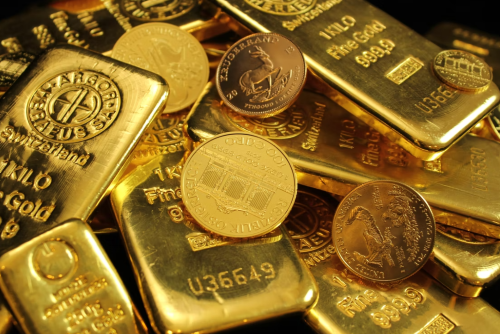
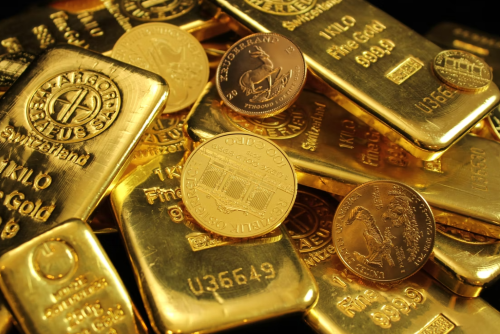
Image Source: Unsplash
Gold and silver get hammered
Monday was an ugly day for gold and silver. Both were sold relentlessly taking gold down 50.00 to the 1850 area and silver was worse down to 22.13. This was not unexpected and there is more room down with 1800 in play for gold and 21.50 in silver.
We do expect a rally in the next day or two which will be created by a short squeeze. Like the equity markets both the bulls and bears become a little too aggressive on both sides which creates mean reversion. However, that does not change the trend. The downtrends are strong, all rallies to resistance levels should be sold. Read More

Image Source: Kitco News
Gold is 'the most confusing' of all commodities right now, here's why
Gold is abandoning its usual drivers and is focusing solely on the U.S. dollar, with prices tumbling around $50 on the day at the start of May trading. But the "unloved" metal could surprise the markets with a $2,100 year-end price target as investors shift their asset allocations, Wells Fargo's head of real asset strategy John LaForge told Kitco News.
The way gold behaved this year has surprised many investors, especially when the precious metal chose to ignore the risk-on/risk-off sentiment in the marketplace.
LaForge described gold's trading action as "the most confusing of all the commodities."
His comments come as gold dropped around $50 on the day, with June Comex gold futures last trading at $1,862.60, down 2.57% on the day.
"It doesn't seem to want to react to anything outside the U.S. dollar and that's been going on for a solid year and a half," LaForge said. "The bad news is bad news and the good news is bad news. It doesn't seem to matter. Gold reached a point where people just don't love it no matter what the fundamentals are. They'd rather go play and do other things. Bitcoin could be one of them. This period doesn't have to last, but that's where gold is today, which makes these things hard to explain." Read More
Paul Tudor Jones: 'Capital preservation is the most important thing' right now
One of Wall Street's most prominent investors Paul Tudor Jones warned that he can't think of a worse environment for stocks and bonds than now, adding that "capital preservations is the most important thing" to focus on.
The billionaire hedge fund manager cited the Federal Reserve's upcoming aggressive rate hikes as concerning considering the financial situation.
Markets are currently pricing in a 98.7% chance of a 50-basis-point rate hike at the FOMC's May meeting, according to the CME's FedWatch Tool. The official announcement is scheduled for Wednesday at 2 pm ET time.
But this is not all. Markets are also pricing in an 86% chance of a 75-basis-point rate hike at the June meeting and an 80.6% chance of an additional 50-basis-point hike at the July meeting.
"You can't think of a worse environment than where we are right now for financial assets," Jones, the founder and chief investment officer of Tudor Investment, told CNBC Tuesday. "Clearly, you don't want to own bonds and stocks."
This environment is "uncharted territory" for investors because the central banks primarily have a good track record of easing monetary policy during an economic slowdown, Jones added. This is very different from tightening into a slowing economy. Read More
The Fed is ready to raise rates by 50 bps, but what comes next?
The Federal Reserve is on the cusp of embarking on its most aggressive tightening cycle in 28 years. The central bank is all but guaranteed to raise interest rates by 50 basis points on Wednesday.
Still, the lingering question for markets and investors is just how hawkish the Federal Reserve will be.
Although markets see a nearly 100% chance of a 50-basis point move Wednesday, economists and market analysts note that there is still a lot of uncertainty surrounding the impending decision. There are some expectations that the Federal Reserve could surprise markets with a 75-basis point move.
Some economists see a 20% chance of a more aggressive move. However, the CME's Fed WatchTool shows that markets see nearly a 100% chance of a 75-basis point move in June. Win Thin, Global Head of Currency Strategy at Brothers Brothers Harriman, noted that markets see interest rates rising to around 3.25% by the end of the year.
On top of the rise in interest rates, the Federal Reserve has also suggested that it would start reducing its balance sheet by $95 billion a month. Read More
Gold, silver see tepid short covering after recent losses
Gold and silver prices are firmer in midday U.S. Trading Tuesday. Short covering by the shorter-term futures traders was featured today after both metals hit 2.5-month lows on Monday. The bulls are trying to stop the bleeding in down-trending markets that have been punished by a strong U.S. dollar and rising bond yields. June gold futures were last up $7.50 at $1,871.10 and May Comex silver was last up $0.101 at $22.65 an ounce.
The economic data point of the week in the U.S. Federal Reserve Open Market Committee (FOMC) meeting that began Tuesday morning and ends Wednesday afternoon with a statement. It's widely believed the Fed will raise the key U.S. interest rate by 0.5%, amid the highest inflation levels in 40 years. The monthly U.S. jobs report is also due out Friday morning.
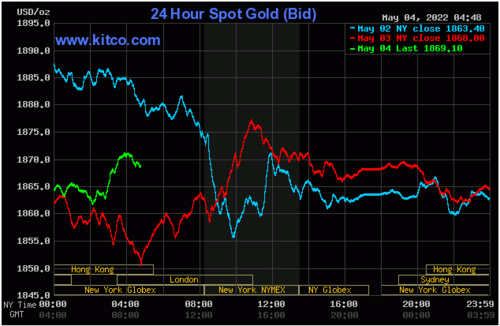
Image Source: Kitco News
Technically, June gold futures See a price downtrend still in place on the daily bar chart. Bears have the overall near-term technical advantage. Bulls' next upside price objective is to produce a close above solid resistance at last week's high of $1,935.50. Bears' next near-term downside price objective is pushing futures prices below solid technical support at $1,800.00. First resistance is seen at today's high of $1,878.40 and then at $1,883.00. First support is seen at today's low of $1,849.70 and then at $1,835.00. Wyckoff's Market Rating: 4.0.
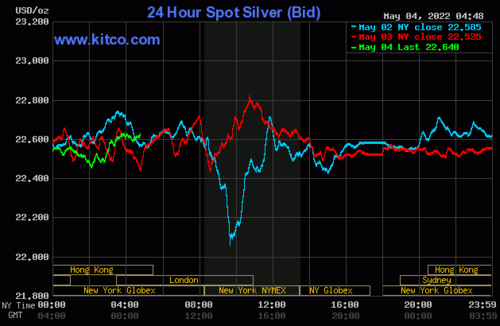
Image Source: Kitco News
May silver futures see a steep price downtrend in place on the daily bar chart. The silver bears have the solid overall near-term technical advantage. Silver bulls' next upside price objective is closing prices above solid technical resistance at $24.00 an ounce. The next downside price objective for the bears is closing prices below solid support at the December low of $21.445. First resistance is seen at Monday's high of $22.83 and then at $23.00. Next support is seen at today's low of $22.475 and then at this week's low of $22.12. Wyckoff's Market Rating: 2.5. Read More
U.S. Mint sees gold demand drop 43% in April, silver demand drops 23%
After a strong start to the year, bullion demand for gold and silver from the U.S. Mint fell sharply last month.
In its latest sales numbers, the U.S. Mint said it sold 88,000 ounces of gold in various denominations of its America Eagle Gold bullion coins. Sales are down more than 43% from March.
Meanwhile, annually, compared to lackluster demand in 2021, sales are up 128.5%.
Silver demand is also down sharply, with the U.S. mint selling 850,000 one-ounce American Eagle Silver coins. Silver coin demand dropped 23% from March. For the year, silver demand is down nearly 92%.
Silver significantly underperformed gold last month as prices dropped more than 7% last month. The gold market saw only a roughly 2% drop in April.
According to some analysts, bullion sales suffered last month as investors reacted to aggressive monetary policy tightening expectations from the Federal Reserve. Read More
The Fed's aggressive monetary policy begins but will it stop inflation from rising?
In March of 2020, members of the Federal Reserve held an emergency meeting in which they announced that they would reduce the benchmark interest rate (Fed funds rate) to between 0 and ¼%. They also began an aggressive round of quantitative easing by purchasing billions of dollars of Treasuries and mortgage-backed securities (MBS) to shelter the U.S. economy from a global pandemic. The Fed immediately began to purchase $80 billion of Treasuries and $40 billion of MBS, totaling $120 billion each month with no limit or timeline.
This process continued up until November 3, 2021, when the Federal Reserve announced that it would begin to reduce the pace of its asset purchases by reducing its $120 billion monthly asset purchases by $15 billion per month until the Federal Reserve purchases were reduced to zero by the middle of 2022. In March of this year, the Federal Reserve initiated its first interest rate hike since 2018 by raising rates by ¼%, taking the Fed funds rates to ¼% to ½ %. Read More
.png)
Disclaimer: These articles are provided for informational purposes only. They are not offered or intended to be used as legal, tax, investment, financial, or any other advice.















