x




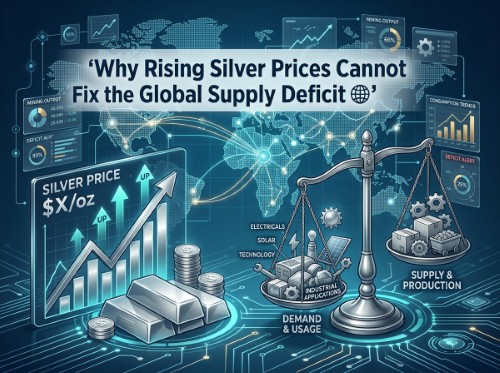
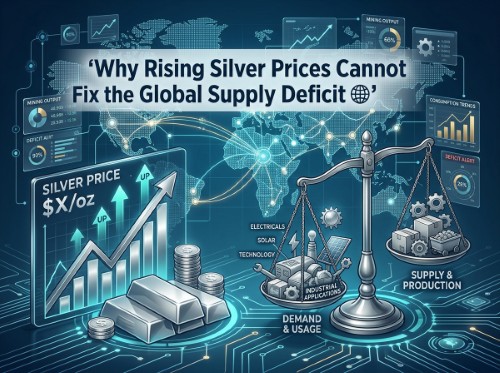
When the market price of a commodity surges, basic economic theory dictates what happens next: producers ramp up extraction, new projects receive capital approval, and fresh supply floods the market to restore equilibrium.
Yet, the silver market consistently defies this textbook principle. Despite persistent supply shortfalls and burgeoning industrial demand from the green technology sector, global silver production remains strangely inelastic.
The secret behind this market paradox lies in a fundamental structural reality: the vast majority of silver is not mined on purpose. To truly understand why the silver market is running a multi-year deficit—and why higher prices cannot quickly resolve it—investors must examine the mechanics of byproduct mining.
To grasp why silver supply cannot easily expand, one must look at where silver actually comes from. Only a small minority of mining operations across the globe are dedicated "primary" silver mines—facilities built specifically to extract silver as their main commercial revenue stream.
Instead, four out of every five ounces of silver brought to market arrive purely incidental to the extraction of other industrial metals. When a mining corporation opens a large-scale copper pit in Chile or a lead-zinc deposit in Peru, silver is simply riding along in the ore deposit.
Consequently, the corporate board reviewing that mine's capital allocation cares primarily about base metal economics. If the price of silver doubles overnight, a copper mine manager will not adjust their production schedule, expand pit operations, or hire extra shifts solely to recover more silver. The precious metal represents a minor rounding error on their balance sheet compared to the thousands of tonnes of copper being processed.
As Oliver Turner, an executive at primary producer Americas Gold & Silver, pointed out in recent industry comments, byproduct operators simply cannot "turn on more supply" when global demand spikes. Their output remains completely captive to the supply chains, energy costs, and market demand of copper, lead, and zinc.
While structural supply constraints exist perpetually in the background, specific operational events frequently highlight just how vulnerable this arrangement makes the global marketplace.
In August 2026, three unrelated operational setbacks across Latin America illustrated how easily byproduct silver supply can be trimmed without silver prices playing any role whatsoever:
1. Severe Weather in Chile
Antofagasta was forced to cut its 2026 copper output guidance following severe weather conditions that temporarily halted operations at its massive Los Pelambres copper mine in Chile. Because Los Pelambres produces substantial volumes of byproduct silver alongside its main copper output, silver supply was cut as an unintended consequence.
2. Community Blockades in Mexico
In Jalisco, Mexico, Endeavour Silver faced an Ejido community blockade that brought work at its Terronera mine to a sudden halt on 12th August. Although the company successfully negotiated a resolution—allowing full operations to resume by 24th August 2026—the temporary pause interrupted the flow of refined metal.
3. Regulatory and Output Declines in Peru
Official data from Peru’s national statistics agency (INEI) highlighted a 9.0% year-on-year drop in monthly silver output during the summer. This reduction was driven by falling ore grades and tightening regulatory scrutiny surrounding informal mining networks under the ongoing REINFO oversight process.
Combined, these three localised occurrences removed an estimated 1.1 million ounces of silver from the global market. While 1.1 million ounces represents roughly 2.4% of the year's total projected deficit—a modest figure on its own—it highlights a critical market truth: in a market already operating well below required consumption levels, any operational tremor immediately compounds the shortfall.
The ongoing imbalance between global supply and demand is not a novel phenomenon created by recent weather or labor disputes. It is an established multi-year trend.
Data published in the Silver Institute’s World Silver Survey confirms that 2025 marked the fifth consecutive year where total silver demand outstripped combined mine output and secondary recycling.
For 2026, industry projections point toward a sixth consecutive deficit year, with an estimated shortfall of 46.3 million ounces. While 2026 figures remain a forward-looking forecast until official year-end audits are finalised, the structural trajectory remains undeniable.
The Industrial Demand Engine
On the other side of the ledger, demand is showing no signs of cooling. Industrial applications—most notably photovoltaic solar panels, automotive electrification, 5G telecommunications infrastructure, and power grid expansions—now account for 50% to 55% of total annual silver consumption.
Unlike retail investment demand, which can fluctuate based on market sentiment, industrial consumption is largely price-inelastic in the short term. High-tech manufacturers require silver for its unparalleled electrical and thermal conductivity; they cannot simply swap it for a cheaper alternative without sacrificing product performance.
This growing divergence between rigid supply and rising industrial demand holds vital implications for precious metal allocation strategies.
Many market participants gain exposure to silver via financial derivatives, futures contracts, or unallocated exchange-traded funds (ETFs). These "paper silver" claims track the spot price of the metal, but they do not guarantee immediate access to allocated, physical bullion.
In a theoretical market where supply responds dynamically to higher prices, holding paper claims carries minimal structural friction. However, in a market defined by an inelastic, byproduct-dominated supply chain and steadily depleting above-ground vault inventories:
When physical inventories draw down to cover multi-year structural deficits, the market distinction between paper guarantees and direct ownership becomes increasingly pronounced. Investors seeking true diversification often favour segregated, fully allocated physical bullion held outside the traditional banking system for this exact reason.
What is byproduct silver mining?
Byproduct silver mining refers to silver that is extracted as a secondary material during the mining of primary metals such as copper, lead, or zinc. Approximately 70% to 80% of all mined silver worldwide comes from byproduct operations rather than primary silver mines.
Why doesn't a higher silver price lead to more silver mining?
Because most silver comes from base metal mines, operational decisions—such as expanding mine capacity or increasing ore processing—are governed by copper, zinc, or lead prices. A rise in silver prices alone does not provide sufficient economic incentive for a copper mine to change its operational scale.
How severe is the current global silver deficit?
The silver market recorded five consecutive years of confirmed supply deficits through 2025. For 2026, the Silver Institute projects an additional deficit of approximately 46.3 million ounces, driven largely by expanding industrial use in solar panels and electronics.
What is the main difference between holding paper silver and physical silver?
Paper silver (such as futures contracts or unallocated funds) provides exposure to price movements but relies on financial counterparties. Physical allocated silver confers direct, legal ownership of specific, vaulted metal bars or coins, entirely isolated from counterparty or supply-chain settlement risks.
Disclaimer: This article is provided for informational purposes only, mistakes may be made, and it's not offered or intended to be used as legal, tax, investment, financial, or any other advice.