x



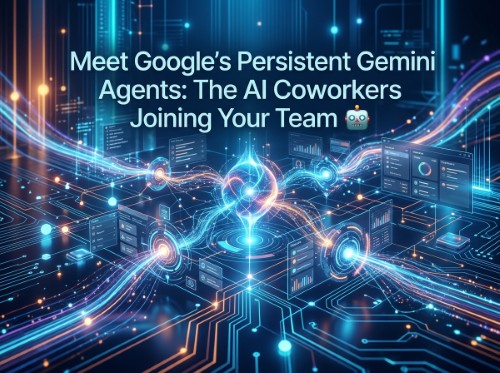
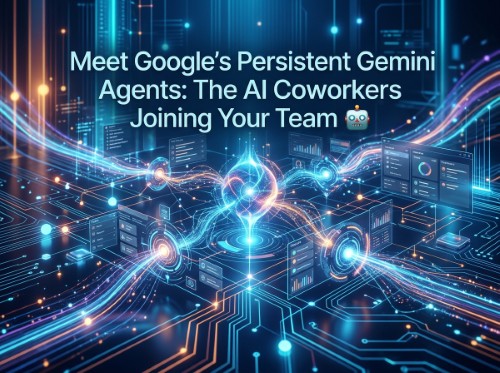
The landscape of workplace automation is evolving rapidly, moving beyond simple chatbots into an era of autonomous digital colleagues. Announced at the Gemini at Work event, Google Cloud has unveiled a ground-breaking upgrade to its enterprise ecosystem: persistent Gemini Agents capable of executing multi-day, complex tasks across enterprise applications.
These are not merely enhanced assistants that answer isolated prompts. Instead, Google is introducing persistent digital workers complete with their own corporate identities, dedicated Google Workspace accounts, and multi-layered memory structures.
The defining feature of this new release is how these AI agents integrate into an organisation's existing infrastructure. Rather than acting purely as individual personal assistants bound to a single user session, Gemini agents can be configured as team-wide persistent coworkers.
In a coworker setup, an agent can be provisioned with its own identity within the company directory, complete with:
Employees can interact with these agents just as they would with human colleagues—tagging them in Google Chat or asking for specific document revisions. Because execution takes place securely in the cloud, work can be initiated on a mobile device, monitored on a desktop, and left running autonomously over hours or days.
To handle assignments that extend across long periods, Google has implemented a four-tier memory architecture:
This structure allows agents to develop a deep understanding of institutional knowledge without requiring users to repeat background context for every new task. Furthermore, for complex projects, a primary agent can assemble temporary teams of specialised sub-agents to execute sub-tasks in parallel.
Model Flexibility Beyond Google
Crucially, Google’s platform architecture remains model-flexible. While powered natively by Gemini models, the platform already supports Anthropic’s Claude models, with plans to integrate additional proprietary and open-weight models. Administrators retain strict control over which models are permitted, and Smart Routing features automatically assign workloads based on performance requirements and cost-efficiency.
Beyond Google Workspace, the agent natively integrates with platforms such as Microsoft 365, Slack, Salesforce, ServiceNow, Jira, Git, BigQuery, and Snowflake.
Deploying autonomous agents across corporate networks raises valid security and administrative questions. To address these concern, Google operates each agent under cryptographically attested identities that adhere strictly to existing corporate permission levels.
Key safety and administration features include:
Google’s announcement comes during an intense period of competition among major enterprise tech providers. Rivals such as Microsoft (with Copilot Home, Code, and Autopilot), OpenAI (with persistent Dots agents), Anthropic (with native Google Workspace editing), and SpaceXAI (with Grok Bot and Team Bots) are all competing to provide the central operating layer for digital work.
The new universal Gemini agent is currently accessible in private preview to select customers, with wider availability planned for inclusion in Gemini Enterprise subscriptions at no extra base charge. Specialised domain skill packages for legal, financial services, data engineering, and business analytics are also rolling out alongside the core general-purpose agent.
As organisations transition from point-solution chatbots to persistent digital workforces, the focus shifts from individual prompt engineering to broad workflow delegation—marking a major milestone in the future of work.
Disclaimer: This article is provided for informational purposes only, mistakes may be made, and it's not offered or intended to be used as legal, tax, investment, financial, or any other advice.