x



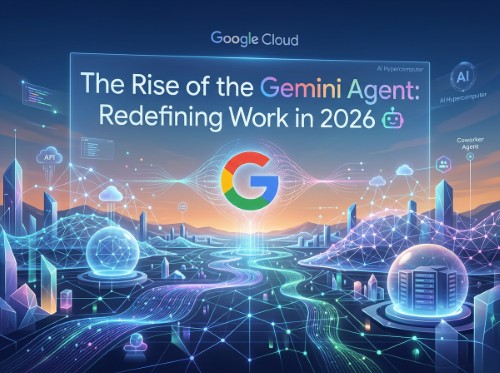
The enterprise technology landscape experienced a profound paradigm shift at the Gemini at Work 2026 event, where Google Cloud officially unveiled the Gemini agent. Presented by Google Cloud CEO Thomas Kurian, this major release signals a definitive departure from traditional, reactive chatbots. Rather than merely answering brief queries or drafting isolated pieces of text, work now truly starts in the prompt window. Modern organisations have moved past mere experimentation, with nearly 80 percent of Google Cloud customers actively running their core business on artificial intelligence, and nearly 90 percent of the Fortune 100 leveraging Gemini Enterprise.
The Gemini agent is engineered as a single, universal system capable of handling complex knowledge work, generating rich media, writing and executing code, and solving intricate multi-step problems from a unified prompt interface. Rather than forcing users to stitch together different applications, the agent accepts high-level objectives, plans the execution, utilises appropriate tools, and returns fully realised results.
The underlying architecture is built around several groundbreaking capabilities:
One of the most striking innovations introduced at the event is the concept of coworker agents, which allows enterprises to deploy autonomous entities that act as bona fide team members rather than passive productivity tools.
"A manager describes a role, such as events coordinator, and Gemini creates an agent with its own Workspace account: an email address, a calendar, Drive storage and a listing in the company directory."
Within Google Workspace, the Gemini agent operates natively and inline across Gmail, Docs, Sheets, Slides, Drive, Chat, and Calendar. Key integration features include:
To be truly effective across an entire enterprise, an AI agent must integrate deeply with existing software ecosystems while maintaining strict operational parameters. The Gemini agent connects securely with collaboration platforms, developer tools like Git and Jira, enterprise software such as Salesforce and ServiceNow, and databases like BigQuery, Snowflake, and Databricks. Furthermore, it supports any server utilising the Model Context Protocol (MCP), acting as a universal plug between artificial intelligence and software.
To streamline complex workflows, the platform introduces skills and a skills registry, which store reusable sets of instructions, knowledge, or multi-step processes as modular prompts. Teams can build, share, and publish custom skills to a corporate registry, enabling the agent to learn from each execution and continuously improve its consistency while lowering token consumption.
Deploying autonomous digital labour at scale requires stringent governance to address foundational questions regarding identity, authorisation, and observability. Google's security architecture addresses these concerns through several robust mechanisms:
Organisations worldwide are already driving measurable impact across every major sector. Small and midsize businesses as well as global enterprises are leveraging Gemini Enterprise to streamline operations and foster AI-native cultures. Furthermore, users can easily discover third-party agents and connectors via the new AI Solution Finder.
The arrival of the Gemini agent marks a pivotal turning point for modern work, equipping enterprises with autonomous, highly contextual, and secure artificial intelligence ready to tackle the demands of the future.
Disclaimer: This article is provided for informational purposes only, mistakes may be made, and it's not offered or intended to be used as legal, tax, investment, financial, or any other advice.