THE BACKUP DRILL | JAMES OTTO GRAY
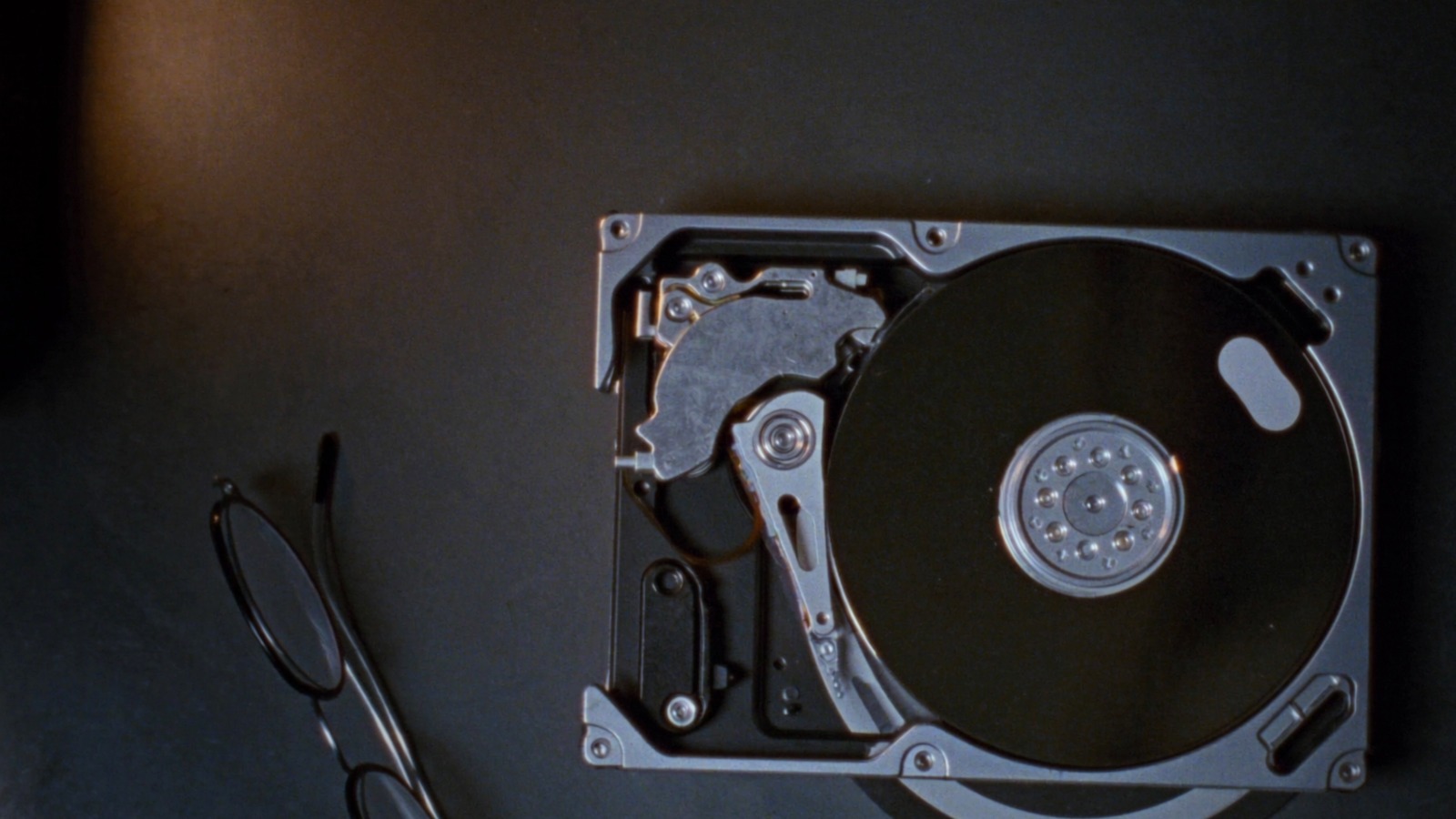
1.36% of hard drives fail in a perfect data center. Yours lives in a laptop bag.
A retired fire chief's first check on the computer his business lives on — and the one question almost nobody has ever asked their backup.
Backblaze runs a cloud storage business, and every quarter for thirteen years they have published something almost nobody else does: the actual failure rate of every hard drive they own. Not an estimate. The real count.
Their most recent figures: an annualised failure rate of 1.36% across 2025, and 1.24% in the first quarter of 2026 — measured over 341,263 drives, 1,030 failures, more than 30 million drive-days.
Now. A little over one per cent a year sounds like nothing, and my first reaction was that it made my case worse rather than better. Then I read the conditions those drives live in.
Those are enterprise drives, bolted into racks, in a climate-controlled building, at constant temperature, on clean conditioned power, monitored continuously, and replaced the moment they show early warning signs. That 1.36% is the failure rate under close to ideal conditions with professional supervision.
Your drive is in a bag. It gets carried, set down harder than you meant to, run hot on a duvet, taken from a cold car into a warm room, plugged into whatever outlet was free, and shut by having the lid closed on it while it was still writing. Nobody monitors it. Nothing warns you.
I am not going to give you a number for your laptop, because I do not have an honest one and neither does anybody quoting you a scarier figure. What I can say is that a drive in a bag is not in better conditions than a drive in a data center, and the professionals with ideal conditions and full-time monitoring still lose one in seventy-something every year.
That is not a reason to panic. It is a reason to run the check.
The check almost nobody has run
For thirty-one years I was with the Salem Fire Department. The last ten of those I was Division Chief of Training — my job was writing the standards, building the exams, and proficiency testing. Finding out on purpose, in advance, whether the people and the equipment could actually do the job.
The single most useful thing that work teaches you is this:
Having equipment is not the standard. Demonstrating it works is the standard.
We did not run drills because we expected a fire on Tuesday. We ran them because you do not find out whether the plan works while the building is burning.
So here is check one, and it takes about four minutes.
Pick a file you would genuinely be upset to lose. Go to your backup — not the folder on your desktop, the actual backup — and bring that one file back. Open it. Confirm it is the current version and not a copy from eight months ago.
That is the whole check.
Why it has to be first
Because every way a backup fails is invisible until you try to use it.
The drive mounted but stopped copying. The folder was never included in the first place. The subscription lapsed quietly. The software updated and the schedule reset itself. The file is there and it is corrupt. The backup is running perfectly and has been backing up the wrong directory since March.
Every one of those looks exactly like a working backup, right up until the morning you need it. There is no alarm. The only thing that tells you is a restore.
And I will be honest about how I came to write this down, because it is not a story where I look clever. I run an internet business from home now, and everything it is worth is on my computer. I had a backup. I would have told you I was covered. And when I finally sat down and asked whether I could demonstrate getting it all back, the answer was that I did not know. I had assumed.
Thirty-one years of testing other people, and I had not tested my own.
What "pass" and "fail" actually mean here
Pass: the file came back and it was current. Good. You are ahead of most people, and the other four checks are worth twenty minutes of your time but nothing here is urgent for you.
Fail, or "I'm not sure how to do that": that is not an embarrassment, it is the finding. It is the entire reason to run a drill — you find out what does not work while it still does not matter. Every one of the remaining four checks is downstream of this one, and none of them means much until this one passes.
The other four checks are on one page here
Where the second copy has to be. How to tell whether it quietly stopped running months ago. The device nearly everyone forgets. And the five-minute exercise that shows you what you would actually need on the first morning.
No cost, and nothing on that list requires you to buy anything — including from me.
James Otto Gray | Salem, Oregon
Retired Division Chief of Training, Salem Fire Department | Retired Senior Vice President, Coldwell Banker Commercial
james.otto.gray@gmail.com
Informational only. I am a GotBackup member and may earn a commission if you join through me. Prices and features are GotBackup's own and can change — check their site before you buy.