x






This article by Nic Carter came from the Medium.com and was published on Feb 16 2021. Its more than an acidemic argument.
During a recent debate between myself and hedge fund investor Mike Green, Mike insisted that Bitcoin should not be considered money by virtue of my comparisons between Bitcoin and gold, because gold itself was not money.
This led me to ponder why gold was not money.
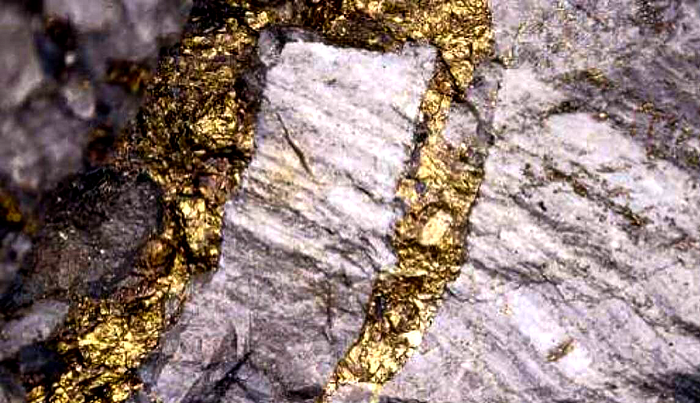
If I’ve understood him correctly, Mike is right when it comes to gold. Gold, in its elemental, disordered form, should probably not be considered money. If you were a miner standing above some gold trapped in the bedrock, you might say “there are precious metals below,” and “there’s a rich seam of ore beneath us,” not “there is a pile of money down there.”
The reason that I don’t consider raw, atomic gold to be money is that gold in its elemental form is disorganized. It’s useless for commerce in nugget form. It has to be weighed and evaluated for purity each time it changes hands. To become useful in commerce — to become a “generally accepted medium of exchange” — it must be rendered fungible. Thus it is standardized into specie: coins or bars. It was the process of stamping the king’s head on a standard coin that monetized gold. To standardize is to monetize. In so doing, the sovereign (or in some cases, the private mint) reduced uncertainty in commerce and lowered transaction costs. No assaying or weighing necessary. You trusted the physical fixedness of the minted coins.
So for something to be useful in commerce, it has to be fungibilized into a set of weights. It’s no coincidence that the etymology of sovereign currency derives from words for weight or shape. Pound, livre, lira, and peso originate from various words related to “weight”. Mark and markka — more units of weight. Same with ruble. Yuan, yen, and won all mean “round” — another kind of physical standard. To become a currency or money, the coins were standardized into specific shapes, specific weights, and imprinted with images of the king (hence the other class of currency names deriving from ‘Royal’ like real, riyal, and rial).
This process of standardization worked best with commodities that people already considered valuable. Gold and silver were best because of their atomic stability and scarcity. Gold’s superior scarcity and difficulty of extraction means that it has a high “economic density” — that is, you needed relatively small amounts of gold to instantiate a lot of purchasing power. So prior to being rendered into coinage, these precious metals could be considered monetary commodities, or proto-monies. But few would consider gold or silver nuggets money, even back when gold and silver were explicitly monetized.
Enter Bitcoin. Bitcoin achieved spontaneous value in 2010 with that pizza transaction. But as we’ve established, something can have value without being money. Barrels of oil or truckloads of lumber are valuable but are not considered money, because they are not useful media of exchange. But I would contend that ever since Bitcoin attained its spontaneous, market-derived value, it did in fact become money. Its 0 to 1 moment of being worthless to having value not only established it as a monetary commodity, and hence something with the capacity to be money, but a genuine money in of itself. How so? Because Bitcoin is innately standardized. As a dematerialized monetary unit, it does not require a sovereign to assemble it into standard units. As it is innately digital, it avoids the problems of assayability and verifiability that physical commodities suffer from. So Bitcoin could monetize without being standardized, because it is standard by definition. Bitcoin contains its own standard unit: we call it Bitcoin, and it’s one twenty-one-millionth of the total quantity of Bitcoin that will ever be created.
For convenience, Bitcoin has a smaller denomination, like the dollar has the cent and the złoty has the grocz — the satoshi. A satoshi is one one-hundred millionth of a bitcoin, or roughly one two-quadrillionth of the total supply. That there are more orders of magnitude between the two than normal is irrelevant. The point is that bitcoin is natively denominated. Units of bitcoin are fungible by design. Once they came to have value, they were instantly useful in commerce. There was no assaying, no anti-counterfeiting measures. To use bitcoin is to assay the entire stock of bitcoin, all the time. Running a full node accomplishes this.
Thus, there is no distinction between bitcoin in its raw, elemental form, and bitcoin in its money-ready form. The two are one and the same. Thus we resolve the puzzle of bitcoin as a gold-like money. Bitcoin is natively standardized. The same cannot be said for gold.
Partner, Castle Island Ventures. Cofounder, Coinmetrics.io
10