x




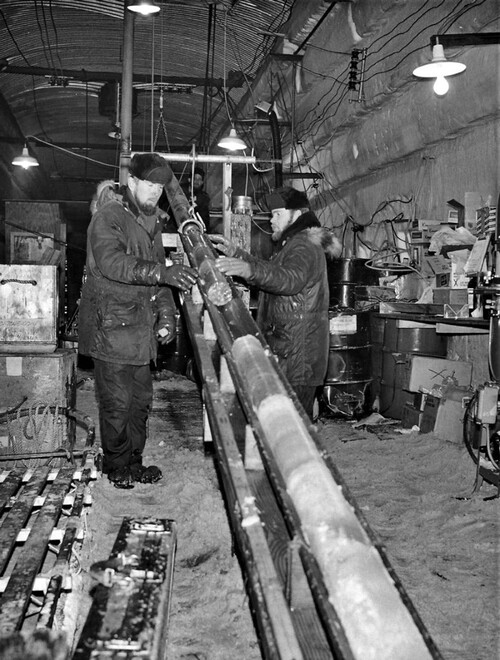
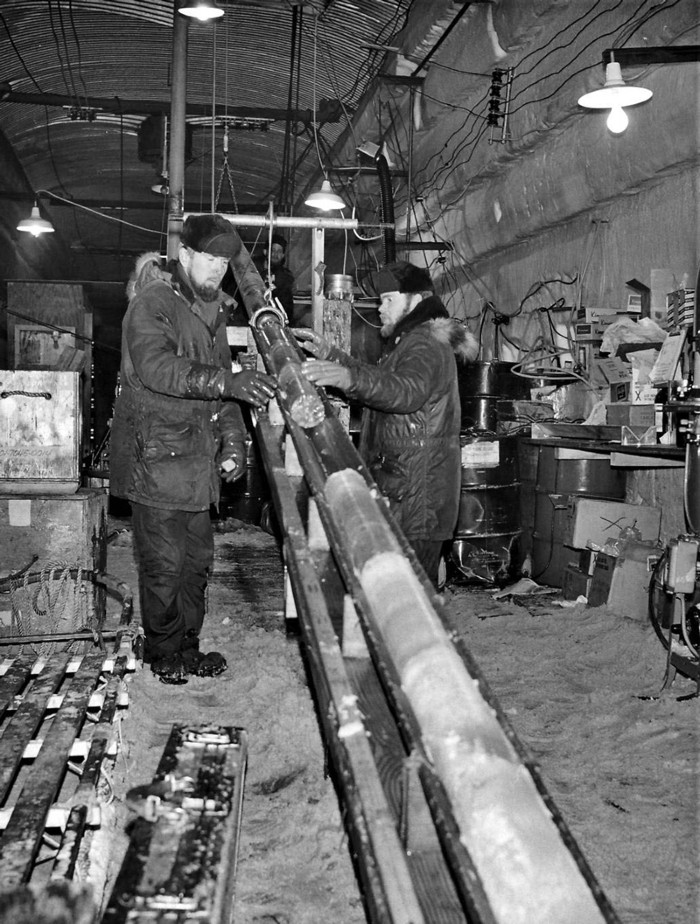
An ice core (above) drilled in 1966 has revealed that the ice sheet covering Greenland melted away and was restored at least once in the last million years. Credit: ERDC Cold Regions Research and Engineering Laboratory
Long-frozen areas of Greenland were ice-free in warmer periods of the past — a potentially bad omen for the fate of the island’s massive ice sheet.
To understand the history of Greenland’s climate, Andrew Christ at the University of Vermont in Burlington and his colleagues analysed sediment at the bottom of an ice core from northwestern Greenland, which is now covered by a 1.4-kilometre-thick ice sheet. The core was drilled by scientists at a US military base in 1966, the height of the cold war.
The sediments’ chemical and isotopic signatures hint that the surrounding land surface was sporadically exposed when the ice sheet was absent. The ice seems to have melted away and reformed at least once in the past million years, the researchers conclude. Fossil remains of plants in the sediment suggest that vegetation flourished in a mostly ice-free environment in that same time period.
The rate of ice-sheet melting and recovery in the past provides clues to how much Greenland’s shrinking ice sheet might contribute to sea-level rise in a warming climate, the scientists say.