x




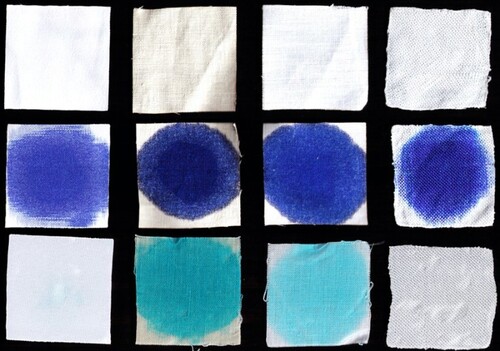
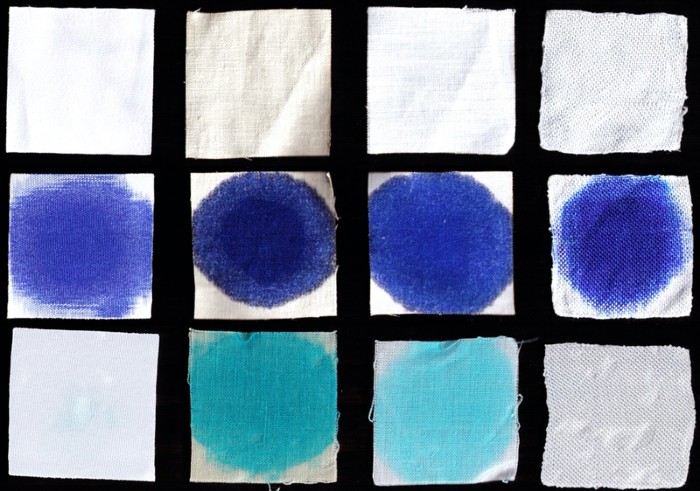
Swatches of polyester, linen, cotton and woven polyethylene (top row, left to right) are stained with food colouring (middle row) then shown after rinsing in plain water (bottom row). Credit: M. Alberghini et al./Nature Sustain.
The stain-resistant textile needs less washing, which means less energy consumption and lower emissions of greenhouse gases.
Using threads made from a common plastic, researchers have crafted a high-performance fabric that can keep you cool and clean.
Polyethylene (PE) is one of the most widely produced plastics in the world, and can be found in everything from food packaging to detergent bottles. Because the material is cheap and readily available, a research team led by Svetlana Boriskina at the Massachusetts Institute of Technology in Cambridge wondered whether PE could be engineered to make wearable garments.
The researchers used standard equipment from the textile industry to make PE fibres and weave them into fabrics. They found that woven PE not only wicks moisture more effectively than do a number of common fabrics, including polyester and cotton, but also dries faster. As a result, evaporation lowers the temperature of a surface covered with wet PE more than that of a surface covered with wet cotton. Woven PE is also highly stain resistant, and the process of colouring it does not require water.
The authors say that the adoption of woven-PE garments could reduce energy and water consumption from air conditioning and laundering.