
x
Black Bar Banner 1
x

New: AI Blog Autopilot — free for the next 30 days. Switch it on by November 15th »

NEW: Smart Mail is live — free for every member. Send broadcasts, build lists and run autoresponders. Open Smart Mail »

Training: Lesson 14 in Getting Started with MarketHive. Watch it now »

A+ A−
Ads by Markethive - View All
The Blog Feed
The Blog Feed
» Blog Feed
Write a New Blog Post
Search Blog Status
Most Viewed
Most Recent
Most Shared
Alphabetical
Markethive Blog (default)
My Blog Posts
Friends' Blogs
Blog Categories
All
Advertising
Blockchain & Cryptocurrency
Business Development
Diet & Weight Loss
Environmental
Health and Wellness
History and Culture
Home and Garden
Marketing
Mentoring & Training
Money & Finance
Other
Political
Prayer & Religion
Programming & Technical
Real Estate
Search Engine Optimization
Social Media
Spirituality
Sports & Recreation
Transport
Travel & Events
Website Design
Blogging Tools & Assets
My Blog Info
Members Subscribed to You
Blogs You Are Subscribed To
Website Widget
Wordpress Plugin
Subscribe for Greater Services
Subscribe to one of many subscriptions, each one includes the previous ones.. Unlock powerful tools, advance features, to build a powerful reach.

A quantum light source outshines a competitor 1,000-fold

Posted by Otto Knotzer on March 27, 2021 - 7:21am


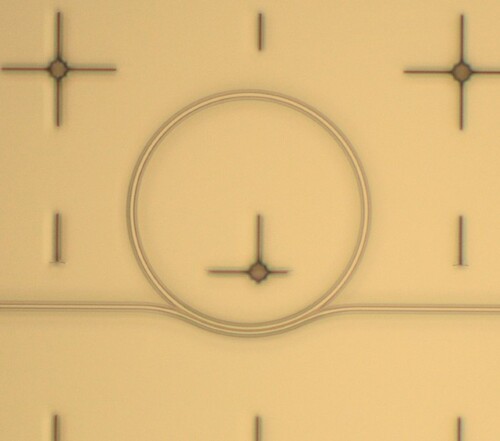
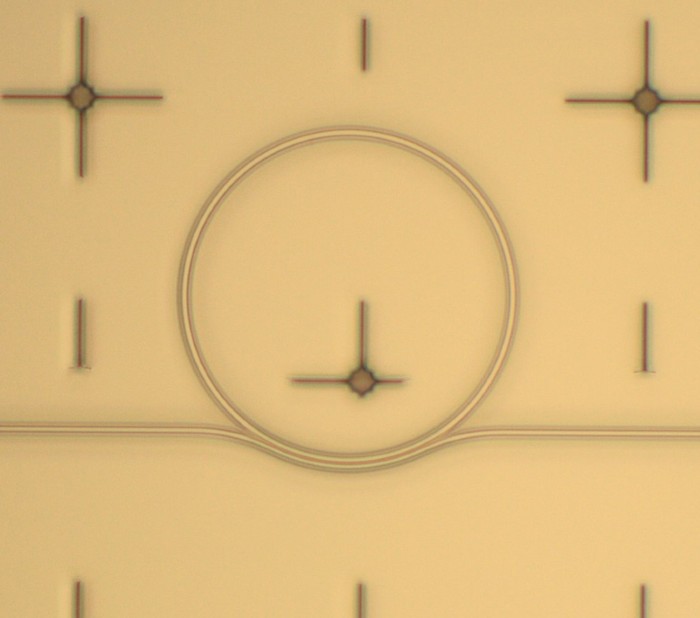
A photonic microring resonator .

Micrometre-scale rings made of aluminium gallium arsenide (model ring above) can produce entangled photons at a rapid clip. Credit: T. J. Steiner et al./Phys. Rev. X (CC BY 4.0)

A quantum light source outshines a competitor 1,000-fold

A small device churns out pairs of entangled photons with the help of an unusual material.

A device uses an unconventional material to produce ‘entangled’ photons, a valued commodity for quantum technologies, more than 1,000 times faster than a competing approach.

Two photons in an entangled pair have tightly linked properties and can be used for a range of applications, including secure quantum communications. To generate entangled photon pairs, researchers have begun developing compact chips as an alternative to older set-ups that occupy entire laboratory benches. One promising approach uses chip components made of silicon on an electrically insulating layer.

Galan Moody at the University of California, Santa Barbara, and his colleagues instead used a mixture of aluminium, gallium and arsenic, building micrometre-scale rings from the material on top of an insulator. When the researchers fed laser light into such a ring, they generated entangled photon pairs at more than 1,000 times the rate of sources built from silicon on an insulator.

The team says this combination could be used to create compact ‘quantum photonic’ chips that include a variety of components, such as structures to carry photons much as wires carry electrons. Such chips could be used for information processing and satellite communications.


Otto Knotzer Good morning and a beautiful Sunday
March 28, 2021 at 4:08am
SÉRGIO LEITE Thanks for sharing!
March 27, 2021 at 10:07pm
March 27, 2021 at 7:22am