x





Published online 12 January 2023
A model that mimics gonad development opens doors to examining disorders of sex development for the first time.
Lara Reid
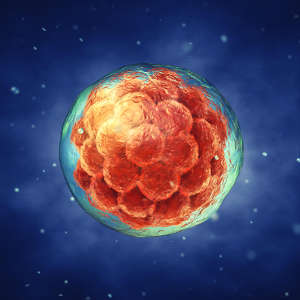
Depiction of an early stage embryo.
nobeastsofierce Science / Alamy Stock Photo
In human embryos, testes in males and ovaries in females begin to develop at around four weeks, with sex determination occurring around week six. However, little is known about ‘gonad’ development and the processes involved in disorders of sex development (DSDs), which can lead to errors in gonad formation, and disparities between chromosomal and gonadal sex.
Now, Nitzan Gonen at Bar-Ilan University in Ramat Gan, Israel, together with scientists in the UK, France, and Egypt, have established a model of gonad development based on a novel protocol using mouse or human pluripotent stem cells. Their study is the first to model a naturally occurring genetic variant that causes a common DSD.
“Our system can be used to explore the role of specific genes and pathways in gonad development and sex determination in humans. This has simply not been possible until now,” says Gonen.
Gonadal sex is determined via a tightly controlled program guided by either pro-testicular or pro-ovarian pathways. Disruptions or alterations to these pathways can lead to DSDs. Full understanding of these processes requires a robust cell culture model that mimics the natural development of gonads in the body.
The team began by using mouse pluripotent stem cells, which they placed in a specific culture medium. They added different growth factors and proteins at specific times to manipulate the stem cells’ differentiation towards intermediate mesoderm cells, from which the gonads originate, and on into early gonad progenitor cells. Once they had optimized this protocol, their cell culture model closely resembled the state of gonads in living mouse embryos at day 11.5 of development. This was verified using RNA sequencing techniques.
Using the protocol optimised on mouse stem cells, the team then ran experiments using human pluripotent stem cells from a control XX female, control XY male and from a female patient carrying a gene variant that is a cause of 46, XY DSD. They found that cells carrying the variant had aberrant gene expression and were unable to generate the structures needed to form functional testes, unlike those from the control XY cells.
“Our method results in more fully differentiated cell types compared with other model attempts, notably the ‘supporting cells’ are present – the Sertoli cells typical of testes, and the granulosa cells typical of ovaries,” says Gonen. “Critically, we show that the types of supporting cells produced are dependent on the presence or absence of SRY, the testis-determining gene from the Y chromosome.”
“This unique model and its initial findings are of high importance to this field,” says Serge Nef, a leading developmental biologist at the University of Geneva, Switzerland, who was not involved in the study. “This system represents a promising approach for studying human gonad development, and for identifying genes or variants that cause DSDs.”