x




Britain'shealth care system is in danger of collapse

Status: 21.03.2020 00:58 a.m.
By Jens-Peter Marquardt, ARD Studio London
"We can turn the tide within twelve weeks." As the British Prime Minister Boris Johnson says, as usual with flowers. Even if Johnson is right: Many, probably very many British are in acute danger of not seeing the end of these twelve weeks Because the British health system, the National Health Service (NHS), is extremely poorly prepared for this pandemic.
Before the outbreak, the British hospitals had just 5,000 ventilators in the intensive care units. Not even seven per 100,000 inhabitants. 24th place among 31 European countries. In comparison: In Germany there were almost 30 ventilators per hundred thousand inhabitants before the outbreak. 6.6 in the UK to 29.2 in Germany.
Dr. Alison Pitard, the head of the British intensive care association, therefore made it clear in the BBC: Great Britain was far behind the European average and also many other countries.
In the meantime, 3000 more ventilators are said to have been added to the island, but this is still far from the supply in Germany. Premier Johnson has therefore called on automakers like Rolls Royce and excavator manufacturers like JCB to switch to ventilators. A coalition of British industrial companies is working to quickly deliver ventilators. In the Second World War, such companies also managed to switch to building Spitfire fighters.
There is no specialist like the Drägerwerk in Lübeck in the whole of Great Britain. A Swiss manufacturer had previously warned the British about the shortage in the intensive care units. But the conservative governments have kept the state health system so short in recent years that emergency care has also deteriorated.
Nicki Cridland of the British Association of Critical Care Nurses complains that the UK simply does not have the sufficient number of intensive care nurses. In the next few weeks, an intensive care nurse would no longer have to take care of a seriously ill patient as usual, but five, six, seven or eight.
In the UK, the NHS is paid from the state budget. The services are free for the patients. The British therefore do not have to pay into statutory health insurance. The system is therefore directly dependent on the government's budget policy. And in the past few years, the conservatives have primarily saved, relying on austerity and a lean state. Great Britain has 228 hospital beds per 100,000 inhabitants according to the latest comparison statistics, Germany has almost three times as much. The relationship is similar for doctors.
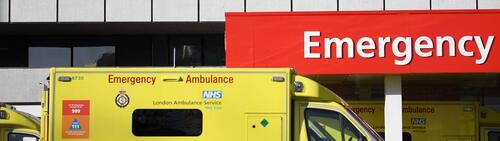
The result: The NHS has collapsed under normal flu waves in recent years. For example, emergency patients had to die because there were no more ambulances available: they were parked in the parking lots of the hospitals because the wards and the corridors were so crowded that the paramedics could no longer deliver their patients to the emergency departments. If the coronavirus pandemic hits hard now, it will be much worse.
Dr. Labor opposition doctor and MP Rosena Alinn-Khan warned the prime minister in the House of Commons that the clinics were running out of protective clothing and coronavirus tests for staff, and asked Johnson to finally take action.
The Brexit has made the shortage even worse. Tens of thousands of jobs for nurses and doctors are vacant. So far, a lot of staff from other EU countries have worked here. But thousands, especially Eastern Europeans, have returned home because they no longer feel welcome. No new ones came.
And the country is still in the transition phase. De-jure, but de facto continued in the internal market. Great Britain, for example, could still use the EU emergency pool this year and would also have access to the joint procurement of ventilators. But the government of Brexiter Johnson prefers Rolls Royce and JCB, which have never made a single ventilator.