x





Evolved adaptations of female animals could help solve women’s health challenges
By Barbara Natterson-Horowitz on February 14, 2023

Credit: Islenia Milien
Projected on the massive screen behind me onstage, a herd of giraffes rushes across a sweep of savanna. With the video set to loop, the giraffes gallop endlessly, giving me time to slowly lean across the podium and ask my audience: “Did you spot the pregnant giraffes?” I am delivering a plenary lecture at the 2019 Nobel Conference in Stockholm. The theme of that year's conference was bioinspired medicine—finding solutions in nature to human health problems—and I wanted to call attention to the connections between women and other female animals.
As a cardiologist and evolutionary biologist, I'd been posing this question about the giraffes to medical students in my courses at Harvard University and the University of California, Los Angeles, for years, so I could tell it had landed as planned. I watched the crowd scan the troop of giraffes for evidence of pregnancy—a baby bump, a lagging mother-to-be. I suspected that few, if any, of the assembled scientists and physicians had considered this question when first taking in the scene. That was precisely my point. Given the importance of female health challenges such as pregnancy to the survival of a species—including our own—shouldn't the realities of female life in the wild be more than an afterthought for doctors and biomedical researchers?
Predators pose a daily threat to survival for all prey species, and they don't give pregnant animals a pass. Even in their final, heaviest days of pregnancy, females must evade predators. To do so, they have evolved impressive physiological adaptations.
ADVERTISEMENT
Consider a giraffe in the last weeks of her nearly 15-month gestation. She has gained hundreds of pounds—her fetus alone weighs up to 150 pounds, but the load is much heavier when you add in the placenta, extra fluid and fat. Yet pregnant giraffes appear to flee as fast as nonpregnant individuals. If they couldn't, predators would quickly target them as easy prey. That would be the end of the line for that mother, her gestating calf and ultimately the species itself.
As I publicly expressed admiration for the giraffe's gestational athleticism, I privately cringed a bit recalling how unathletic—how un-giraffe-like—I had felt as a cardiologist in the final weeks of my own pregnancies. I was the slowest doctor in the herd of physicians responding to code blue alerts for medical emergencies at the hospital. I'd become so breathless and exhausted rushing up just two flights of stairs that once, on my way to a cardiac arrest, another physician pulled me aside to express concern for my cardiac health.
I understood why they were worried. Late in pregnancy, women are at risk of developing life-threatening diseases such as preeclampsia and heart failure. Even a healthy pregnancy places significant stress on the heart. The volume of blood that is circulating expands nearly 50 percent. To deal with this increased workload, the cardiac cells and pumping chambers of the heart must grow and transform in size and shape. Cardiologists use the term “remodeling” to describe these changes, but when things go wrong, the consequences are far more serious than a misplaced sofa throwing off the feng shui. Problems with how the heart cells get remodeled during pregnancy are linked to reduced cardiac function and even heart failure soon after delivery.
Fortunately, my cardiac health turned out to be fine: the source of my shortness of breath and fatigue was the nearly 40 pounds of fetus, fluid and fat I'd packed on by the end of the third trimester. Slowing down in the last weeks of pregnancy is perfectly normal for humans—including female cardiologists who can use the elevator instead of sprinting up the stairs.
But in the wild, pregnant animals must maintain their speed and stamina to save their lives. For pregnant gazelles, zebras, and other prey species, the ability to flee swiftly protects them from predation. The animals giving chase are often also female and sometimes also pregnant. To avoid starvation, pregnant cheetahs, hyenas, and other predators need to pursue, overtake and capture fleeing prey. A species in which pregnant females can't evade predators or capture food is doomed to extinction.
ADVERTISEMENT
I've become fascinated by how females of other species have adapted to these challenges. I now study their biology to find possible solutions to women's health issues ranging from heart failure to breast cancer. This field of research is still emerging, but already it is generating insights that could lead to lifesaving treatments for some of the most prevalent human health concerns.
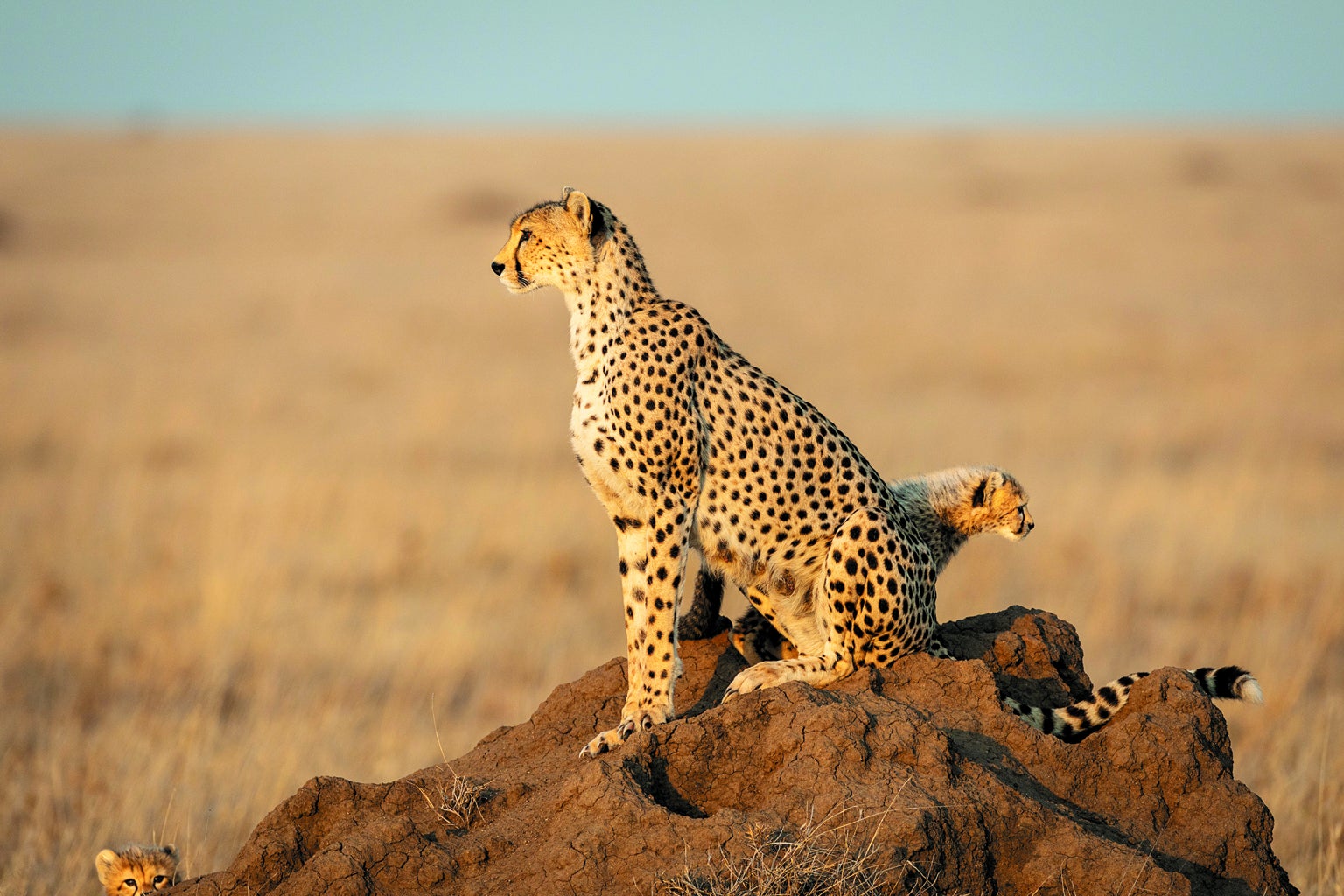
Cheetahs and other predators need to be able to chase down prey during pregnancy. Credit: StuPorts/Getty Images
A multispecies approach never would have occurred to me as a young professor of medicine in the 1990s. For the first 10 years of my career, I treated many forms of heart disease but always in one species—my own. Then, in 2005, I became a cardiovascular consultant to the Los Angeles Zoo. (Zoo veterinarians occasionally invite physicians to weigh in on diagnoses or assist in medical procedures, especially when the conditions are far more common in humans than in nonhuman animals.) My patient roster expanded to include great apes, bears, lions and raptors, among others. Animal health hadn't been included in my formal medical education, so the learning curve was steep. The zoo's veterinarians and the animals themselves became my teachers as I learned that most of the diseases affecting my human patients—cardiovascular disease and cancer among them—can also develop in other species.
Over the years I grew increasingly convinced that species-spanning medicine could reveal insights for my patients that traditional human-centered approaches had not. Partnering with naturalist and science writer Kathryn Bowers, I made it my mission to raise awareness about the relevance of animal health to that of humans, launching educational and professional programs, leading research teams and writing books meant to bring the fields of human medicine, veterinary science and evolutionary biology closer together. The reception to these efforts was mostly positive, but I received a surprising degree of pushback from my own field of medicine. Some physicians seemed resistant to connecting the health of their patients and other species (beyond the transmission of certain diseases from animals to humans). Maybe they took issue with the humbling notion that veterinarians could teach them about their human patients.

Sign up for Scientific American’s free newsletters.
Sign Up
Human exceptionalism, I could see, was deeply entrenched in our medical traditions. People haven't always been comfortable accepting that humans are animals. It has been my experience that human health professionals reflexively assume diseases they treat in their patients are unique to our species. (They aren't.)
Anthropocentrism wasn't the only distorted worldview slowing down the progress of medical science. Biomedical research has also long focused on males to the exclusion of females. Until 1993 the National Institutes of Health didn't require the clinical trials they funded to include women—not even studies of diseases known to be more common in women than men. Mind-bogglingly, it wasn't until 2015 that the NIH mandated the inclusion of female laboratory animals in preclinical safety studies of new medical treatments. There were rationales for not including females in biomedical studies: researchers wanted to avoid the potentially confounding effects of the estrus cycle, which can introduce variations in physiology and behavior not seen in males, and they wanted to protect potentially pregnant women, and fetuses, from thalidomide-type tragedies. Yet however well intended these investigators might have been, excluding females from studies proved enormously damaging to women's health.
ADVERTISEMENT
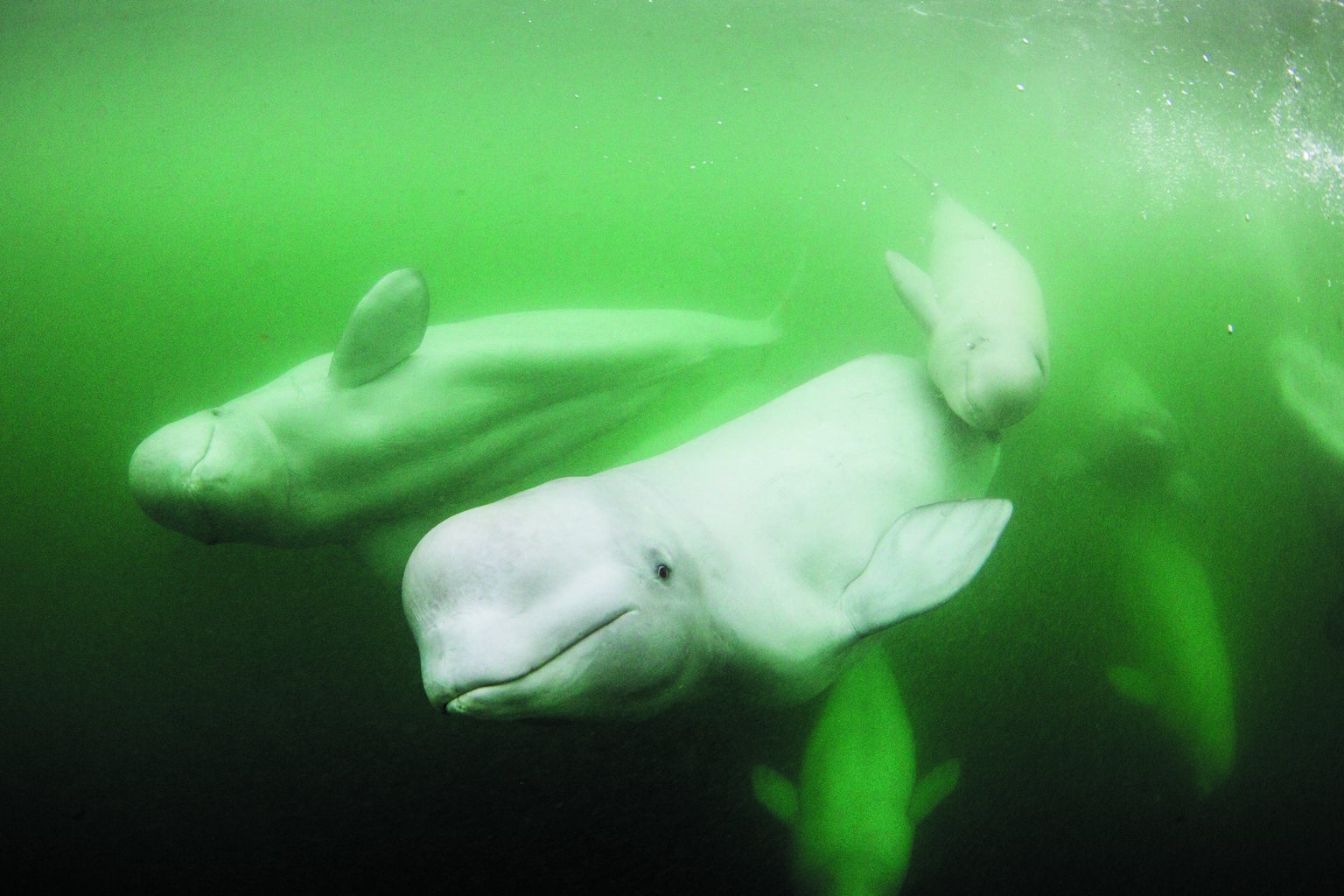
A cluster of breast cancer cases in beluga whales near Montreal brought attention to a threat to human health. Credit: Paul Souders/Getty Images
To address the gaps in our medical knowledge, I began to focus my species-spanning research on major challenges in women's health. The health connections between human and nonhuman females weren't hard to find. I've published studies on ovarian cancer in flamingoes, pythons, fish and humans; hosted symposia on menstrual difficulties in great apes (including us), bats and tree shrews; and collaborated with dairy veterinarians who have deep knowledge of lactation in cows to help women with common breastfeeding problems. These experiences have transformed my understanding not only of my patients but of myself as a female. I've learned when it comes to certain aspects of my health, I may have more in common with other female animals than with my husband, brother, son or the other men in my life. I call the shared bond that links human and animal females the “sisterhood of species.”
I first glimpsed the connection among female animals while examining Cookie, a geriatric lioness, at the Los Angeles Zoo in 2021. After an operation, a lion's heartbeats sound pretty much the same as those of a human who has been through the same procedure. So the clarity of the lub-dup, lub-dups streaming through the stethoscope I had pressed against Cookie's huge, furry chest reassured me. It meant the dangerous buildup of fluid we had removed from the sac around her heart hadn't returned. The pathology report on the cause of the fluid buildup wasn't back yet, however, and the veterinarians were worried that it might be metastatic breast cancer. There were two reasons for this specific concern. First, breast cancer is one of the tumors that sometimes spreads to the heart, creating inflammation and the kind of fluid buildup that had threatened Cookie's life. The other reason, the veterinarians explained, was that compared with other zoo animals, lions, jaguars, cheetahs, and other cats are especially susceptible to breast cancer.
This connection between human and animal health was personal. Breast cancer is a health concern for many women, and I was no exception. Around the time I first learned about breast cancer in cats, I was being tested for the BRCA mutations following several borderline breast biopsies. The BRCA mutations are well known to put women at increased risk of breast and ovarian cancers. To my amazement, I learned that BRCA mutations also put some dog breeds, including Cavalier King Charles Spaniels, and certain other carnivores at increased risk. In all my years caring for women, as well as some men, with breast cancer, I hadn't considered what other species might also be vulnerable. In fact, as I showed in a recently published study, breast cancer is a threat across nearly all mammalian lineages, with cases found in creatures ranging from kangaroos and koalas to wombats and water buffalos.
Ultimately Cookie and I were both lucky. Cookie's fluid buildup turned out not to be cancerous, and she went on to live another four years. I tested negative for BRCA mutations, and my biopsies did not show breast cancer. Other creatures have not fared so well. But we have learned from their misfortune.
Whales don't usually develop breast cancer—leukemia and lymphoma are the more common cetacean cancers. So when researchers found that 27 percent of the dead belugas they examined in and around the St. Lawrence Estuary near Montreal between 1983 and 1999 had died of breast cancer, their discovery raised questions.
ADVERTISEMENT
Looking for causes, investigators quickly locked on to several aluminum smelting factories near the estuary that were spewing chemicals known to induce breast and other cancers. The scientists determined that these chemicals probably contributed to the disease not only in the whales but also in humans who lived in the area and exhibited abnormally high cancer rates themselves. Recognizing the breast cancer “epidemic” in mammals living in this urban waterway helped to alert authorities to an environmental hazard that was also threatening human health.