
Such inflation rates were previously unknown in reunified Germany. The Federal Statistical Office reported an average inflation rate of 7.9 percent for 2022. That was the highest rate of inflation since reunification in 1990. With the exception of 1992, when the economic upswing temporarily boosted inflation to 5.1 percent, it has rarely climbed above 2 percent since then. That has now suddenly changed. For consumers, persistently high inflation means a significant loss of purchasing power.
However, real estate borrowers can benefit from currency depreciation: If inflation rises sustainably and faster than the agreed interest payments on their loan, the real value of the financing amount shrinks. But it's not quite that simple after all. Borrowers must consider other variables when financing their home.
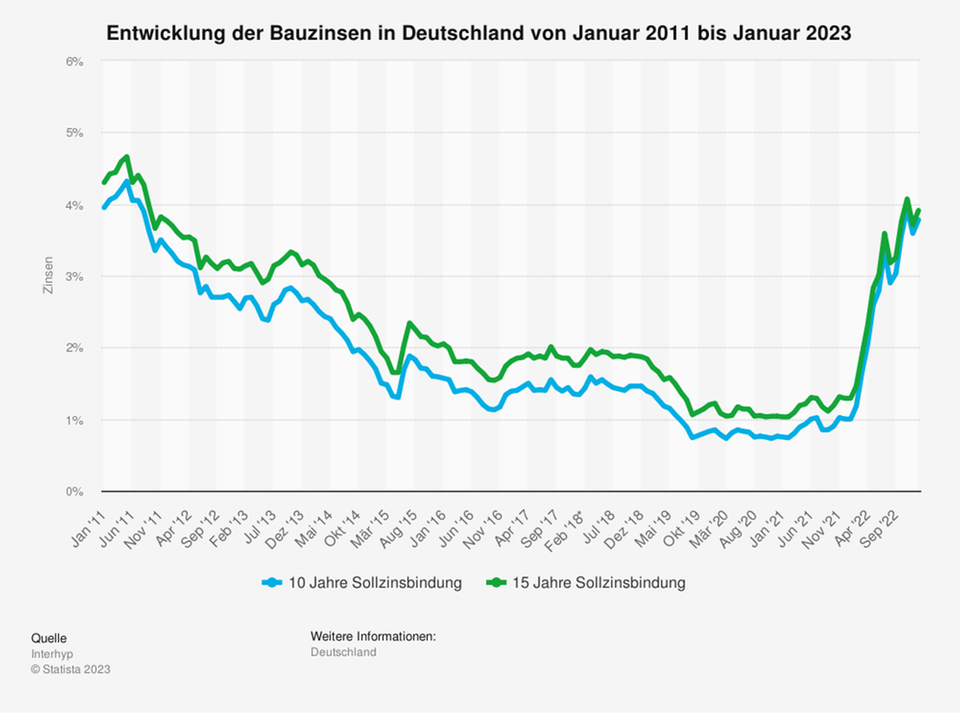
Accordingly, existing real estate loans with variable interest rates benefit less from high inflation than, for example, annuity loans. Because they have to pay the building interest that increases with inflation. The same applies to people whose debit interest rate is about to expire: they too must take out a follow-up loan at the higher interest rate level. Online building rate calculator from Interhyp or Dr. Klein provide an initial overview of how high the monthly repayment installments could be in individual cases.
All those who have a fixed interest rate at comparatively lower conditions are better off. They pay relatively little for their loan and at the same time benefit from the extraordinarily high inflation, since the debt is depreciating in real terms. But here, too, there is one important condition: the income of the debtors must be adjusted for inflation. If you don't get wage increases and can't adjust your salary to inflation, it's also more difficult to pay off the loan. After all, consumers have to spend more money on their living expenses. Anyone who suffers from a real drop in wages hardly benefits from shrinking credit debt - a zero-sum game.
Prospective buyers should have documents ready
And what about prospective buyers? Should they strike in the current interest rate environment or should they wait and see? As is so often the case, it depends. Because the high inflation and the associated rise in interest rates are also having an effect on real estate prices. "After seeing an enormous boom in the real estate market in recent years, we are currently seeing many people adopting a wait-and-see attitude," says Mirjam Mohr, Interhyp's Board Member for Private Customers. Buyers are no longer willing to pay any price, while sellers do not want to sell below their offer. "A new balance between supply and demand still has to be established," she says. "We are currently seeing the first price corrections, there are new opportunities and scope for price negotiations." The expert's advice: have documents ready. In this way, interested parties can react quickly in the current volatile environment and react quickly to possible interest rate dips.