x




Hydrogen is the great hope for the decarbonization of industry. But it can have harmful effects on the climate. Experts work on solutions.
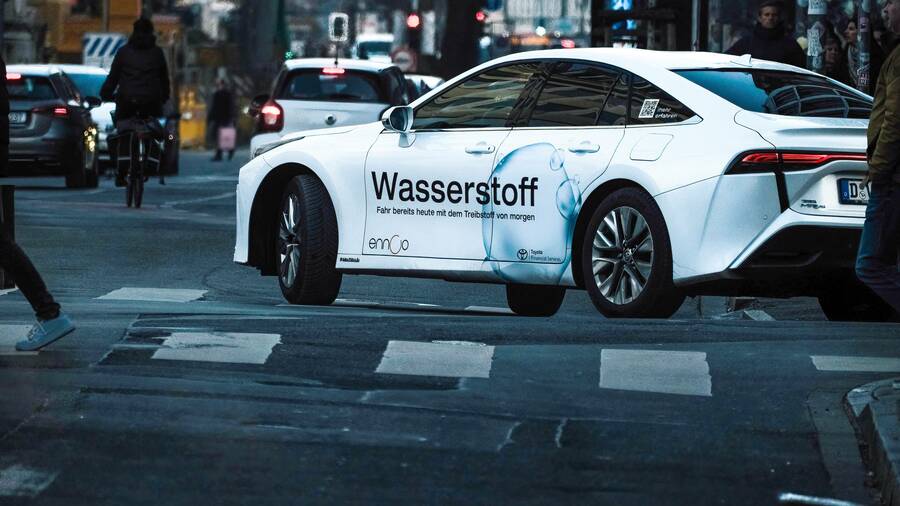
hydrogen car
When hto:
Berlin, Paris Hydrogen has to come from where green electricity doesn't help directly. Green hydrogen should enable the decarbonization of industry and shipping and air traffic as quickly as possible - and thus ensure decisive progress in the fight against global warming.
Around the world, work is being done at high pressure and at a cost of billions to ramp up hydrogen production and create the technical prerequisites for its use. Setbacks are not foreseen on the way to the hydrogen economy.
But a problem arises: if hydrogen escapes into the atmosphere, it damages the climate much more than carbon dioxide. Andrea Lübcke from the German Academy of Science and Engineering (Acatech) explains this: “Hydrogen does not have a direct impact on the climate. However, because hydrogen changes the composition of the atmosphere, it has an indirect effect on the climate.”
The hydrogen reacts there with hydroxide molecules to form water, so that there is less hydroxide available for reactions with greenhouse gases. This increases the ozone content in the atmosphere, and methane, which is extremely harmful to the climate, is broken down more slowly.
The result is frightening: "Over a period of 20 years, the indirect climate impact of hydrogen is 33 times greater than the climate impact of carbon dioxide," says Lübcke. Current studies consider even higher values to be possible, but point to large differences depending on the calculation approach. Does that mean the dream of a climate-neutral hydrogen world is over?
No, say experts. But strict precautions must be taken to prevent hydrogen leaks.
When hydrogen is produced through electrolysis using electricity from renewable sources, it is considered carbon neutral. It is then also referred to as "green" hydrogen. Companies in the steel industry have decided to invest billions in order to replace the classic and CO2-intensive blast furnace route for steel production with the hydrogen-based direct reduction process. The chemical industry is facing similar steps.

Hydrogen train in Hesse
Hydrogen is likely to be used when electricity is not available, especially when transporting heavy goods or large numbers of people.
And everywhere in the transport sector where battery-powered drives are out of the question, for example when operating aircraft or large ships, hydrogen will be the solution of the future.
"Hydrogen can be a good thing - but not necessarily," says Fred Krupp, head of the US environmental protection organization Environmental Defense Fund (EDF). According to Krupp, the consequences of the release of hydrogen into the atmosphere have not yet been adequately investigated. "This is still new territory for most people," he says. Science has only recently started to study the possible consequences of global warming.
>> Also read: Hydrogen and CO2 storage do not solve the climate crisis
There is still no consensus on what standards are needed to prevent hydrogen from escaping into the atmosphere. Because hydrogen itself is not a greenhouse gas, the effects were ignored until recently.
So far, there are no instruments to precisely measure escaping hydrogen. "You can discover large leaks that pose a risk of explosion," says Krupp. "But not the many small leaks, which as a whole could worsen global warming." A current study by Columbia University that summarizes research results concludes: Nobody knows exactly when and where how much hydrogen is escaping.
Krupp is reminded of EDF 's investigations into escaping methane. Methane has a strong climate-damaging effect. "When we started working on the methane issue, the oil companies told us that their systems were designed so that there were no leaks," he says. "They were so sure that they allowed us to carry out measurements on their systems." However, his organization then found "massive leaks". "We also have to go out and start measuring hydrogen."
>> Also read: This is how the industry wants to produce green hydrogen
The issue of methane slip poses challenges for the natural gas industry. Here, too, a development has taken place that is only just beginning when it comes to hydrogen. Environmentalists have long criticized the methane emissions released by leaks in the gas network. Last year, the operators of long-distance gas pipelines in Germany then pledged to halve methane emissions by 2025 compared to 2015.
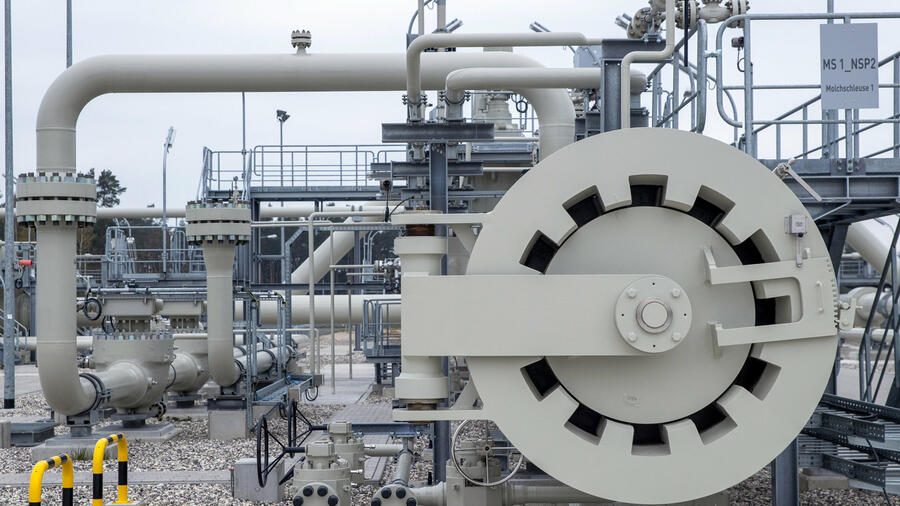
gas lines
Industry and research are already working to prevent methane leaks from gas lines – research on hydrogen is just beginning.
The Association of Transmission System Operators for Gas (FNB Gas), which brings together the major gas transport companies, had previously completed a pilot project on methane emissions. According to the FNB Gas, it has examined around 43,000 potential sources of emissions, such as valves or sliders.