x




IN VIER TAGEN IST EU-AUSTRITT DER BRITEN Brexit-Boris droht mit Zöllen auf deutsche Autos
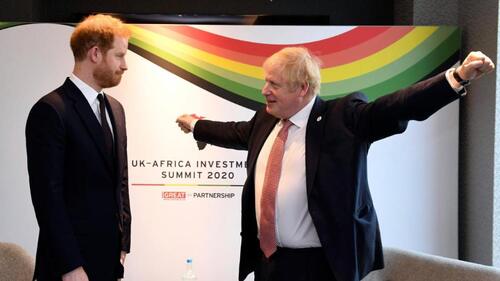
Last Monday, British Prime Minister Boris Johnson met his country's youngest export hit: Bald-Ex-Prince Harry (35, l.) At an advertising event for the British economy in London
01/27/2020 - 11:57 a.m.
The British will officially leave the EU on Friday! What actually changes: not much at first. But: January 31 heralds the start of negotiations with Brussels on what future relations between London and the EU will look like. And there is a lot at stake!
The British are already preparing their negotiating position and, according to insiders, will not be afraid to use hard pressures such as high tariffs!
▶ ︎ Specifically, British Prime Minister Boris Johnson is said to have raised tariffs of up to ten percent on German cars and 30 percent on certain French cheeses with cabinet members on Thursday. But the British also want to threaten the USA with tariffs,
And not only that: In addition to these tariffs, Boris Johnson's Brexit team responsible for the exit strategy also agreed, according to the Times, not to give top priority to the EU, but first the USA, Japan, Australia and New Zealand in the trade talks. That means: the first thing that should be reached is an agreement with these countries and regions.
The situation at Brexit
When Britain officially leaves the EU on Friday, an 11-month transition phase begins. During this time, the British remain in the European single market and in the customs union, but cannot have a say in the EU. An extension of the transition phase by two years is possible under the exit agreement - but Brexit-Boris wants to avoid this at all costs.
The Cabinet's Exit Strategy Committee (or simply XS), which decided to review tariffs, meets on Thursdays. The strategy for agricultural products is on the agenda next week. Officially, the British and Europeans are expected to present their negotiating schedule in the first week of February.
The aim of these measures: to speed up negotiations. With the EU, the British want a completely duty-free and quota-free trade, but they do not have to adhere to all European rules themselves.
The calculation: The EU countries are currently exporting goods to the United Kingdom, the total value of which exceeds British exports to the EU by around £ 94 billion (equivalent to around € 111 billion). British tariffs could lead to particularly affected countries such as Germany in Brussels campaigning to make more concessions to the British.