x




Jüdisch-muslimische Symbiose im Berlin der 1920er Jahre
Between the mosque and the “Red Club” for women: A Munich conference highlighted surprising aspects of Jewish-Muslim relations in Germany
He called himself Hugo "Hamid" Marcus. The homosexual writer of Jewish origin, born in Poznan in 1880, came to Berlin in 1903 and studied with Wilhelm Dilthey and Georg Simmel. During this time he became friends with the scandalous sexologist Magnus Hirschfeld, but also joined the elite George circle. Marcus published philosophical and esoteric books - and converted to Islam in the early twenties without, however, giving up his membership in the Jewish community.
Under his new nickname "Hamid", he headed the "Muslim Review" and designed a homosexual Islamic theory that was allegedly based on Goethe. At the same time, Marcus was managing director of the Ahmadiyya Lahore mosque, which was opened in 1928, the first mosque in Berlin and Germany. Hesse and Thomas Mann also listened to his lectures on “Islam Evenings”. The mosque, a pretty building with two 30-meter-high minarets on Brienner Strasse in Wilmersdorf, was a laboratory in the 1920s and early 1930s, especially for migrants who wanted to reform Islam - or a religion of the future and a new person create.
The "Jews and Muslims in Germany from Early 19th Century to the Present" conference in Munich now opened such fascinating insights into the history of Muslim-Jewish integration. Her aim was to rediscover the interfaces between Jewish-Muslim history in Germany, which today is largely overshadowed by the Middle East conflict, as the Wuppertal historian Sabine Mangold-Will emphasized.
For example, at the transition from the 19th to the early 20th centuries, Jewish scientists shaped German orientalism: Frankfurt-born Abraham Geiger published the first historical-critical study of the Koran, which Sulzburg Gustav Weil, the first Jewish professor in Germany from 1845, published The foundation stone for oriental studies, while Ignaz Goldziher, who was born in Austria-Hungary, is considered one of the founders of Islamic studies.
Josef Horovitz came from Pomerania to the first holder of a German oriental chair, which explicitly included Judaism. From 1915 Horovitz taught in Frankfurt; from 1918 he was also on the board of trustees of the Hebrew University in Jerusalem. In contrast to the colonial view of many Christian colleagues, the Jewish Orientalists assumed that civilizations in West and East were equal.
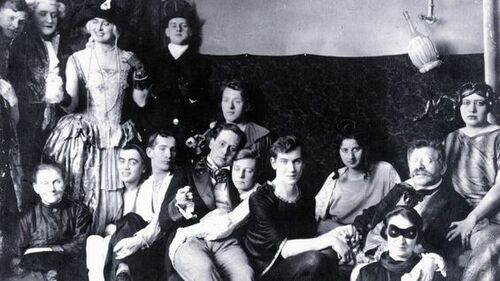
The Erlangen religious historian Gerdien Jonker was able to use private archives and photo collections to take a deeper look into the history of the Wilmersdorfer Mosque community, where life reformers, revolutionaries, artists, theosophists and homosexuals met. In the then migrant district of Wilmersdorf, Muslims from Egypt, Persia, India and the Caucasus, but also reform-oriented Russian and German Jews came together under the umbrella of Islamic modernism.
These minorities of Weimar society were embedded in a dense network of Jewish and "oriental" institutions, restaurants, cinemas, music clubs and other meeting places in the immediate vicinity. Gandhi followers, Persians and Jews worked together against colonialism; Muslim and Jewish women met in the “Red Club” who wanted to completely reorganize the relationships between the sexes. After 1933, the mosque community was taken over by the National Socialists, who staged appearances there with the anti-Semitic Jerusalem mufti Mohammed Amin al-Husseini. However, members of the community, such as Hugo Marcus and other Jews, were secretly helped to escape abroad, as Gerdien Jonker reported.
[History, commemoration, research and culture from a local point of view, we also address in our people's newsletters from the Berlin districts. To order here free of charge: people.tagesspiegel.de]
During the Nazi era, the elderly orientalist and former foreign minister of the Weimar Republic, Friedrich Rosen, sat between the chairs. The offspring of a Westphalian orientalist dynasty and grandson of the well-known British-Jewish pianist Ignaz Moscheles was born in Leipzig, but had spent his childhood in Jerusalem and learned early Persian, which was long regarded as a lingua franca in the Middle East and all the way to India.
As a diplomat in the Orient, he translated poetry from Persian and published scientific articles. Since 1900, hostile to Pan-German colonialists because of his anti-colonial attitude, Rosen had his ministerial pension canceled in 1933 and removed from the chair of the German Oriental Society. Amir Theilhaber, who is currently a fellow at the Washington German Historical Institute, traced his career in Munich.
In 1935, shocked by the political murders in Germany, Rosen visited his son Georg, who was also a diplomat, in Beijing, where he died of an aneurysm. Descendants of Friedrich Rosens from Germany and England were also present at the Munich conference. The family is still waiting in vain for an apology from official authorities in Germany.