x




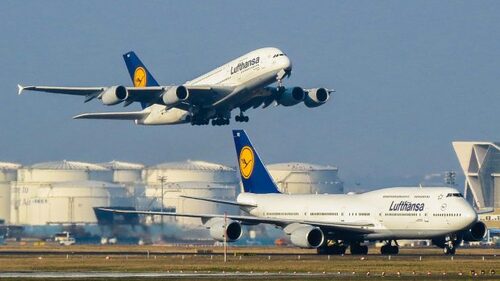
Less noise and fuel consumption: Lufthansa relies on aircraft with shark skin
Innovative ideas can often be easily seen in nature. Shark species that swim particularly quickly have small grooves on their skin. These ensure that less water eddies are created. With the same amount of force, the fish make faster progress. Engineers from Lufthansa and the chemical company BASF have now successfully applied this principle to aviation. For this purpose, the outer skin of aircraft is coated with a special lacquer and then solidified with ultraviolet light. When used correctly, small grooves are formed at a distance of one twentieth of a millimeter. The result: there are fewer cross vortices, which reduces air resistance. This approach has two major advantages for airlines.
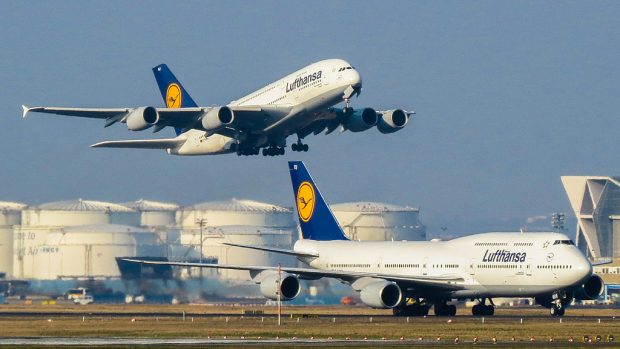
Possible savings: twenty million liters of fuel per year
On the one hand, this reduces aircraft noise. Residents of frequented airports in particular have repeatedly raised public awareness of this problem. Improvements in this area are therefore urgently needed. In addition, the lower resistance means that less kerosene is required. Specifically, fuel consumption drops by up to three percent. What does not sound like much at first seems to bring considerable savings in absolute terms: Lufthansa alone hopes to save 20 million liters of fuel a year. This in turn not only protects the climate and the environment, but could also have a positive impact on the company's balance sheet. In mathematical terms, this would increase the profit by around one percent per year.
Airline tickets could become cheaper
However, it is also conceivable that competition between the airlines will pass the savings on to customers. Airline tickets would then become cheaper on average. However, the prerequisite is that the new approach actually works. After extensive tests, this seems to have been proven. Implementation in real flight operations has so far failed due to the fact that it was comparatively expensive and time-consuming to apply the special paint on the outer skin of the aircraft. However, Lufthansa and BASF now appear to be certain that they have found a solution. For the German airline, this represents an opportunity to put its own efforts in terms of climate protection back in the foreground. Most recently, competitors like Easyjet had the edge.