x




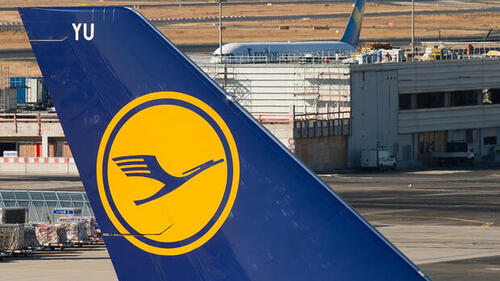
Lufthansa-Flugzeug in Frankfurt Quelle: AP Lufthansa-Aktie – abheben oder abschmieren?
The airline with the crane in the logo is currently exposed to turbulence in several ways. Last but not least, this can be seen in the share price. But stock marketers can always take a closer look at the paper.
Murphy's Law is always a laugh for those who are not affected. However, those who suffer from it find the law that everything that can go wrong go wrong less funny. Just ask at Deutsche Lufthansa AG.
There is, for example, the 2019 ranking of out and underperformers in the Dax, which has been fixed since the end of December. In an overall very strong stock market year, in which the leading German index rose by around 25 percent, the Lufthansa share suffered a loss of almost 17 percent - only the enfant terrible wirecard was worse in the first German stock market league. This realization was followed shortly afterwards by the news that Germany's largest airline had to accept a setback in European competition: The Irish low-cost airline Ryanair from Lufthansa, which still held the pole position in 2017 and 2018, had taken first place in Europe in terms of passenger numbers.
The crane airline increased the total number of passengers carried in 2019 by 2.3 percent to around 145 million. But the competitor from the green island increased even more in this discipline - by around nine percent to 152.4 million. It was only a small consolation for Lufthansa that it was able to increase its occupancy rate to the new record level of 82.5 percent in the past year.
Lufthansa was also in the negative headlines at the beginning of the year because of the strike by the cabin union UFO and the associated cancellations and delays - annoyed passengers are rarely good for good PR. And as soon as this topic seems to be off the table, the analysts worry that the corona virus in China will make air traffic suffer, at least in Asia. One almost forgets that Lufthansa still has to take care of its problem child, the subsidiary Eurowings.
Lufthansa on the ground - interesting for investors
In view of this mixed situation, this may seem cynical, but a look at the stock is interesting right now. "The last will be the first" is not a stock exchange rule that investors should blindly follow. But when things get turbulent, it is often not a bad opportunity to at least think about the advantages and disadvantages of engagement.
The advantages of the Lufthansa share undoubtedly include its valuation: the price-earnings ratio based on the estimates for the 2020 financial year is 5. The situation is similar for KUV: the current market capitalization does not even reach a fifth of 2018 sales. The fact that the dividend yield is 5.4 percent is another point that could interest long-term investors in particular. And with all the negative news of the recent past, one should not neglect the fact that the group is in a restructuring process that can bring it back to a loftier height. The latest speculations about an IPO by the lucrative subsidiary Lufthansa Technik indicate that all options will be examined. The technology division, which according to experts is said to be worth more than the entire group is currently putting on the stock market scales, could then flush it with cash.
Riedl's Dax radar: Next attempt: 14,000 points
RIEDLS DAX RADAR
Next attempt: 14,000 points
With the short rise to a new high, the Dax gave a foretaste of more. Thanks to which shares he is on the way to new price records - interrupted by short-term setbacks.
by Anton Riedl
Of course, Lufthansa is also fraught with risks, not least because of the ubiquitous climate change debate and the high costs that further restructuring will entail. After all, two years ago one would never have thought that aviation shame would become an issue. But here, too, it helps to think long-term, because the flight option will continue to be heavily used by the new residents of the now emerging Asian economies who travel a lot. It would be most climate-friendly, everyone would stay at home, but as reasonable as this option may sound, it is actually not one. In the 21st century, people want to see the world, get to know other countries and cultures. This is not only understandable, it is also a good thing. Because it not only extends the geographical, but also their cultural and intellectual horizon - and promotes global tolerance for each other.
Neither video conferencing nor Skype sessions can do all of this. Rather, the solution will be new aircraft types that no longer emit thousands of liters of kerosene per flight, but that are electronically powered. The future of an airline like Lufthansa may look different from today - but it will undoubtedly continue to exist.
Lufthansa, with its strong brand built up over decades and its large following among business customers due to its membership in the Star Alliance flight alliance, should then continue to have a good position. Of course there will also be competition in this network, which you have to face. If this succeeds, the Lufthansa share can also gain altitude again.