x





DNA from more than 100 of the critically endangered birds could help to save the species from extinction.
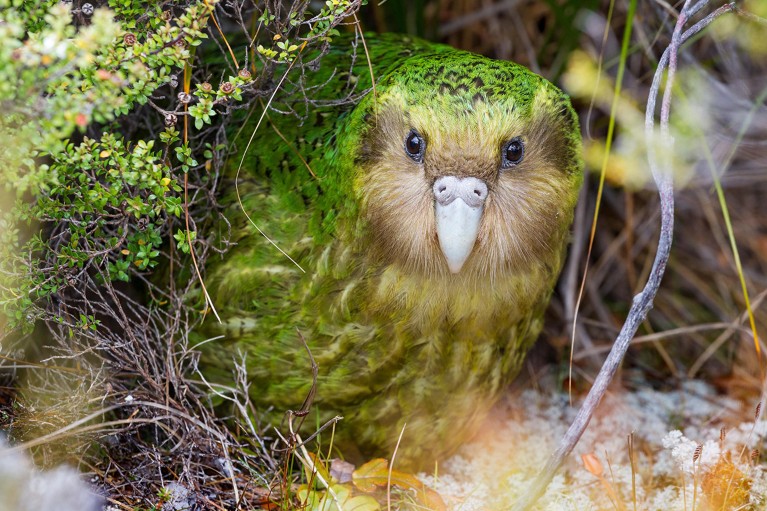
Conservation efforts have brought the kākāpō (Strigops habroptila) from the brink of extinction to a population of 252. Credit: Brent Stephenson/NPL via Alamy
The majority of kākāpō (Strigops habroptila), a critically endangered flightless parrot endemic to New Zealand, have had their genomes sequenced1.
The rotund, green birds used to thrive across the country’s islands, but their numbers plummeted once humans and other invasive mammals arrived. Conservation efforts over the past few decades have seen a modest recovery to 252 individuals, as of August 2022.
A team of researchers and conservationists, led by Peter Dearden, a biochemist at the University of Otago in Dunedin, New Zealand, sequenced the genomes of 169 kākāpō, from both living individuals and stored samples. At the time, this represented nearly the entire kākāpō population.
Can the world save a million species from extinction?
With these data, the researchers could look at the genetic diversity across the whole species and identify specific DNA sequences that are linked to traits that could affect the birds’ survival, such as chick growth or susceptibility to disease. “We have managed to associate genetic variation with observed traits, like growth, and can predict how that trait should be reflected in offspring, allowing us to identify problems earlier and prioritize vet treatment,” says Dearden.
Data from the entire population could help to identify risks in individuals, he adds. “Kind of like personalized medicine for parrots,” says Dearden.
“Their work nicely demonstrates why it is important to invest in genomic sequencing for endangered species, which can then be built upon as the field develops,” says Rebecca Taylor, a conservation-genomics researcher at Environment and Climate Change Canada in Ottawa. “Until now, most programmes have focused on minimizing inbreeding, which is an important goal,” she adds. “But with very endangered species, being able to incorporate the genetic basis of known fitness traits, such as disease susceptibility or fertility rates, into a breeding programme has clear advantages for the survivability of the species going forward.”