x





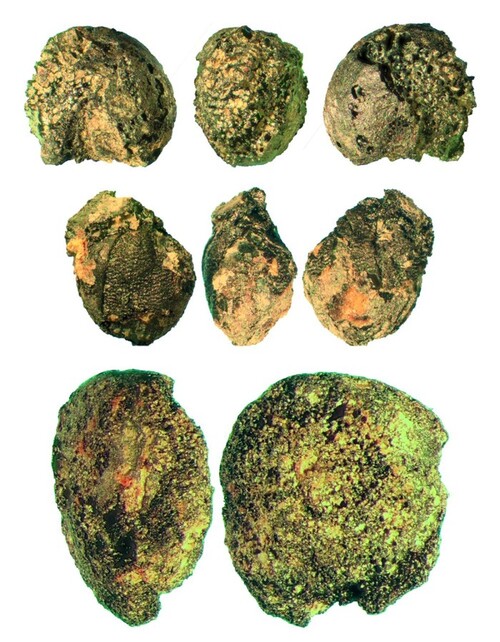
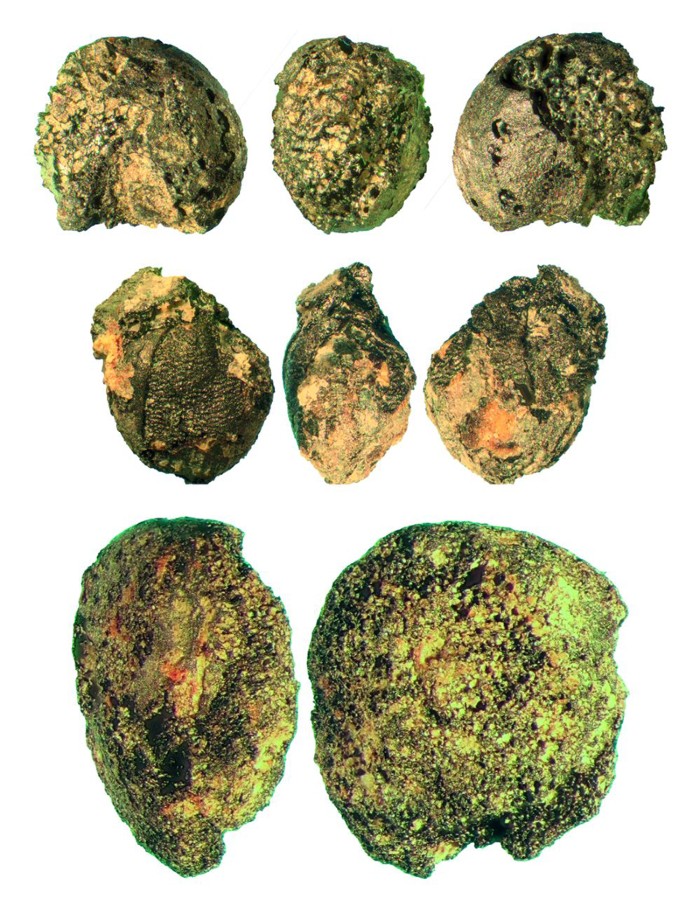
Millet grains (top rows) and lentils (bottom) are among the crop remnants found at a prehistoric mining site in the Alps. Credit: A. G. Heiss et al./PLOS ONE (CC BY 4.0)
Ancient detritus hints that hungry labourers reached for convenience foods such as pre-hulled barley.
Some 3,000 years ago, people in farming villages were sending mashed cereal to copper miners in the Alps, suggesting that meal delivery was already a way of life in the Bronze Age.
Andreas Heiss at the Austrian Academy of Sciences in Vienna and his colleagues found and analysed plant remains at Prigglitz-Gasteil, a mining settlement from the eleventh century BC in the Eastern Alps of present-day Austria. In scanning-microscope images of the samples, the team spotted broken grains of barley (Hordeum vulgare) and foxtail millet (Setaria italica) that had been soaked in a liquid, perhaps water or milk.
The cereals had been hulled and ground, but the researchers found neither tools to mill the grains nor cast-off husks at that site. These items’ absence suggests that farming communities elsewhere supported the miners by sending meals, the researchers say.
It’s possible that the miners’ menu was varied: other groups studying animal remains at such sites have identified pork bones. Heiss and his team also found traces of lentils and a range of fruits and nuts including hazelnuts, raspberries, strawberries and crab apples that probably grew nearby.
Correction: An earlier version of this article gave an incorrect scientific name for barley.