x




But for maximal benefit, more of these academic administrators need to get involved in the scholarly aspect of research.

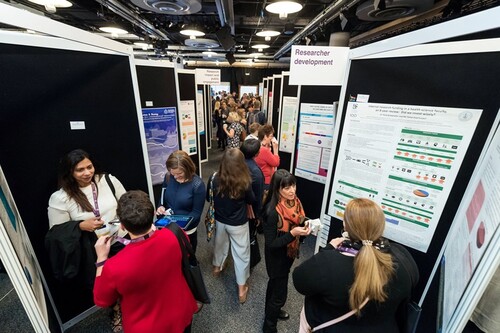
A poster session at an international conference for research managers in Edinburgh in 2018. More academic administrators are getting involved with the scholarly side of their subject.Credit: Malcolm Cochrane Photography
In the space of three decades, academic research management has become an attractive career prospect for researchers around the world. Once focused principally on helping academics to manage funding, research managers and administrators (RMAs) are now part of a globally recognized profession that spans the research spectrum. There are some 20,000 RMAs working in universities; most are in high-income countries, but expansion is under way in lower-income nations, particularly in Africa.
The role has evolved as research has become more complex, and this, in turn, is attracting more candidates with research-level qualifications and experience. Today’s managers and administrators need knowledge and experience of open science, equality and diversity, ethics and public engagement — as well as of more conventional areas such as accounting, project management and research policy.
RMA courses and qualifications are now offered by universities and by some of the 20 national and regional professional associations belonging to the International Network of Research Management Societies (INORMS).

‘We’re problem solvers’: research administrators offer guidance to working scientists
But, as we report in this issue, tensions between RMAs and the researchers they work with are not uncommon. There are still those who regard the academic as ‘king’ and the RMA as little more than research support. Meanwhile, at some institutions, university leaders expect RMAs to monitor academics’ performance metrics — such as targets for publishing and research income — which can be stressful for both researchers and managers.
As a result, RMAs and their professional organizations are becoming advocates for responsible research. And they are embracing the academic study of research management and administration. This is helping to establish good practice, as well as professional standards that can be used to hold universities and publishers to account.
For example, members of INORMS are taking a lead in addressing how university league tables might be improved to make them fairer and more transparent. And the UK research managers association, ARMA, has been involved in an independent review on the use of metrics in research evaluation, a project called the Metric Tide. This year also saw the launch by management professionals of the Journal of Research Management and Administration.
These are welcome developments. RMAs are crucial to the research enterprise. Moreover, their involvement in active scholarship is essential to achieving the aims set out above. Researchers and managers must work collegially and respectfully to make the research environment happier and more productive.