x





The stock of biogas plants in Germany currently comprises around 9,000 plants that mainly generate renewable electricity and heat. Since the EEG fixed remuneration expires for a large number of plants by 2030, new requirements and challenges arise for biogas plants as well.
Companies on the topic
:fill(fff,0)/images.vogel.de/vogelonline/companyimg/107800/107832/65.jpg "logoDueperthal.jpg")
:fill(fff,0)/images.vogel.de/vogelonline/companyimg/123400/123469/65.png "07_weka-logo_arca-member_de_cmyk.png")
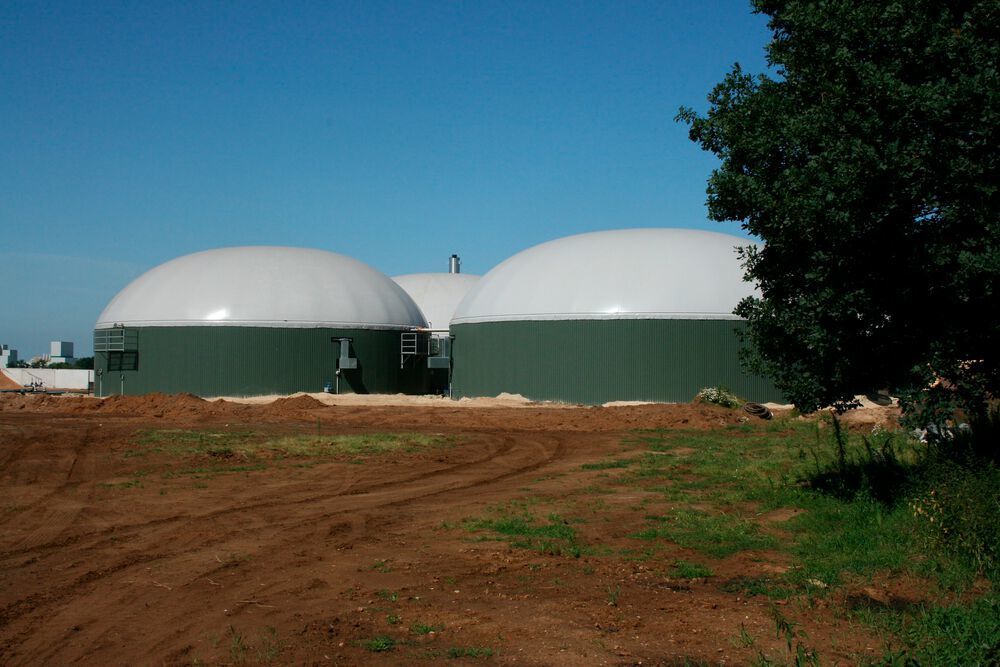 The Biogas 2030 project deals with the future of biogas plants after the EEG fixed remuneration expires in 2030.
Berlin - The aim of the "Biogas 2030" project was to identify ecologically and economically sensible plant concepts for existing biogas plants in Germany. Based on the existing plants for the production of biogas in Germany, plant concepts were identified in the research project “Options for existing biogas plants by 2030 from an economic and energy point of view”, for which three different operating models were examined in more detail. On the basis of the selected models (substrate reduction, flex concept, conversion of VOV to biomethane), cost considerations and GHG balances were drawn up, obstacles to their feasibility were identified and options for action were derived. In order to adequately take into account the ecological, economic and energy system-technical aspects, the scientists of the project consortium recommend to differentiate according to plant size and regional framework conditions. While incentives for substrate reduction (operating model 1) or to make the systems more flexible (operating model 2) are to be set for the smaller existing plants, only the larger biogas plants (> 250 m3 biogas / h) the conversion of the plant to provide biomethane (operating model 3) is recommended.
In order to stimulate the substrate reduction of the NawaRo share (operating model 1) for agricultural biogas plants, the EEG fixed remuneration should be continued for plants with a high slurry content, or a statutory follow-up subsidy should be considered. The reduction in the amount of substrate in operating model 1 (50% energetic) ultimately leads to greater flexibility in the system and thus opens up the possibility of taking advantage of the flexibility bonus, according to the scientists. To make the biogas plant more flexible (operating model 2), adjustments to the legal framework by optimizing the tender management for existing plants are also recommended. For example, concrete tendering volumes for electricity from biomass for the period from 2023 must primarily be specified and made known at an early stage. The conversion to biomethane (operating model 3) requires, among other things, a change in the legal regulatory framework in order to increase the incentives for full-cost-optimized generation and feed-in of biomethane. An option to reduce the specific supply costs of biomethane could exist, for example, in the area of gas conditioning (including calorific value adjustment) and an adjustment to the 38th BImSchV. Steering the development of existing biogas plants in the strategically desired direction requires, according to the project consortium, in addition to adapting the economic and regulatory framework conditions, primarily an overall strategy for biogas or biomethane,
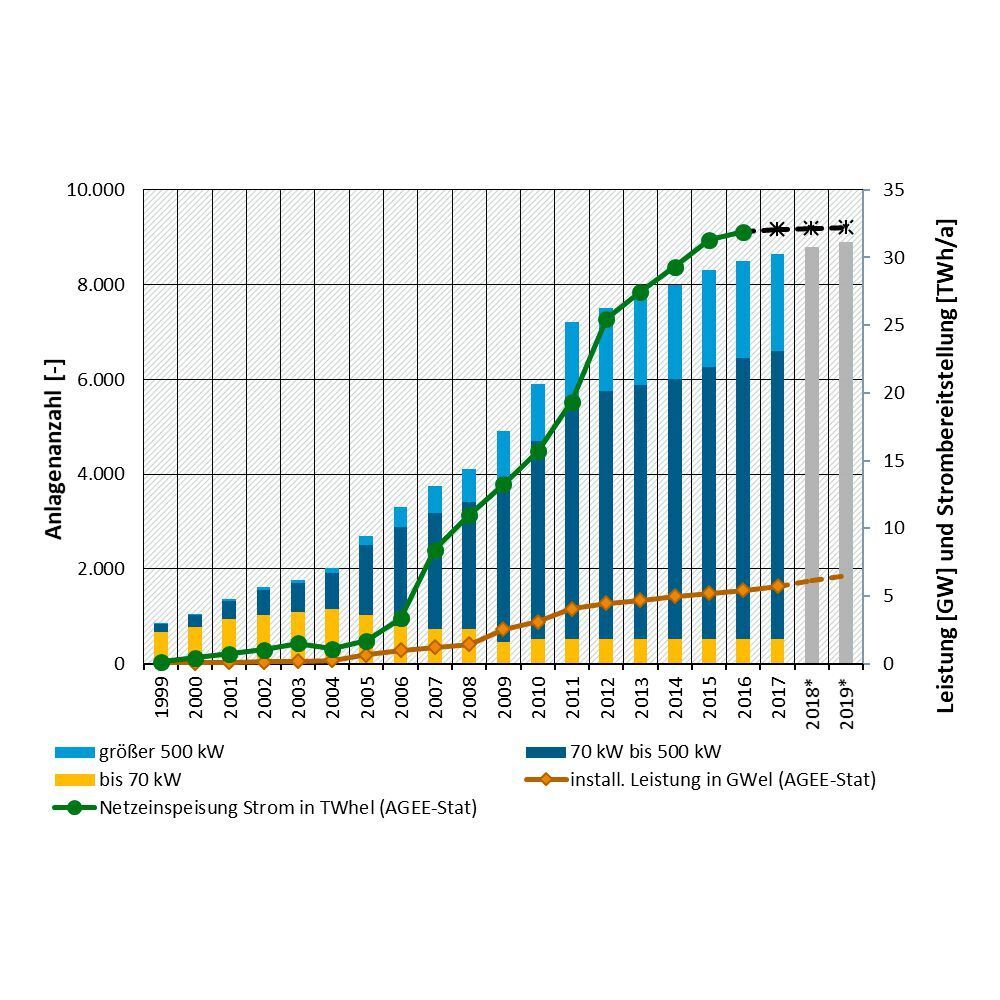 Size class distribution of the biogas production plants according to DBFZ database plant database; installed system capacity and power generation according to AGEE-Stat 2/2019 (UBA 2019)
The German Biomass Research Center works as a central and independent thought leader in the field of energetic and material use of biomass on the question of how the limited available biomass resources can contribute sustainably and with the highest efficiency and effectiveness to the existing and future energy system. As part of its research activities, the DBFZ identifies, develops, accompanies, evaluates and demonstrates the most promising fields of application for bioenergy and the particularly positive examples together with partners from research, business and the public.