x




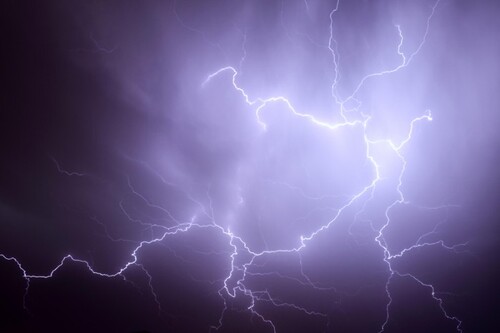
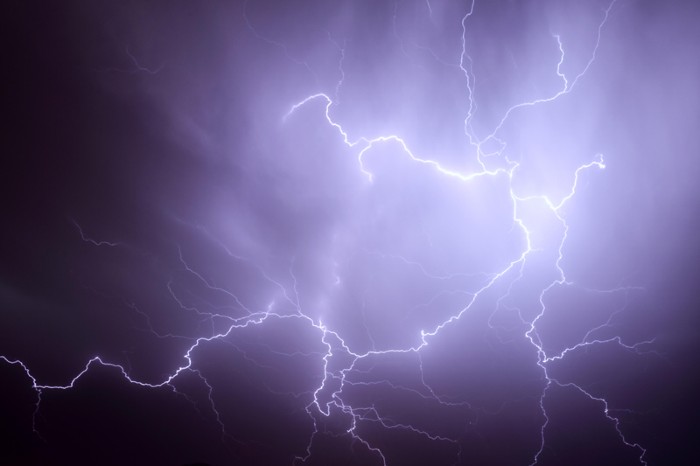
Storm clouds that spawn lightning are becoming more common in the warming Arctic, where such light shows have been rare. Credit: Ivan Kmit/Alamy
Warming in the frozen north leads to more clouds that can produce electrical discharge.
Lightning is striking the high north nearly ten times as often as it did a decade ago, increasing the risk of wildfires and injuries in the rapidly warming Arctic.
Lightning is less common in cold regions than at warmer latitudes. To understand whether it is becoming more frequent in the Arctic, Robert Holzworth at the University of Washington in Seattle and his colleagues mapped global lightning strikes recorded by a worldwide network of ground-based sensors. The researchers found that the number of summer-time lightning strikes above a latitude of 65° north rose from roughly 35,000 in 2010 to 250,000 in 2020. Most of that activity took place in Arctic Siberia.
The researchers conclude that rising temperatures in the Arctic seem to favour the formation of convective storm clouds. When ice crystals in such clouds collide, making the crystals electrically charged, lightning can occur.
Lightning can cause wildfires on vulnerable Arctic lands, and ships navigating increasingly ice-free Arctic waters could become more vulnerable to a stroke of lightning, the scientists say.