x





Plant-inspired machines could one day prove useful in search-and-rescue scenarios.
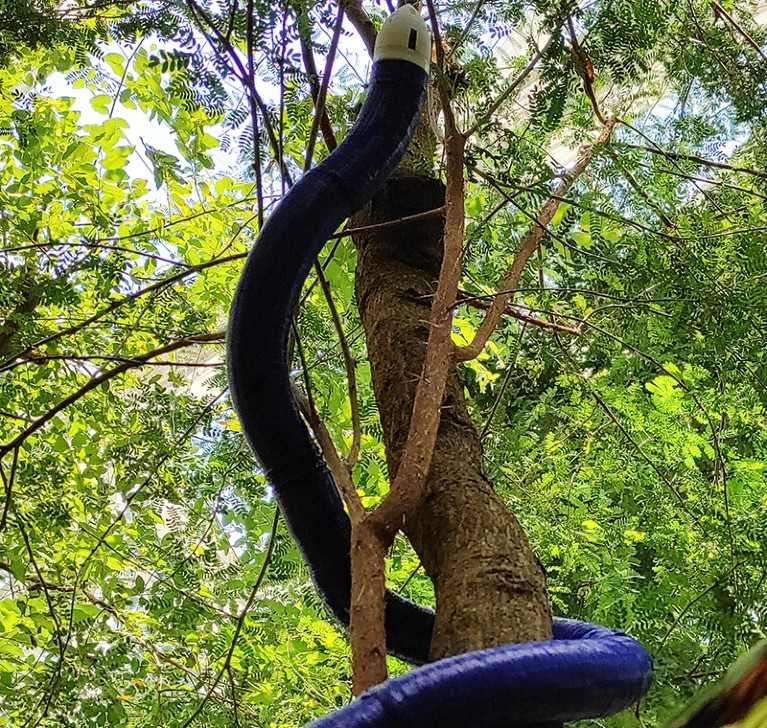
The vine-like Filobot was inspired by plants.Credit: Del Dottore et al. Sci. Robot. 9, eadi5908 (2024)
Researchers have demonstrated a robot that grows like a vine in response to stimuli such as light and pressure. The machine — named FiloBot — has a head that prints its own body by melting and extruding plastic, which then solidifies as it cools. The robot’s head is connected to a base by a thin hose, through which it receives a fresh supply of plastic from a spool. FiloBot’s growth rate is slow — its body elongates by just a few millimetres each minute.
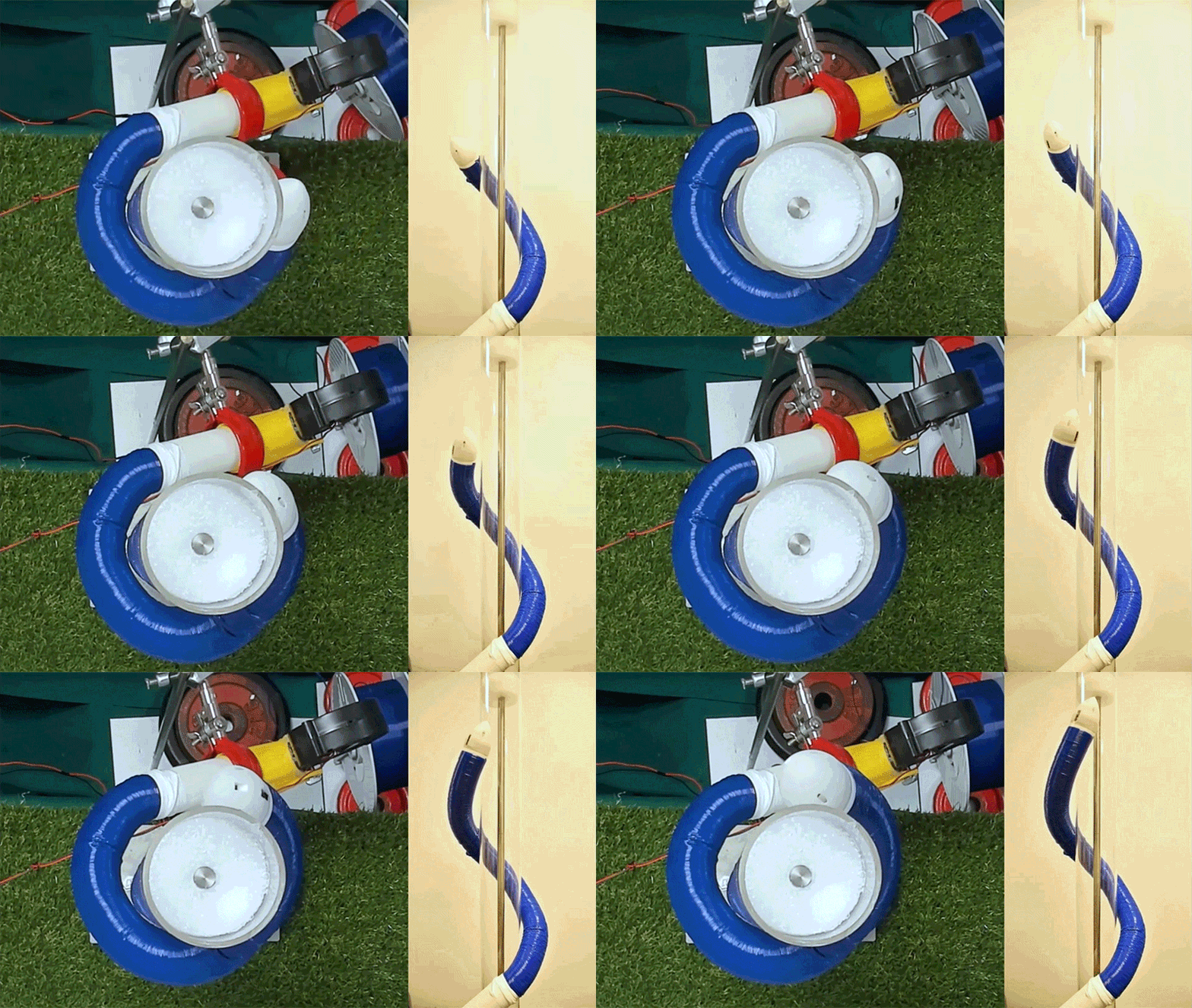
FiloBot grows by 3D printing itself. This footage has been sped up. Credit: IIT - Istituto Italiano di Tecnologia
Plant-like robots could one day find applications in search-and-rescue missions, or other situations in which they must navigate unpredictable environments, says Emanuela Del Dottore, a roboticist at the Italian Institute of Technology in Genoa. The robot’s slow growth could be an advantage, she adds — in a collapsed building it might help to avoid disturbing unstable wreckage, for example. The technology could also form the basis of self-building infrastructure.
“We are fascinated by the multiple different features of plants that enable them to conquer very challenging and mutable environment,” Del Dottore says. She and her colleagues describe the robot in a paper published on 17 January in Science Robotics1.